AI Video Creator vs Videographer for Real Estate Videos: What Top Agents Are Choosing in 2026

Summarize with AI


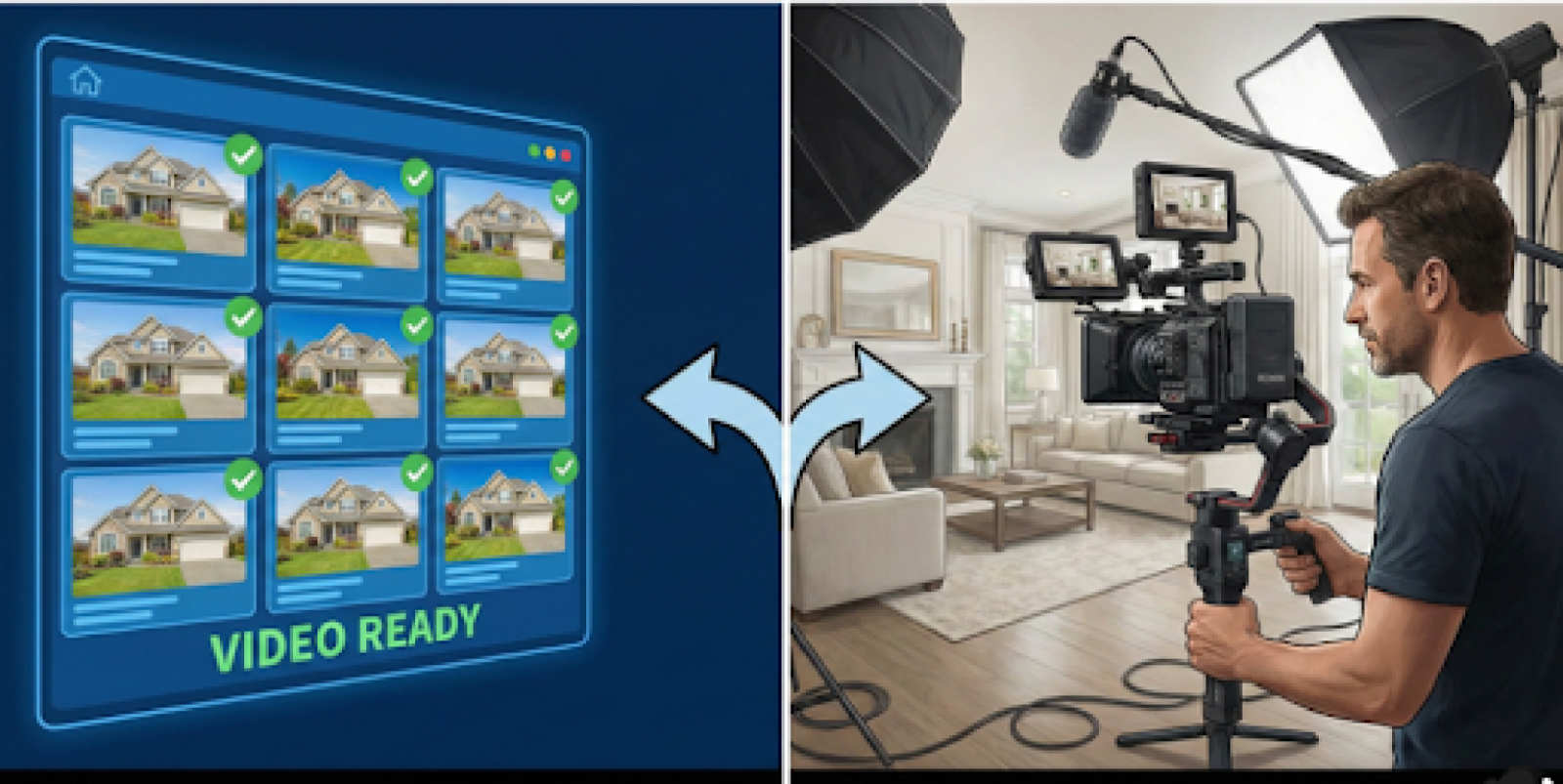
Key takeaway
- Understand the trade-offs between AI video tools and videographers.
- See when automation beats custom filming for listing videos.
- Learn how top agents balance scale with premium production.
- Compare cost, speed, and coverage across both video approaches.
- Know when videography still adds unique marketing value.
AI video creator vs videographer has become a production architecture decision for real estate teams in 2026. Agents are no longer debating creative preference. They are evaluating throughput, media utilization rate, and cost per listing.
As listing cycles compress and distribution becomes social-first, real estate video is expected, not optional.
This article examines AI video creator vs videographer for real estate videos from a production systems perspective. It focuses on how agents assess cost structure, throughput capacity, and media utilization when selecting between automated video platforms and professional videography.
See how AutoReel pricing supports video creation across every listing you manage.
What Is an AI Video Creator for Real Estate?
An AI video creator for real estate is a post-production system that converts listing photography into short-form video using automated sequencing, motion simulation, and predefined design logic. It operates entirely downstream of photography and does not require physical capture.
From a technical perspective, these platforms apply deterministic motion effects — such as pans, zooms, and transitions — across static images. Output formats are standardized for digital distribution, typically vertical or square, with consistent branding overlays.

AutoReel exemplifies this model, functioning as a rendering engine rather than a creative capture tool. The system ingests listing photos, applies predefined cinematic logic, and produces short social-ready videos within a controlled, repeatable pipeline.
Core functional attributes include:
- Dependency on quality of still image rather than capture conditions
- Automated rendering pipelines with minimal variance
- Fast generation cycles, often completed within minutes
- Fixed output lengths optimized for social feeds and listing platforms
Within the AI video creator vs. videographer discussion, AI tools are designed for production efficiency and coverage. They allow agents and photographers to deploy video across an entire listing inventory without scheduling constraints, revision lag, or variable pricing.
The value proposition centers on scale, predictability, and repeatability, rather than bespoke visual storytelling.
What Does a Professional Real Estate Videographer Deliver?
A professional real estate videographer produces original motion footage through on-site filming. This includes stabilized walkthroughs, controlled interior sequences, exterior movement, and in some cases aerial capture. The resulting video is unique to the property and cannot be replicated through automation.
The videography workflow introduces multiple variables:
- Access to property and on-site scheduling
- Dependence on lighting, staging, and environmental conditions
- Manual editing and color grading
- Limited revision capacity tied to time and cost
Videographers are typically engaged when visual storytelling materially influences buyer perception. This includes luxury properties, architecturally complex homes, and brand-level marketing assets.
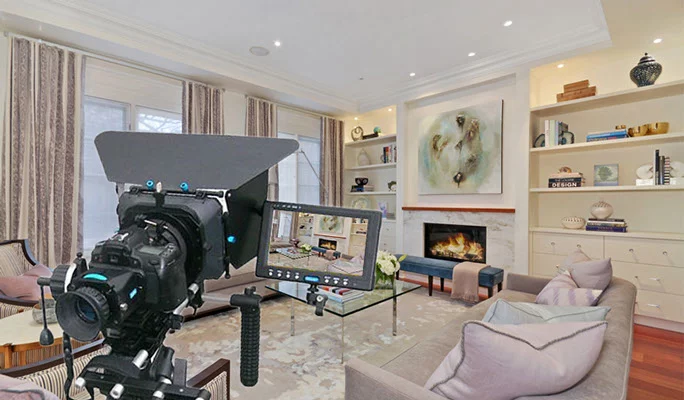
In the AI video creator vs videographer comparison, videography represents premium production value with constrained throughput. While it delivers authentic spatial continuity and creative depth, it does so at the expense of speed and scalability.
For agents managing high listing volume, this makes videography a selective investment rather than a default solution.
Review AutoReel pricing built for agents scaling video without increasing production costs.
AI Video Creator vs Videographer
When agents assess video production methods, the comparison centers on execution reliability and operational fit. The primary concern is whether video can be deployed across active listings without introducing scheduling constraints, cost volatility, or delays in marketing timelines.
AI video creators operate as production systems with standardized inputs and predictable outputs. Videographers function as specialized service providers whose deliverables are shaped by physical capture conditions and manual editing decisions.
This distinction governs how each integrates into listing workflows.
The AI video creator vs videographer decision hinges on whether video is treated as operational infrastructure or a premium enhancement.
AI video creators enable consistent, systematized deployment across entire listing portfolios. Videographers remain relevant where original motion footage materially influences buyer perception or brand positioning.
Most top-performing agents now separate these roles deliberately, assigning automation to scale and specialization to scenarios where customization justifies added complexity and cost.
Operational Comparison: Cost, Speed, and Results
When agents evaluate AI video creator vs videographer, the decision typically resolves around three operational variables.
Cost determines scalability, speed affects market timing, and results define how consistently video is deployed across listings. These factors are assessed independently because each influences listing performance in a different way.
Cost
From a production economics standpoint, AI video creators operate on fixed, low-cost models that scale efficiently across multiple listings. Videography, by contrast, incurs a full production cost per property, making it impractical for portfolio-wide deployment.
In practice, lower marginal cost enables agents to treat video as standard infrastructure rather than a discretionary upgrade.
Speed
Speed directly influences how quickly a listing reaches full market exposure. AI video creators generate assets within minutes after photography delivery. Videography introduces delays due to scheduling, capture, and post-production cycles.
For agents competing on velocity, faster deployment often outweighs incremental gains in production quality.
Results
Results are measured by utilization rather than aesthetics. AI video creators increase the percentage of listings that actually include video, while videography concentrates impact on a smaller subset of properties.
In the AI video creator vs videographer framework, results differ because the objectives differ. One maximizes coverage. The other maximizes depth.
Video Adoption Patterns and Hybrid Production Strategies Among Top Agents
High-performing agents approach video production as an execution problem, not a creative one. The priority is maintaining consistent video presence across active listings while controlling cost, timelines, and production complexity.
This has led to clear adoption patterns and a structured division of labor between AI video systems and professional videography.
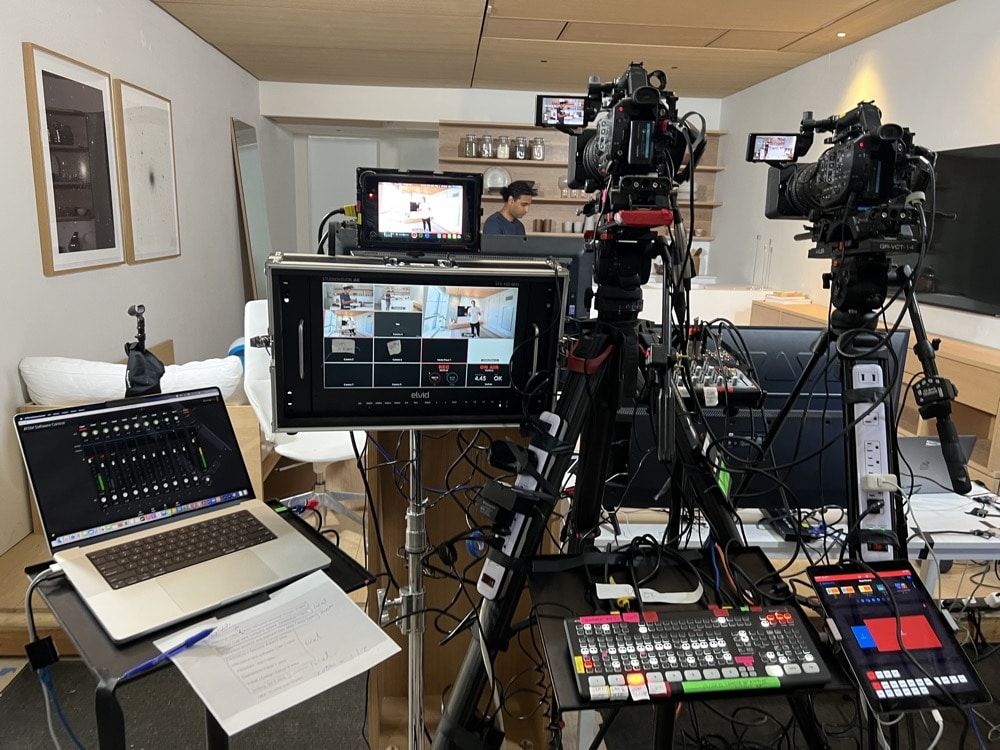
Source
Adoption Patterns Among High-Volume Agents
Agents managing multiple concurrent listings favor solutions that reduce friction and scale predictably. AI video creators enable video deployment immediately after photography delivery, eliminating the need for additional scheduling or on-site coordination.
Observed patterns include:
- AI video positioned as a standard listing deliverable
- Professional video used selectively rather than universally
- Higher overall video utilization without proportional cost growth
Within the AI video creator vs videographer framework, adoption is pragmatic. Tools are selected based on throughput requirements rather than creative ambition.
Structural Constraints Where Videography Retains Advantage
Despite advances in automation, AI video creators remain limited by their reliance on still imagery and template-based motion logic. Certain listing scenarios require original motion footage to convey information that static images cannot.
Key limitations of AI video include:
- Inability to capture true spatial continuity
- Dependence on photography quality and composition
- Lack of dynamic environmental context
Videography remains effective when motion adds informational or perceptual value rather than decorative value.
Hybrid Production Stacks Used by Top Agents
By 2026, most top agents have moved away from single-method production models. Instead, they implement layered stacks where each tool serves a defined role within the marketing workflow.
Typical allocation includes:
- Photography as the primary capture layer
- AI video creators for routine listing promotion and distribution
- Videography for flagship properties and brand-level assets
This structure increases total video output while preserving budget flexibility. It also aligns with photographer workflows, where AI-generated video becomes a derivative asset rather than a separate production engagement.
Within this system, AI video creator vs videographer debate is resolved through routing logic based on listing intent, expected return, and production constraints, not preference.
Why AutoReel Aligns With How Video Is Used in 2026
AutoReel is designed for real estate agents and teams who treat video as a standard listing asset, not a one-off production expense. It converts existing photography into short-form real estate videos within minutes, allowing video to scale with inventory rather than budget.
What differentiates AutoReel is execution efficiency:
- Predictable pricing that supports portfolio-wide video coverage
- Fast turnaround aligned with listing activation timelines
- Consistent branding across all outputs
- No bottlenecks around scheduling, filming, or revision
For professionals evaluating AI video creator vs videographer, AutoReel functions as production infrastructure. It enables agents to deploy video across every listing while reserving traditional videography only for scenarios where original footage materially changes outcomes.
Operational Clarity Drives Better Video Decisions
By 2026, the AI video creator vs videographer decision is no longer subjective. Brokers and agents are selecting production methods based on throughput, cost control, and deployment speed.
AI video creators now function as core infrastructure for listing-level video, while videographers remain a limited strategic resource for high-impact use cases.
Teams that separate volume execution from premium storytelling are achieving broader video coverage without increasing operational complexity or marketing spend.
Check AutoReel pricing to evaluate AI video viability for your listing workflow.
FAQ: AI Video Creator vs Videographer for Brokers
1. How does an AI video creator technically differ from professional videography?
An AI video creator programmatically animates still photography using predefined motion logic and templates. A videographer captures original motion footage on-site, introducing spatial continuity, environmental variables, and manual post-production that AI systems cannot replicate.
2. Does AI video meet MLS and brokerage compliance standards?
Yes. AI-generated real estate videos use approved still photography and listing metadata, making them compliant with MLS guidelines. Since no manipulated footage is introduced, compliance risk remains equivalent to photo-based marketing when branding and disclosures are correctly applied.
3. How does video turnaround time affect listing activation speed?
AI video creators compress production into minutes, allowing same-day listing activation across portals and social platforms. Videography introduces multi-day latency, which can delay full marketing rollout and reduce early-stage listing momentum in competitive markets.
4. Can AI video replace videographers for luxury listings?
No. Luxury listings often require spatial storytelling, architectural flow, and experiential cues that depend on real motion footage. AI video creators lack capture capability, making them unsuitable as a full replacement in high-end or design-driven properties.
5. What impact does AI video have on cost per listing?
AI video creators significantly reduce marginal video cost, enabling brokers to deploy video across all listings without selective budgeting. This lowers average marketing spend per property while increasing overall media coverage and listing presentation consistency.
6. How do AI video tools integrate into existing photography workflows?
AI video creators operate downstream of photography. Once photos are delivered, video generation becomes a secondary, automated step. This avoids additional site visits and allows photographers or agents to produce video without altering capture workflows.
7. Does AI video affect brand consistency across teams?
Positively. AI video creators enforce standardized templates, transitions, and branding assets. This produces uniform visual identity across listings, which is difficult to maintain when multiple videographers with differing styles are used across teams.
8. How do brokers typically structure AI video and videography together?
Most brokers use AI video as baseline infrastructure for all listings and reserve videography for flagship properties or brand assets. This layered approach maximizes output while controlling production cost and resource allocation.
9. What operational risks should brokers consider with AI video adoption?
Primary risks include over-reliance on poor-quality photography and template saturation. These are mitigated through photography standards and periodic template updates. Unlike videography, AI video introduces minimal scheduling or execution risk.
External Resource
- Multiple Listing Service Compliance and Media Standards
- HubSpot Marketing Blog – Video Marketing Strategy
- Reddit r/RealEstate: “Are real estate videos actually worth the cost?”
- YouTube: “Real Estate Video Marketing Explained” by Think Media