AutoReel vs Traditional Videographer: How Much Do Real Estate Videos Cost Today (2026)?

Summarize with AI


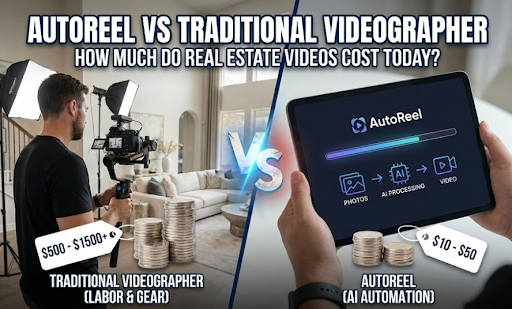
Real estate video has quietly shifted from a “nice-to-have” to an operational expectation, and that is where the cost of a videographer starts breaking down. For agents and photographers who already understand video’s value, the real question is no longer “should I use video?” but “how much do real estate videos cost at scale, and does the old model still hold up?”
This article examines AutoReel vs traditional videographer through cost, workflow, and adoption behavior. It is written for professionals who are already past the basics and are making operational decisions.
Key Takeaways
- The cost of a videographer makes traditional real estate video difficult to scale across every listing.
- Real estate video cost drops dramatically when AI is used as the default production layer.
- The AI vs human video debate is now about suitability and workflow, not visual quality alone.
- AutoReel enables faster launches, consistent output, and routine video usage across teams.
- Human videographers still matter, but primarily for selective branding and luxury use cases.
When video becomes affordable, fast, and repeatable, it stops being a decision point and starts becoming standard infrastructure for modern real estate marketing.
Try AutoReel to create affordable real estate videos for every listing today.
Why Real Estate Video Pricing Is Breaking the Traditional Model
Here’s the deal. Demand for video in real estate has grown rapidly, but the underlying pricing model has not kept pace. Agents are now expected to publish listing videos, reels, short clips, and social content for nearly every property they represent.
The problem is structural. Traditional videography was built for occasional, high-touch projects, not for the volume and speed required by modern marketing. This disconnect is forcing professionals to rethink the cost of a videographer.
Video expectations today look like this:
- Video required for every listing, not just premium homes
- Short-form content needed for social platforms
- Faster turnaround tied to listing launch timelines
- Consistent output across multiple channels
When pricing is still based on manual labor and one-off shoots, real estate video cost becomes a bottleneck. Quality is not the issue. Scalability is.
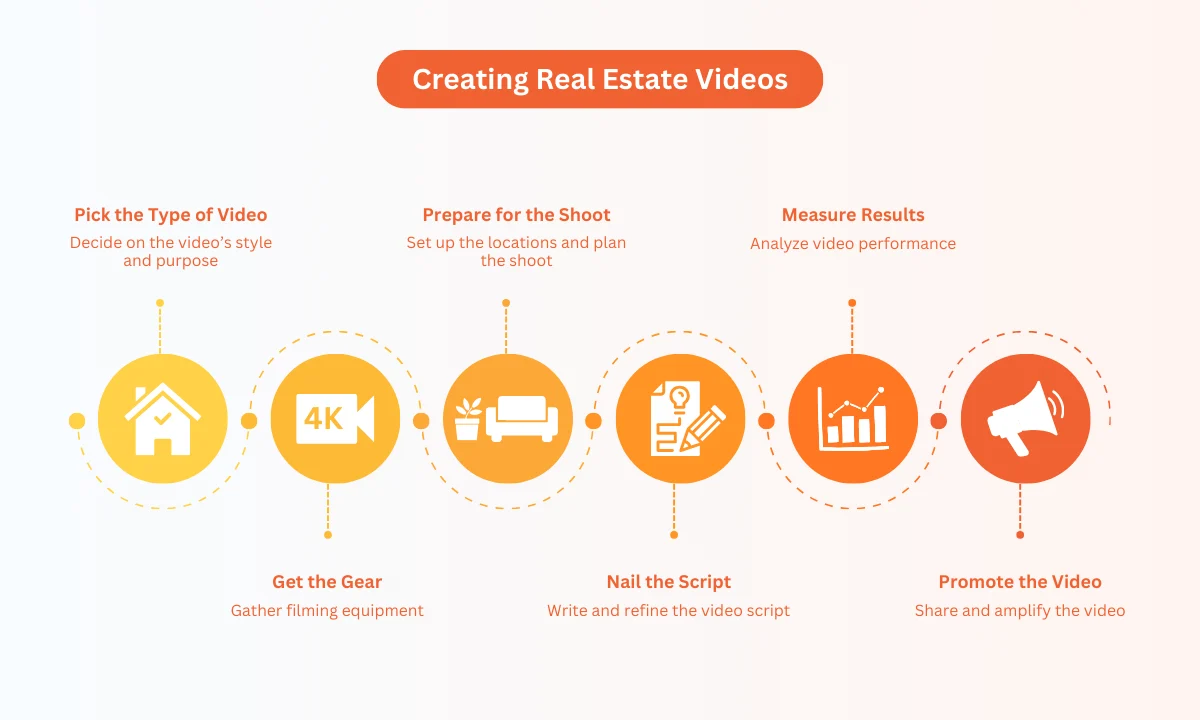
That is the gap where AutoReel enters the workflow. By removing production friction and lowering cost, it aligns video creation with how real estate marketing actually operates today.
Cost of a Videographer in Real Estate (What You’re Actually Paying For)
At first glance, hiring a videographer looks straightforward. In reality, the cost of a videographer in real estate reflects an entire production workflow, not just the final video. Understanding what is bundled into that price explains why real estate video cost escalates quickly and why scale becomes a problem.
Production and On-Site Time
A significant portion of the cost of a videographer comes from time spent on location and preparing footage. This includes setup, shooting, and capturing multiple angles to meet listing expectations.
What is typically included:
- On-site shooting time
- Equipment setup and breakdown
- Multiple takes for usable footage
This time-based model ties pricing directly to labor, which limits how efficiently video can be produced.
Editing and Post-Production Effort
After filming, editing becomes the next major cost driver. Manual post-production adds hours of work that agents rarely see but always pay for.
What is typically included:
- Manual editing and sequencing
- Color correction and basic effects
- Limited revision rounds
Because editing is done by hand, turnaround speed and flexibility are restricted.
Coordination, Licensing, and Usage Limits
Beyond filming and editing, agents often pay indirectly for coordination and usage constraints. These factors are rarely clear upfront but affect long-term value.
What is often missing:
- Fast turnaround guarantees
- Social-first or platform-specific formats
- Unlimited usage rights across channels
These limitations reduce how often and where videos can be used, even after paying a high real estate video cost.
At prices ranging from $250 to $1,000 per listing, most agents cannot justify video on every property. That is why only about 20 percent of real estate photography orders include video today. The cost of a videographer does not just impact budgets. It directly shapes how frequently video is used and how consistently listings are marketed.
How Much Do Real Estate Videos Cost With AutoReel
This is where behavior starts to change. When agents and photographers evaluate how much do real estate videos cost with AI, the comparison with traditional production becomes immediate and practical. The discussion moves away from whether video is worth it and toward how often it should be used.

With AutoReel, video creation is no longer tied to scheduling shoots or managing post-production. Videos are generated directly from listing assets, which removes friction from the process and shortens turnaround dramatically.
Instead of treating video as an optional upgrade, teams begin to treat it as a standard part of every listing launch. This shift has less to do with technology and more to do with cost accessibility.
What changes with AutoReel:
- Video creation can cost as little as $10
- Average production time is 10 to 15 minutes
- Most videos are 30 seconds and optimized for social platforms
- No on-site filming or coordination required
When real estate video cost drops this low, hesitation disappears. Video becomes routine rather than selective. That is the real difference in how much do real estate videos cost once AI enters the workflow, and it is what enables consistent video use at scale.
Make video routine by using AutoReel to produce low cost listings quickly.
The AI vs human video conversation is no longer about visual quality alone. As real estate marketing scales, professionals focus less on cinematic detail and more on efficiency, consistency, and how production methods affect the cost of a videographer and overall real estate video cost.
For standard listings, AI video delivers speed and repeatability, helping control how much do real estate video cost at volume. Human videographers remain valuable for brand-driven or high-end projects where emotion and storytelling justify higher production investment.
AI Video vs Human Video at a Glance
Where AI video performs best:
- Lower cost of a videographer alternative for daily use
- Fast production for listing launches
- Consistent output across teams
- Easy formatting for social platforms
Where human video still wins:
- Emotional storytelling and branding
- Custom creative direction
- Premium or luxury showcase properties
The reason adoption is happening quietly is straightforward. Most listings do not require cinematic production. They require speed, consistency, and affordability. As those priorities take precedence, AI video naturally absorbs the repeatable workload, while human videography becomes a selective upgrade rather than the default choice.
Choose AutoReel when speed, consistency, and scale matter more than cinematic polish.
The Hidden Economics Agents and Teams Don’t Talk About
For agents and teams, the biggest shift in video marketing is behavioral, not creative. When real estate video cost drops from a premium expense to a routine one, video stops being a special decision and starts shaping daily marketing operations. This change affects how listings are launched, promoted, and perceived.
When Video Is Expensive, Usage Stays LimitedThe cost of a videographer forces agents to ration video, even when they value it. In practice, this leads to:
- Video reserved for select or high-end listings
- Delayed launches due to production scheduling
- Inconsistent presence across platforms
High real estate video cost limits frequency, not intent.
When Video Becomes Affordable, Behavior Changes Once video feels routine, agents assume every listing will include it. This results in:
- Video added to nearly all listings
- More frequent social publishing
- Faster launches without coordination delays
Lower real estate video cost turns video into infrastructure rather than an upgrade, driving consistency and visibility at scale.
Why Photographers Are Quietly Switching to AutoReel
For real estate photographers, the shift toward AutoReel is not driven by trends or curiosity. It is driven by simple economics. As clients increasingly expect video alongside photography, the traditional cost of a videographer model does not work for photographers who operate on tight margins and high volume.
What AutoReel introduces is a way to meet that demand without changing how photographers shoot, schedule, or deliver their core services.
The Cost-to-Return Math Finally Makes Sense
Using AutoReel, photographers can add video without adding production complexity. The real advantage is not just lower real estate video cost, but predictable margins on every order.
Key financial realities:
- A video can be created for roughly $10
- The same video is sold for around $80 on average
- In some markets, photographers charge up to $300
This creates an eight times return on cost, which is rare in real estate media services. When video stops eating into margins, it becomes an easy add-on rather than a risky upsell.
Average Order Value Increases Without Extra Work
Beyond per-video profit, AutoReel directly impacts overall revenue per shoot. Photographers are not selling more sessions. They are simply increasing the value of each one.
What changes operationally:
- Average Order Value increases by about $80
- Most of that increase is pure margin
- No additional shooting or site time is required
Because the workflow remains unchanged, photographers avoid added scheduling or operational strain, turning video into a digital add-on rather than a separate service. Since results closely resemble real footage online, clients rarely question production, making the shift to AutoReel driven by efficiency and economics.
AutoReel vs Traditional Videographer Is No Longer a Choice
For most experienced real estate professionals, the discussion around AutoReel vs traditional videographer has moved past opinion. It is no longer a creative preference or a technology debate. It is an operational decision driven by volume, cost control, and speed to market.
What has emerged is a clear working structure. AutoReel handles the everyday demand for video, while traditional videographers are used selectively. This shift is not about replacing people outright. It is about aligning the cost of a videographer with the situations where that expense still makes business sense.
In practice, AI video establishes a reliable baseline so every listing includes motion content, while human videographers are used selectively when branding, emotion, or cinematic depth justify the higher real estate video cost. This shift reflects practical marketing needs, with AI covering repeatable demand and human video reserved for moments where it adds clear value.
Use AutoReel as your default video layer and reserve videographers strategically only.
Why AutoReel Becomes the Default Moving Forward
For modern teams, the comparison between AutoReel and a traditional videographer comes down to workflow. When the cost of a videographer stays high, video remains limited and delayed. When costs drop, speed and consistency drive adoption, and video becomes a standard part of listing marketing.
AutoReel is increasingly used as the default layer for real estate video, handling everyday demand through affordable, repeatable output. Human videographers remain important, but are used strategically rather than for every listing.
Test AutoReel on one listing to answer pricing and workflow questions today.
FAQs
1. What is the average cost of a videographer for real estate listings?
The cost of a videographer for real estate usually ranges from $250 to $1,000 per listing. Pricing varies by property size, location, editing complexity, and add-ons like drone footage, making video a selective rather than standard marketing option.
2. How much do real estate videos cost compared to photography?
Real estate videos cost significantly more than photography. Photography is often bundled affordably, while video requires additional filming, editing, and coordination. The higher cost of a videographer limits frequent video use despite its marketing effectiveness.
3. Why is the cost of a videographer so high in real estate?
The cost of a videographer reflects on-site time, equipment, travel, manual editing, and revisions. Video production is labor intensive and difficult to scale, which keeps real estate video cost high and inconsistent across markets.
4. Is AI video cheaper than hiring a real estate videographer?
Yes. AI video tools can reduce real estate video cost dramatically. While a videographer may cost hundreds per listing, AI-generated video can cost as little as $10 and be produced within minutes.
5. Does AI video replace the need for a human videographer?
AI video replaces human videographers for most standard listings. In the ai vs human video comparison, AI suits repeatable, affordable content, while human videographers remain valuable for luxury properties and brand-focused storytelling.
6. Why do only some real estate listings include video?
Many listings lack video due to the cost of a videographer. High real estate video cost forces agents to reserve video for premium homes. Lower-cost AI options make video feasible across more listings.
7. How much do real estate videos cost for social media marketing?
Even short social media videos can cost hundreds when produced traditionally. AI tools significantly reduce real estate video cost for social platforms, enabling agents to publish short-form content consistently without high production expenses.
8. Are buyers able to tell the difference between AI video and human video?
Most buyers focus on clarity and presentation, not production method. In many online contexts, ai vs human video differences are subtle, especially on listing portals and social feeds where consistency matters more than cinematic detail.