Best Camera for Real Estate Video Compared to AI Video Creation Tools

Summarize with AI


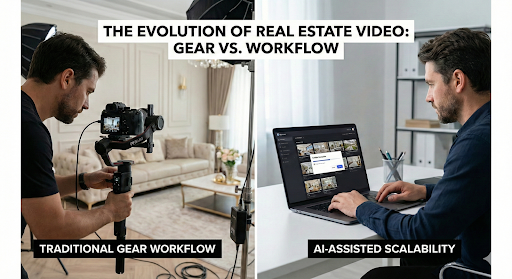
Takeaway
- Understand what really defines the best camera for real estate video.
- Compare camera workflows with faster, scalable AI video creation tools.
- Learn when to use cameras and when AI delivers better ROI.
The best camera for real estate video is no longer judged by image quality alone. Professionals now compare cameras alongside AI-based video tools, weighing speed, cost control, and consistency as video becomes a standard requirement in modern property marketing.
Traditional camera-based workflows provide authenticity and creative control, but they introduce time, labor, and scalability constraints. Meanwhile, AI-driven video creation is reshaping how quickly and affordably listing videos can be produced without on-site filming.
This guide is written for niche-aware agents, photographers, and brokerages who already understand video fundamentals and want a clear, technical comparison grounded in real production workflows rather than surface-level marketing claims.
Create listing videos faster without filming using AutoReel today
What Defines the Best Camera for Real Estate Video
The phrase best camera for real estate video refers to a capability set, not a specific product. Professionals prioritize predictable performance across interior lighting conditions, stable motion, and efficient post-production workflows.
Key technical considerations include sensor dynamic range for bright windows, reliable autofocus during slow movement, and internal codecs that tolerate color correction without breaking apart. Wide-angle lens compatibility is essential for spatial accuracy, while in-body stabilization reduces reliance on heavy rigs.
In practice, professionals evaluate the best camera for real estate video using the following operational criteria:
- Consistent exposure handling in mixed lighting environments
- Smooth motion output for interior walkthroughs without micro jitter
- Autofocus systems that remain stable during continuous movement
- Codec resilience during color correction and export
- Compatibility with ultra-wide lenses for interior framing
- Stabilization performance that reduces setup complexity
Equally important is workflow efficiency. A technically excellent camera that slows down shooting or editing rarely qualifies as “best” in a commercial environment. Real estate video is a volume-driven discipline where repeatability matters more than cinematic experimentation.
This definition sets the baseline for comparison. Once the functional requirements of a camera are clear, it becomes easier to evaluate whether traditional capture still outperforms AI-based video creation for day-to-day listings.
Traditional Camera Based Real Estate Video Workflows
Most professional real estate videos are produced using mirrorless cameras supported by gimbals and wide-angle lenses. These systems deliver strong image quality while remaining compact enough for controlled interior movement.
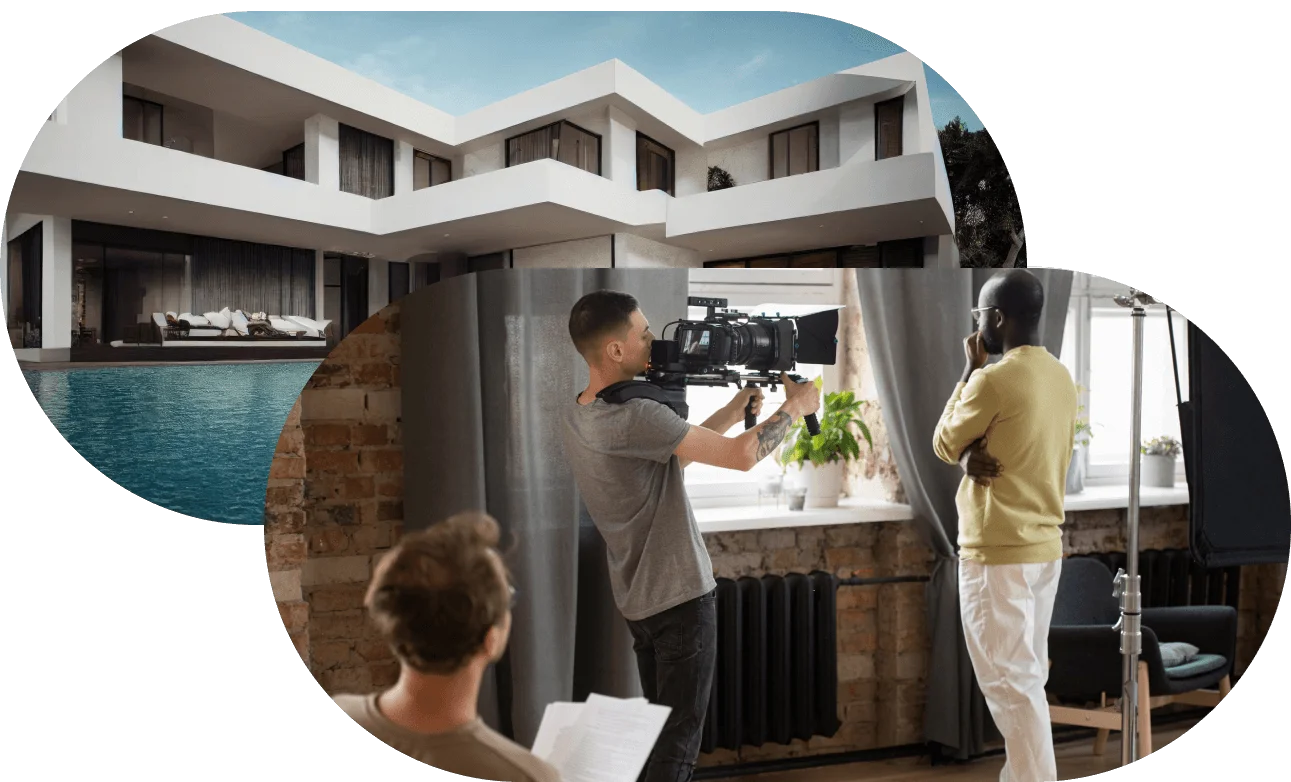
Camera-based workflows involve multiple stages. On-site capture requires careful exposure balancing, smooth motion control, and consistent framing. Post-production then adds stabilization refinement, color correction, music, and export formatting for social platforms.
In practical terms, camera-based real estate video workflows typically include:
- Property scheduling and on-site setup time
- Manual exposure and white balance adjustments per room
- Gimbal balancing and calibration before each shoot
- Multiple walkthrough takes to ensure usable motion
- Post-production stabilization and color correction
- Manual exports for different social and listing platforms
This approach produces authentic footage and remains the standard for luxury listings, but it introduces operational friction. Scheduling shoots, travel time, and post-production all limit daily output.
For professionals, the best camera for real estate video is therefore as much a productivity tool as a visual one, since more complex setups increase hidden costs in time and labor.
The Real Cost of Camera Based Real Estate Video
Camera-based real estate video production involves far more than the price of the camera itself. While hardware is the most visible expense, time and labor are the true cost drivers, and they scale poorly as listing volume increases.
Each video requires a combination of on-site work, technical execution, and post-production effort that compounds across multiple properties.
These costs are manageable for premium listings but inefficient for routine marketing. Even experienced operators face diminishing returns when demand increases.
This economic reality is why many professionals now question whether owning the best camera for real estate video makes sense for every listing, especially when faster, lower-friction alternatives are available.
How AI Based Real Estate Video Creation Works
AI-based real estate video creation replaces physical filming with software-driven motion generation. Instead of recording footage on-site, users upload listing photos that the system converts into a short, structured video sequence designed for property marketing.
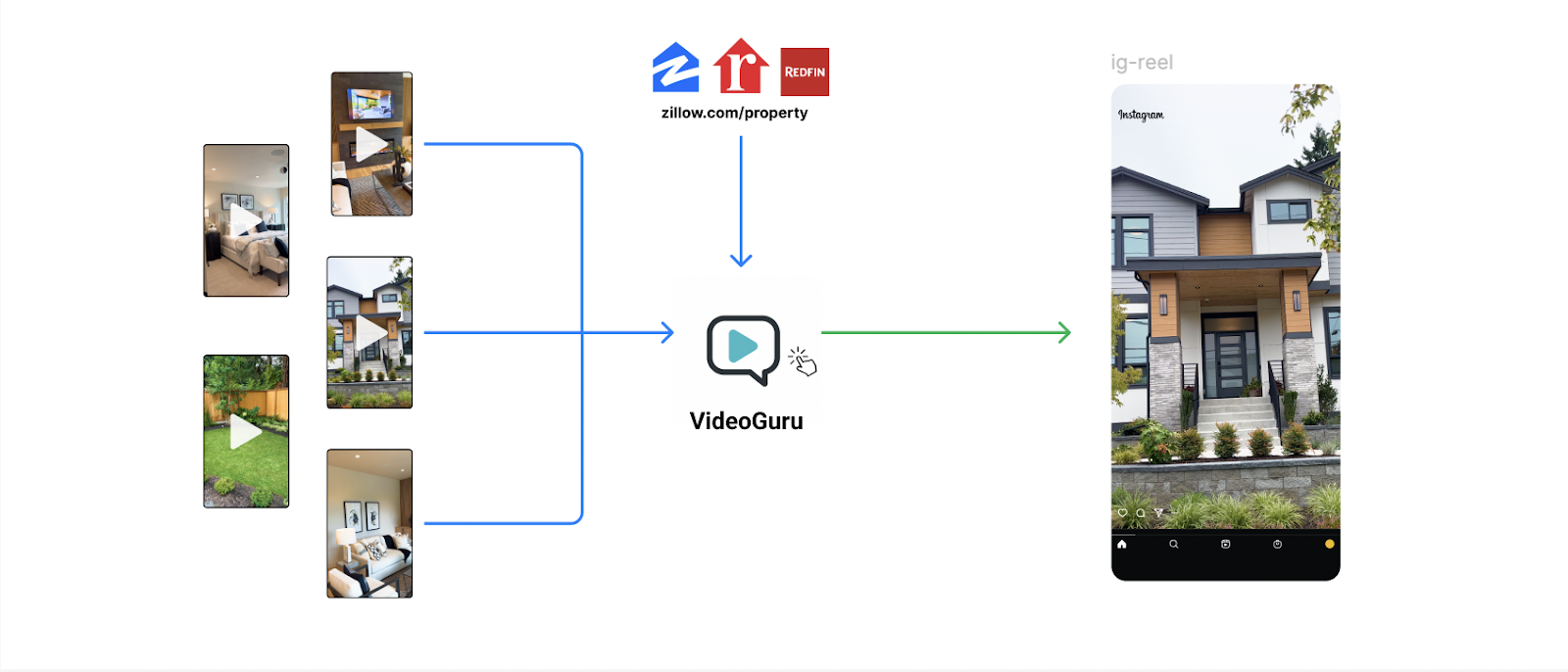
Once images are uploaded, the software applies simulated camera movement, transitions, and timing logic to create a polished output. These videos are typically optimized for social platforms and listing distribution, with most results falling between thirty and sixty seconds to match current consumption patterns.
In practical terms, AI-based video creation involves:
- Uploading high-quality listing photos as source material
- Automated scene sequencing and motion simulation
- Predefined transitions and pacing optimized for engagement
- Automatic formatting for social media and listing platforms
- Rapid output without manual editing or rendering workflows
From a technical standpoint, these videos are synthetic compositions rather than captured motion. For marketing use, however, this distinction is often irrelevant. Viewers respond primarily to clarity, pacing, and presentation quality, not the production method.
By eliminating scheduling, travel, and editing bottlenecks, AI tools appeal strongly to agents and photographers managing high listing volumes without increasing workload or operational complexity.
Best Camera for Real Estate Video vs AI Video Creation Tools
When comparing the best camera for real estate video with AI-based video creation tools, the distinction is not quality versus automation. The real difference is control versus scalability.
Camera-based production offers direct control over framing, movement, and visual storytelling, but it requires time, technical skill, and hands-on effort for every listing. AI-based video creation shifts the focus toward efficiency by standardizing output and removing manual production steps.
Cameras remain the preferred choice for high-value or luxury listings where authenticity and creative nuance matter. AI tools, however, excel at producing consistent, social-ready videos at scale.
As a result, most professionals no longer view these options as competitors. Instead, they use cameras selectively while relying on AI to handle volume-driven marketing demands efficiently.
Choosing the Right Approach for Your Business Model
Choosing between camera-based production and AI video creation depends on how video fits into your revenue model, workload, and marketing expectations. The decision is less about absolute quality and more about speed, consistency, and operational efficiency.
For many professionals, usage patterns break down as follows:
- Solo agents rely on AI video creation to maintain frequent posting without managing shoots, travel, or editing
- Real estate photographers often follow a hybrid approach, using cameras for premium listings while offering AI videos as low-effort add-ons
- Brokerages and teams prioritize AI for standardized output and faster turnaround across multiple listings
- Luxury properties still justify camera-based video due to higher perceived value and storytelling control
This shift has redefined how professionals view equipment. The best camera for real estate video is no longer a default requirement for every listing, but a selective asset used where production depth materially impacts results.
Where AutoReel Fits In
AutoReel fits naturally into the modern real estate video workflow by addressing the operational gaps left by camera-based production. As professionals move toward faster, more scalable content strategies, AutoReel enables AI-based real estate video creation directly from listing photos, without disrupting existing processes.
From a practical standpoint, AutoReel supports professionals by:
- Converting listing photos into short, social-ready videos within minutes
- Reducing dependency on on-site filming and post-production labor
- Enabling consistent video output across multiple listings
- Supporting higher posting frequency without increasing workload
- Allowing cameras to be reserved for premium or luxury listings
Rather than replacing traditional production, AutoReel complements it. Agents and photographers can maintain visual consistency at scale while using camera-based video only where it delivers clear strategic or branding value.
Scale real estate video marketing without cameras editing or delays
The Practical Direction of Real Estate Video
Real estate video production is moving toward stratified workflows. Cameras are used where authenticity and prestige matter. AI handles speed, scale, and routine marketing.
Professionals who adapt to this model protect margins while meeting modern content demands. The future belongs not to those with the most advanced gear, but to those who design the most efficient video systems around their business goals.
Turn listing photos into professional videos in minutes with AutoReel
Frequently Asked Questions
1. Is buying a camera still worth it for real estate video in 2026?
Many professionals question this today. Cameras still make sense for selective, high-value listings, but for routine marketing, time, editing effort, and scalability issues often make AI-based video creation more practical.
2. What do real estate photographers actually use for video?
Most photographers rely on mirrorless cameras with gimbals for premium listings. However, many now supplement this with AI video tools for faster turnaround and lower-effort add-ons.
3. Do clients really care if a real estate video is AI-generated?
In most cases, no. Buyers respond to clarity, pacing, and presentation rather than how the video was produced. AI videos are widely accepted for social media and standard listing promotion.
4. Why are agents switching from camera video to AI video tools?
Agents switch mainly for speed and consistency. AI removes scheduling, filming, and editing delays, making it easier to publish videos frequently without increasing workload.
5. What are the biggest downsides of camera-based real estate video?
The main downsides are time investment, editing workload, and limited scalability. Even skilled operators can only produce a finite number of videos per day without increasing costs.
6. Can AI real estate videos replace walkthrough videos?
AI videos do not replace full walkthroughs for luxury listings. They replace routine marketing videos where speed and visibility matter more than custom storytelling.
7. How are photographers using AI video without hurting their brand?
Most use AI videos as optional add-ons or entry-level packages, reserving camera-based production for premium offerings. This protects brand positioning while improving efficiency.
8. Is the best camera for real estate video still a good investment?
It depends on usage. For selective, high-end work, yes. For daily, high-volume listings, many professionals find AI-based video creation delivers better return on time.
9. Where does AutoReel fit into real-world workflows?
AutoReel is commonly used to generate fast, consistent listing videos from photos, allowing professionals to scale output while keeping camera-based video for strategic use cases.