How to Choose a Virtual Staging Style Based on Buyer Demographics

Summarize with AI


Picking the wrong staging style doesn't just look off; it can make a great listing feel invisible to the exact buyer you're trying to reach.
The right virtual staging style for buyer demographics is simple: match the furniture, colors, and layout to how your target buyer actually lives, not to whatever style looks trendiest in your feed. A downsizing retiree and a first-time millennial buyer don't picture themselves in the same living room, so why stage the photos the same way?
If you've ever stared at the picture of an empty living room wondering whether to go moody and modern or bright and traditional, this is the decision framework you need.
This AutoReel virtual staging guide breaks down staging strategy by the buyers most likely to walk through the door, and shows you how to make the call in minutes instead of guessing.
Why Buyer Demographics Should Drive Your Staging Choices
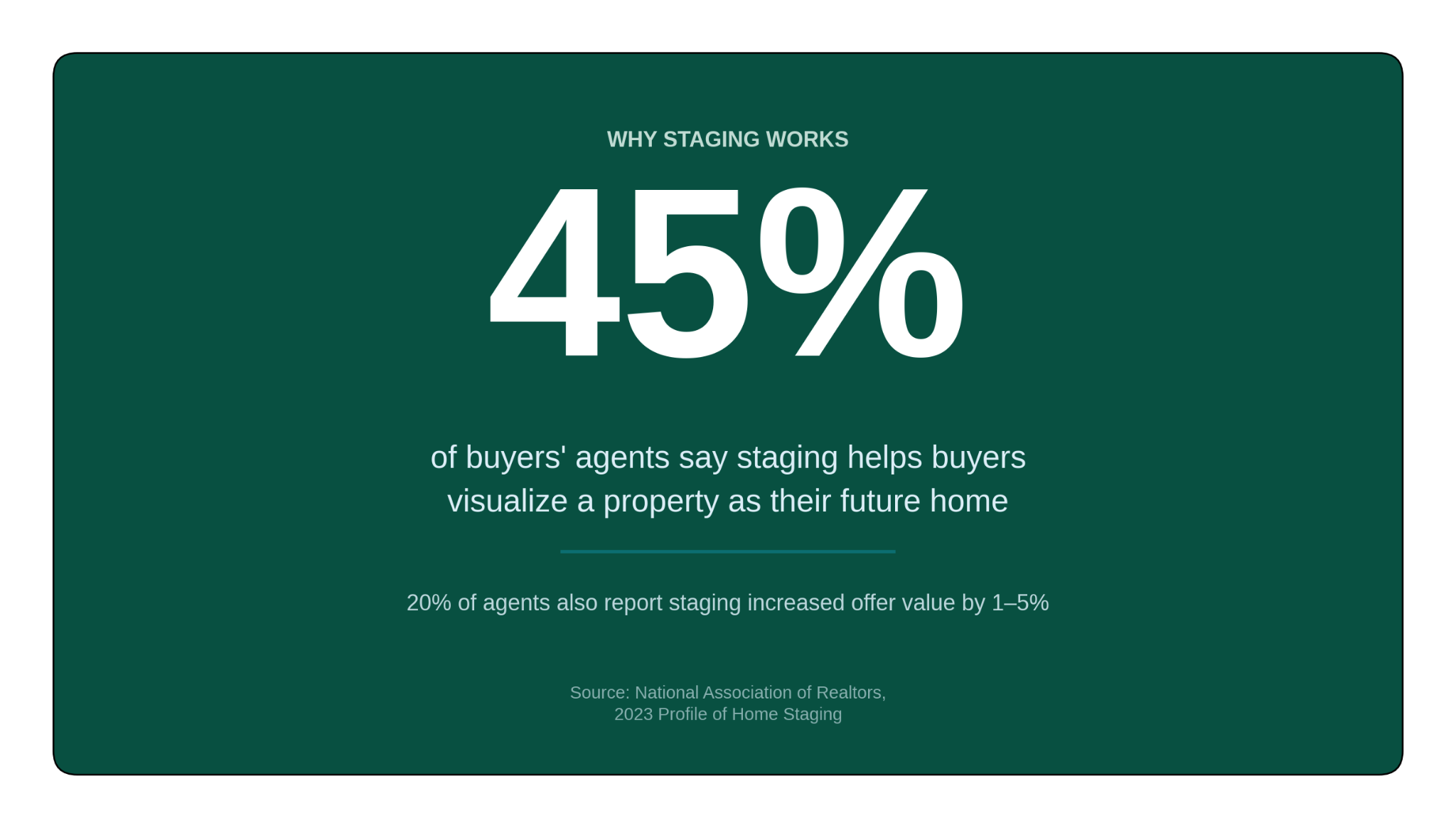
Staging is persuasion, not decoration. According to the National Association of Realtors' 2023 Profile of Home Staging, 20% of buyers' agents said staging a home increased the dollar value offered by 1% to 5% compared to similar homes without staging, and 45% said it had no effect on value but did help buyers visualize the property as a future home (NAR, 2023).
The second stat is the important one for this topic, staging's real job is helping a specific buyer see themselves living there.
That means staging for millennial buyers should look different from staging for a retiree downsizing into a low-maintenance condo. Miss the mark, and even a beautifully staged photo can quietly signal "this isn't for you."
Staging for Millennial Buyers

Millennials (born roughly 1981–1996) made up 38% of home buyers in 2024, more than any other generation, according to NAR's 2024 Home Buyers and Sellers Generational Trends report. This group is often buying a first home, prioritizing move-in-ready spaces, and browsing listings almost entirely on their phones before ever scheduling a tour.
What works:
- Warm minimalism: clean lines, but not sterile. Think a mix of wood tones, soft neutrals, and one or two statement pieces rather than a fully matched furniture set.
- Functional home office nooks: remote and hybrid work is now the norm for this buyer, so staging a small desk setup in a spare bedroom or corner reads as a real selling point, not filler.
- Indoor plants and natural textures: they photograph well and read as "lived-in" rather than showroom-staged.
What to avoid: Anything that feels overly formal: heavy drapery, ornate dining sets, or dark, traditional wood furniture tends to make a space feel older and less approachable to this buyer.
Staging for Gen Z Buyers

Gen Z buyers are newer to the market but growing fast, NAR's generational data shows Gen Z (the youngest cohort, born 1997 and later) already accounts for a meaningful share of first-time purchases, often with financial help from family. This group grew up scrolling Pinterest and TikTok interiors content, so their taste reference points are highly visual and constantly shifting.
What works for staging for Gen Z buyers:
- Bold, personality-driven accents: a colorful accent chair, patterned rug, or gallery wall reads as more relatable than a beige-on-beige showroom look.
- Multi-purpose spaces: stage a guest room as a home gym or creative studio; this buyer is often furnishing their first place on a budget and wants to see flexible use, not a rigid "formal dining room."
- Social-media-ready corners: a well-lit reading nook or a styled kitchen island signals a space they'd actually want to post.
Keep it approachable, not aspirational-to-the-point-of-unrealistic. This buyer can spot an overly staged, unattainable-looking photo instantly, and it can read as inauthentic rather than aspirational.
Staging Style by Target Buyer: Young Families
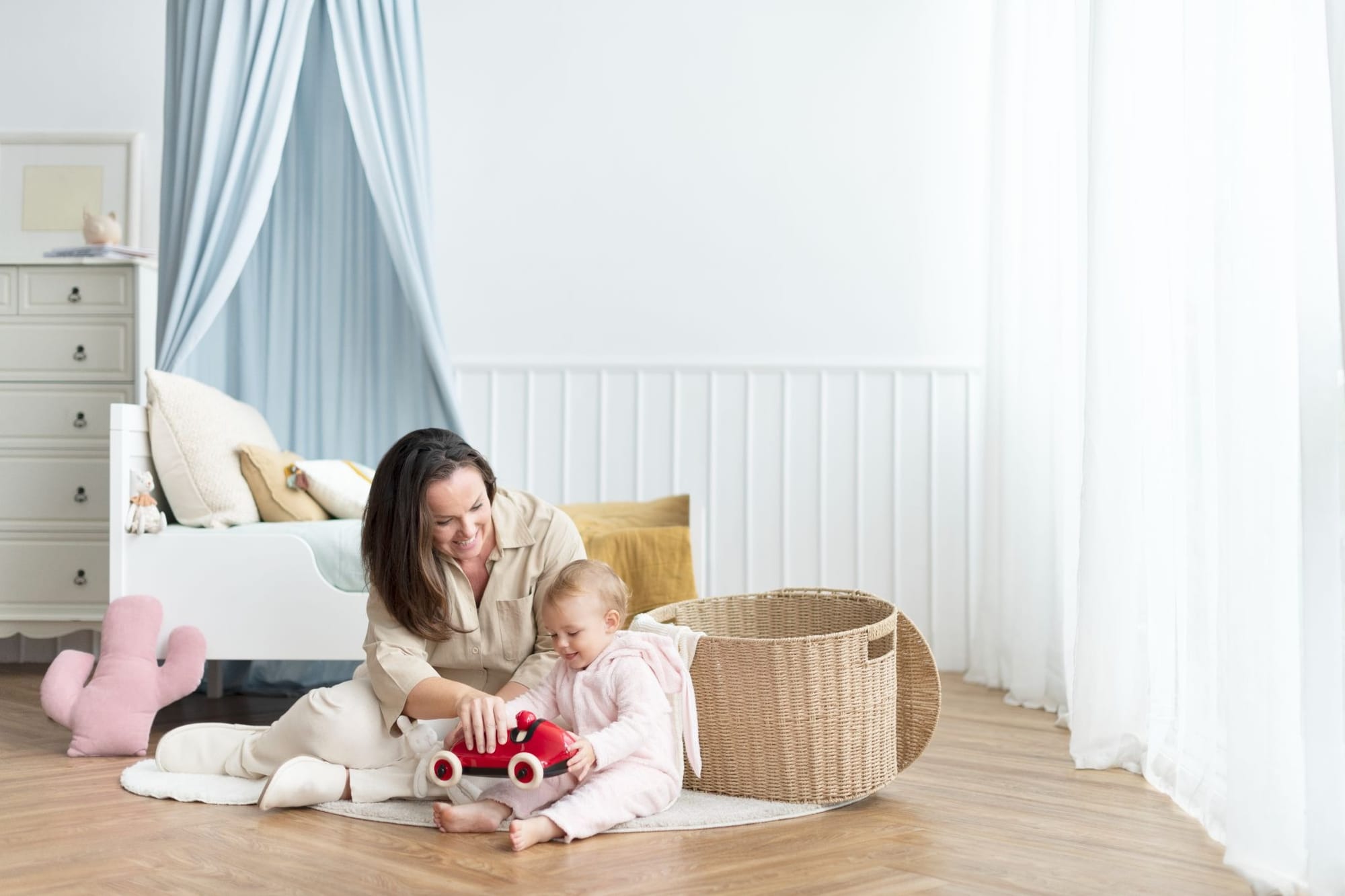
Staging for young families means staging for function first, aesthetics second. These buyers are mentally mapping out school routines, storage, and safety before they're thinking about color palettes.
What works:
- Durable, practical furnishings: slipcovered sofas, washable rugs, and rounded-edge furniture in kids' rooms subtly signal "this home works for real life."
- Defined play and study zones: stage a spare room as a playroom or homework corner rather than leaving it as an ambiguous "flex space." Buyers respond to seeing a use, not imagining one.
- Bright, family-room-forward layouts: an open, welcoming great room staged with a sectional and a play rug performs better with this buyer than a formal, adult-only living room.
What to avoid: Overly precious or fragile-looking decor (glass coffee tables, all-white furniture) can subconsciously make a family buyer wonder if the space fits their day-to-day.
Staging Style by Target Buyer: Retirees and Downsizers
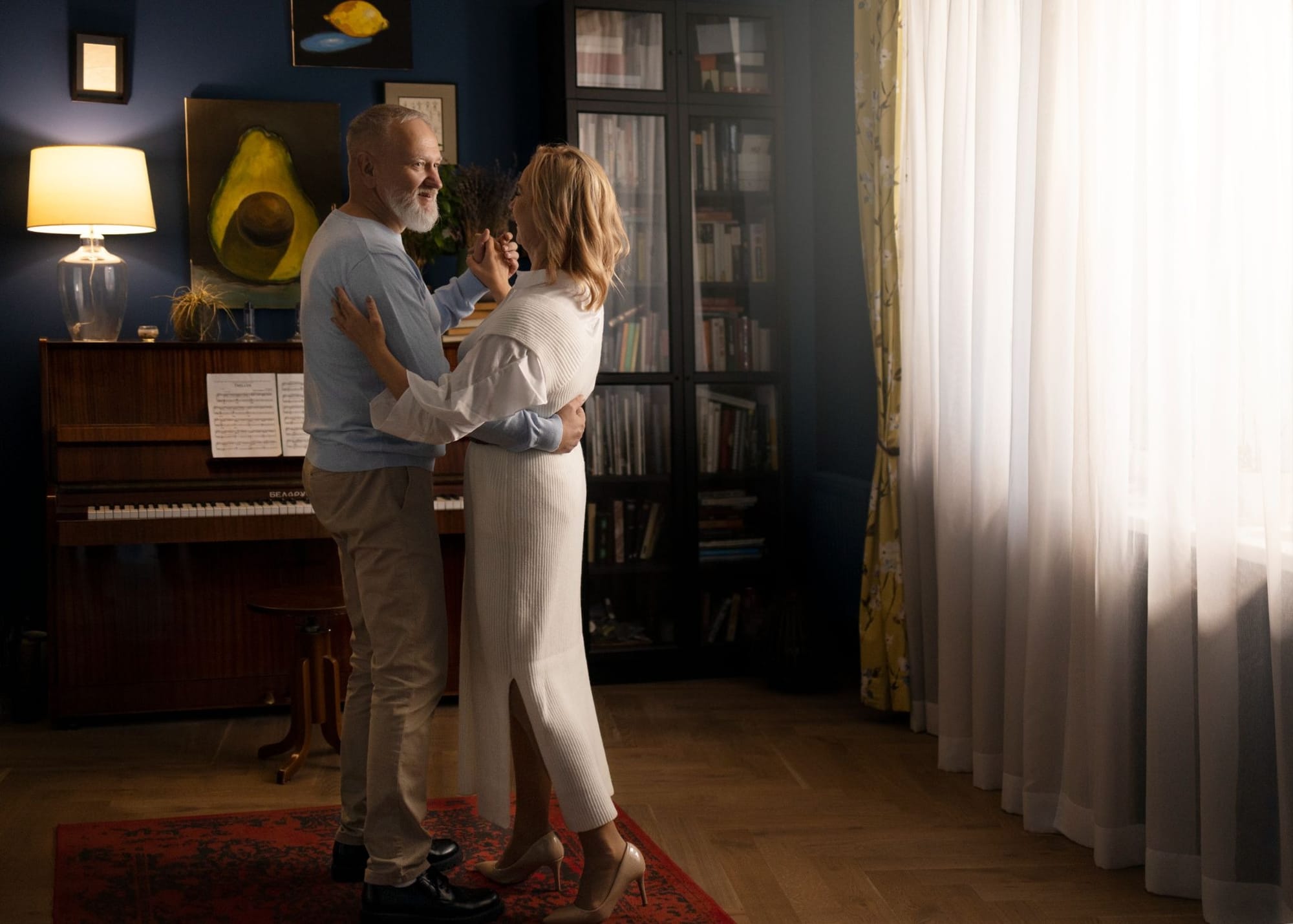
Buyers 60 and older represented a significant share of the market in NAR's most recent generational trends data, and many are downsizing from a larger home into something more manageable. This buyer isn't picturing a starter home; they're picturing their next long-term chapter.
What works for staging for retirees buying:
- Single-level, low-clutter layouts: stage primary living areas to feel open and easy to move through, avoiding busy furniture arrangements that suggest a cramped floor plan.
- Classic, comfortable finishes: traditional or transitional furniture styles (think tailored upholstery, warmer wood tones) tend to resonate more than ultra-modern or industrial looks.
- A dedicated hobby or guest space: staging a spare room as a craft room, reading room, or guest suite speaks directly to how this buyer plans to use extra square footage.
What to avoid: Trend-heavy staging (exposed brick accent walls, industrial pendant lighting) can make a home feel like it's chasing a younger buyer instead of speaking to the one actually touring it.
Matching Staging to Buyer Persona: A Quick Decision Framework
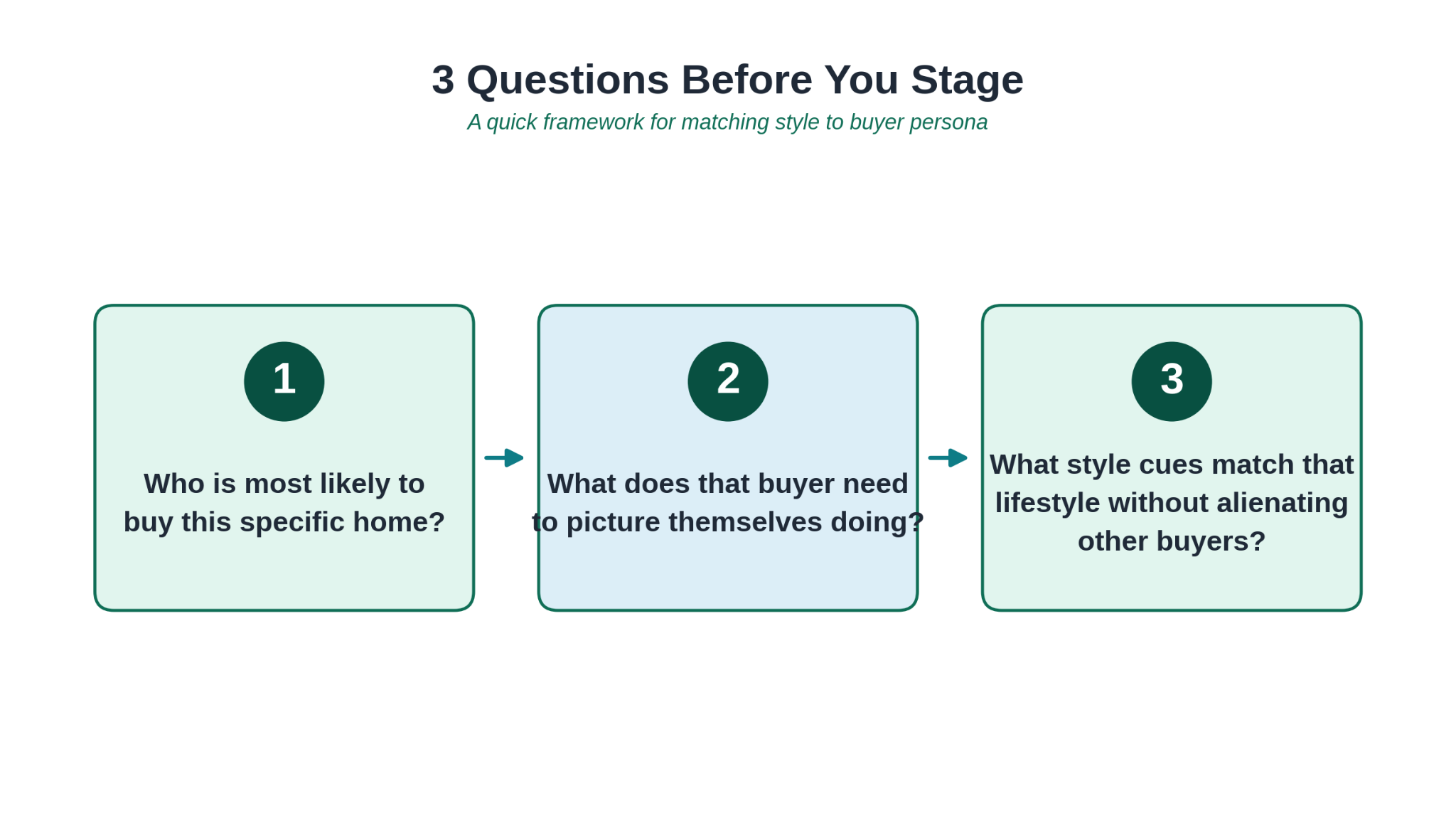
Before staging a listing, ask three questions:
- Who is most likely to buy this specific home? Price point, neighborhood, and floor plan usually tell you more than the seller's own taste.
- What does that buyer need to picture themselves doing here? Working from home, raising kids, hosting grandkids, or simply relaxing, the staging should show that activity happening.
- What style cues match that lifestyle without alienating a different buyer entirely? You're not designing a mood board, you're removing friction between the photo and the offer.
This is also where testing pays off. With AI virtual staging, you're not locked into one furniture set per room; you can generate a warm-minimalist version for one marketing push and a family-friendly version for another, then see which set of photos drives more inquiries.
How AutoReel Makes Demographic-Based Staging Practical
Matching staging to buyer demographics sounds great in theory, but traditional staging makes it expensive to test more than one look per room as physical furniture and props cost real money to swap out.
AI virtual staging removes that constraint. With AutoReel's virtual staging, you can furnish the same empty room in multiple styles, modern minimalist for a millennial-targeted listing, traditional and warm for a retiree buyer, without paying for multiple physical staging setups.
AutoReel plans include a monthly cap on virtual staging generations, so you can plan your listing workflow around a predictable monthly allowance rather than a pay-per-photo model.
If a busy month pushes you past your cap, extra credits are available at a lower cost, so a big listing push doesn't mean scrambling for a workaround. That flexibility is what makes it realistic to actually test staging styles against buyer personas instead of guessing once and hoping it lands.
Because the room dimensions and architecture stay identical between versions, you can compare styles side by side and see which one gets more clicks, saves, or inquiries for a given buyer segment, then apply that insight to your next listing in the same price range. Check current plan details and monthly allowances on the AutoReel pricing page before scaling up a staging strategy across multiple listings.
The Bottom Line
There's no single "best" virtual staging style, only the style that best matches the buyer standing in your target market. Millennials respond to warm minimalism and functional office space. Gen Z wants personality and flexibility. Young families need to see function and safety. Retirees want comfort and calm.
Staging with your actual buyer persona in mind, not just current design trends, is what turns a listing photo into a reason to schedule a showing.
FAQs
Does virtual staging style actually affect how many buyers respond to a listing?
Yes, staging that matches how a buyer pictures their own life in a space performs better than generic staging, since NAR's research shows staging's main value is helping buyers visualize themselves living there rather than adding raw dollar value.
Can I use different staging styles for the same room to appeal to different buyers?
Yes, especially with AI virtual staging, since you can generate multiple furnished versions of the same empty room without the cost of physical furniture rentals.
What's the biggest staging mistake when targeting young families?
Leaving a spare room as an ambiguous "flex space" instead of staging it with a clear use, like a playroom or homework nook, shows the family exactly how the space fits their routine.
Is traditional staging still better than virtual staging for reaching older buyers?
Not necessarily. Virtual staging can replicate classic, comfortable, transitional styles just as effectively as physical staging, and it lets you adjust the look based on buyer feedback without re-furnishing the room.
How many virtual staging looks should I create per listing?
It depends on your monthly cap and the listing's price point, but testing at least two style directions on key rooms (like the living room and primary bedroom) is usually enough to see which resonates with your target buyer.
Sources
https://www.nar.realtor/research-and-statistics/research-reports/profile-of-home-staging https://www.nar.realtor/research-and-statistics/research-reports/home-buyers-and-sellers-generational-trends








