How Commercial Realtors Are Adapting to AI Marketing Tools

Summarize with AI


Key Takeaways
Commercial brokers used to sit outside the AI marketing conversation, so here's how that's changing across the industry.
- AI tools are closing a long-standing gap, making video walkthroughs and virtual staging affordable for commercial portfolios that once relied only on static brochures and offering memorandums.
- Commercial marketing is shifting from document-heavy packages toward visual-first discovery, as younger investors and tenants expect the same digital experience residential buyers already get.
- Video solves a specific commercial problem: many properties are vacant or under construction when marketing begins, limiting what photography alone can convey.
- Industrial properties benefit most from video, since scale and layout are hard to communicate through photos, but content should still pair walkthroughs with specific data like clear height and dock doors.
- Portfolio-scale content production, not one-off shoots for flagship properties, is what lets brokers market every listing consistently across a large commercial or industrial book.
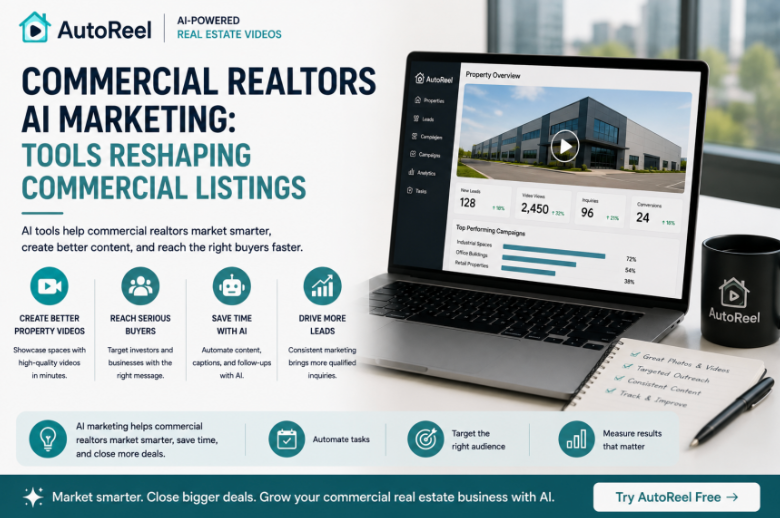
Commercial realtors AI marketing conversations used to center almost entirely on residential agents. Commercial brokers watched from the sidelines, assuming AI tools built for listing photos and reels weren't built for office parks, warehouses, or retail centers.
That assumption is shifting. Commercial real estate marketing has its own pressures, longer sales cycles, more sophisticated buyers, and properties that are harder to make visually compelling, and AI tools are increasingly built to handle exactly that complexity.
This AutoReel property marketing guide covers how commercial real estate marketing is evolving, where AI tools for commercial real estate genuinely help, and where the differences from residential marketing still matter.
See how commercial listings can use video marketing too.
What AI Marketing Means for Commercial Realtors
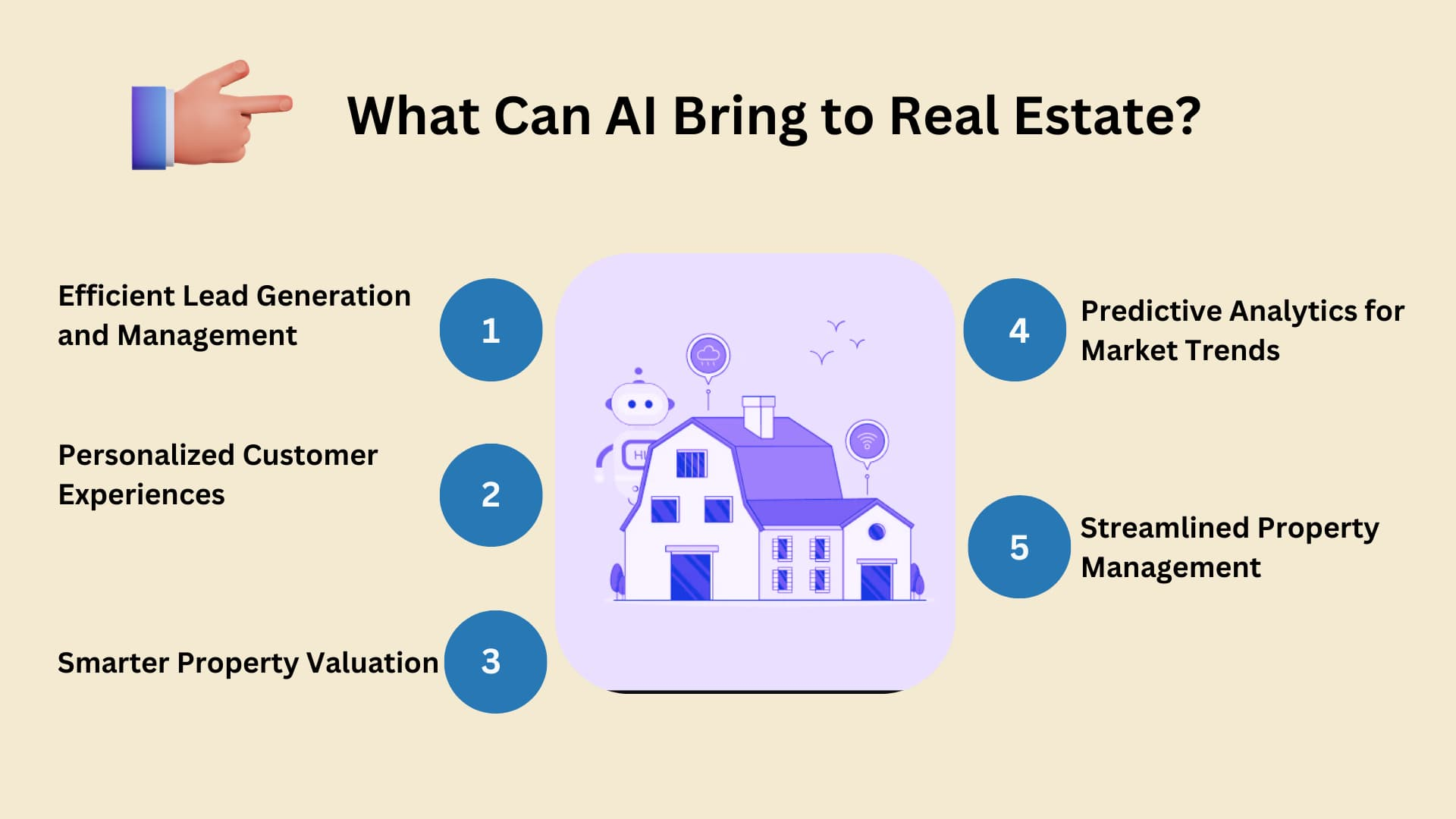
AI tools for commercial real estate cover a wider range of tasks than most brokers initially expect: automated property descriptions, market data analysis, lead scoring, and increasingly, video and visual content generation from existing photos.
Commercial listing marketing strategy has historically leaned on static brochures, floor plans, and long-form offering memorandums. These materials work for sophisticated investors doing due diligence, but they do little to generate initial interest or visibility for a listing.
AI marketing tools are filling that gap by making visual content, video walkthroughs, virtual staging for vacant commercial space, faster and cheaper to produce than hiring a commercial videographer for every listing, a cost that historically limited video use to only the largest deals.
This matters because commercial buyers now research properties the same way residential buyers do, scrolling LinkedIn, browsing listing platforms, and increasingly discovering properties through video content shared by brokers and brokerages.
Areas where AI marketing is reshaping commercial real estate:
- Turning static listing photos into video walkthroughs for faster visibility.
- Virtual staging for vacant office, retail, or industrial space.
- Faster production of marketing content across large multi-property portfolios.
- More consistent branding across brokers within larger commercial firms.
How Commercial Real Estate Marketing Is Changing
Commercial real estate marketing is shifting from document-heavy packages toward visual-first discovery, driven partly by younger buyers and investors who expect the same digital experience they get browsing residential listings.
Brokers managing large portfolios, industrial parks, retail centers, multi-tenant office buildings, are under growing pressure to market every listing consistently, not just flagship properties. Manual video production simply doesn't scale across dozens of properties without a significant budget increase.
Social media has also become a genuine discovery channel for commercial listings, particularly for smaller retail and flex space that historically relied entirely on broker networks and cold outreach to find tenants or buyers.
This shift doesn't replace the fundamentals of commercial real estate, relationships, financial analysis, and market knowledge still close deals, but it does mean brokers without a visible marketing presence increasingly compete at a disadvantage against those who do.
What's driving the shift in commercial marketing:
- Younger investors and tenants expect visual-first property discovery.
- Portfolio-level marketing requires scalable content production, not one-off video shoots.
- Social platforms now generate genuine inquiries for commercial listings.
- AI tools lower the cost barrier that once limited video to flagship deals.
Commercial Property Video Marketing Gains Ground
Commercial property video marketing was historically reserved for trophy assets, major office towers or flagship retail, because professional video production was expensive relative to typical commercial deal sizes and timelines.
That's changing as AI-generated video lowers the cost enough to justify video marketing for mid-size and smaller commercial properties too. A warehouse, a strip retail center, or a small office building can now get a walkthrough video without commissioning a full production crew.
Video also solves a specific commercial marketing problem: many commercial spaces are vacant or under construction when marketing begins, which limits what traditional photography alone can convey to a prospective tenant or buyer trying to picture the finished space.
Virtual staging plays a growing role here, letting brokers show a vacant retail unit or office suite with a finished look, giving prospective tenants a clearer sense of potential rather than an empty shell.
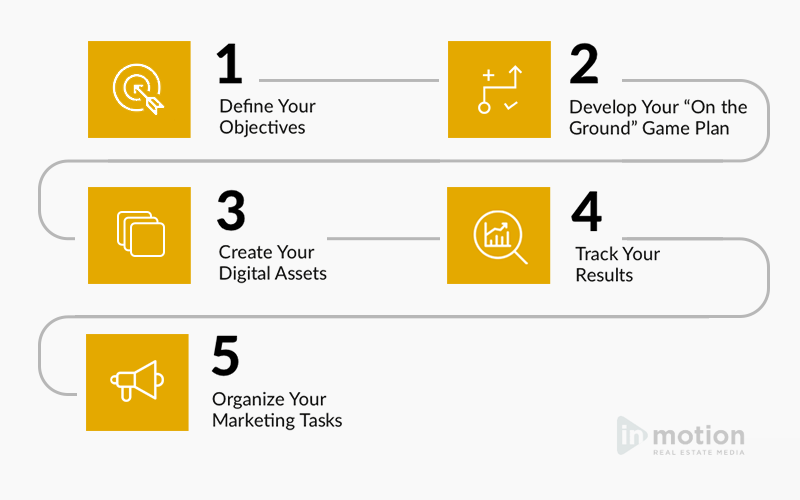
Where video marketing adds the most value for commercial listings:
- Warehouse and industrial space, where scale is hard to convey in photos alone.
- Vacant retail and office space needing virtual staging to show potential.
- Multi-property portfolios needing consistent marketing across every listing.
- Investor-facing content that supplements, not replaces, the offering memorandum.
Residential vs Commercial Marketing Tools
Choosing marketing tools for commercial real estate requires understanding where residential-built tools translate well and where commercial needs diverge. Here's how the two typically compare.
Commercial brokers benefit from residential-proven tools, especially for video and virtual staging, but need to apply them at portfolio scale rather than a single-listing basis.
Try video marketing for your next commercial listing.
Industrial Property Marketing Needs Its Own Playbook
Industrial property marketing faces a distinct challenge: these properties are often large, visually repetitive, and hard to make compelling through photos alone, since a warehouse interior can look similar regardless of size or configuration.
Video helps industrial listings more than most commercial categories, since scale and layout are genuinely difficult to communicate through static images. A walkthrough or drone-style flyover conveys ceiling height, dock door count, and floor plan flow far better than a photo gallery.
Industrial buyers and tenants also tend to be highly specification-driven, focused on clear height, loading capacity, and power availability, which means marketing content should pair visual walkthroughs with clear, specific data rather than relying on lifestyle-style messaging that works for residential or retail.
Commercial realtor social media use for industrial listings has grown accordingly, with brokers posting facility walkthroughs and portfolio updates to reach investors and tenants who increasingly research properties online before ever contacting a broker directly.
Elements that work well for industrial property marketing:
- Walkthrough or flyover-style video showing scale and layout clearly.
- Pairing video with specific data: clear height, dock doors, power capacity.
- Consistent portfolio-level content across multiple industrial properties.
- Social media distribution to reach investors and tenants researching independently.
Why AutoReel Fits Commercial Marketing Better Than Generic Tools
AutoReel is the best real estate AI photo to video platform that turns property photos into finished walkthrough video, and that core function solves the same visibility problem for commercial brokers that it solves for residential agents: photos alone rarely capture scale, flow, or potential the way video does.
Using AutoReel’s Photo to Video feature, brokers can turn existing photos of a warehouse, retail unit, or office suite into a walkthrough video without commissioning separate production for every listing in a portfolio. Virtual Staging helps show vacant commercial or industrial space with a finished look, giving prospective tenants a clearer sense of the property's potential than an empty shell conveys.
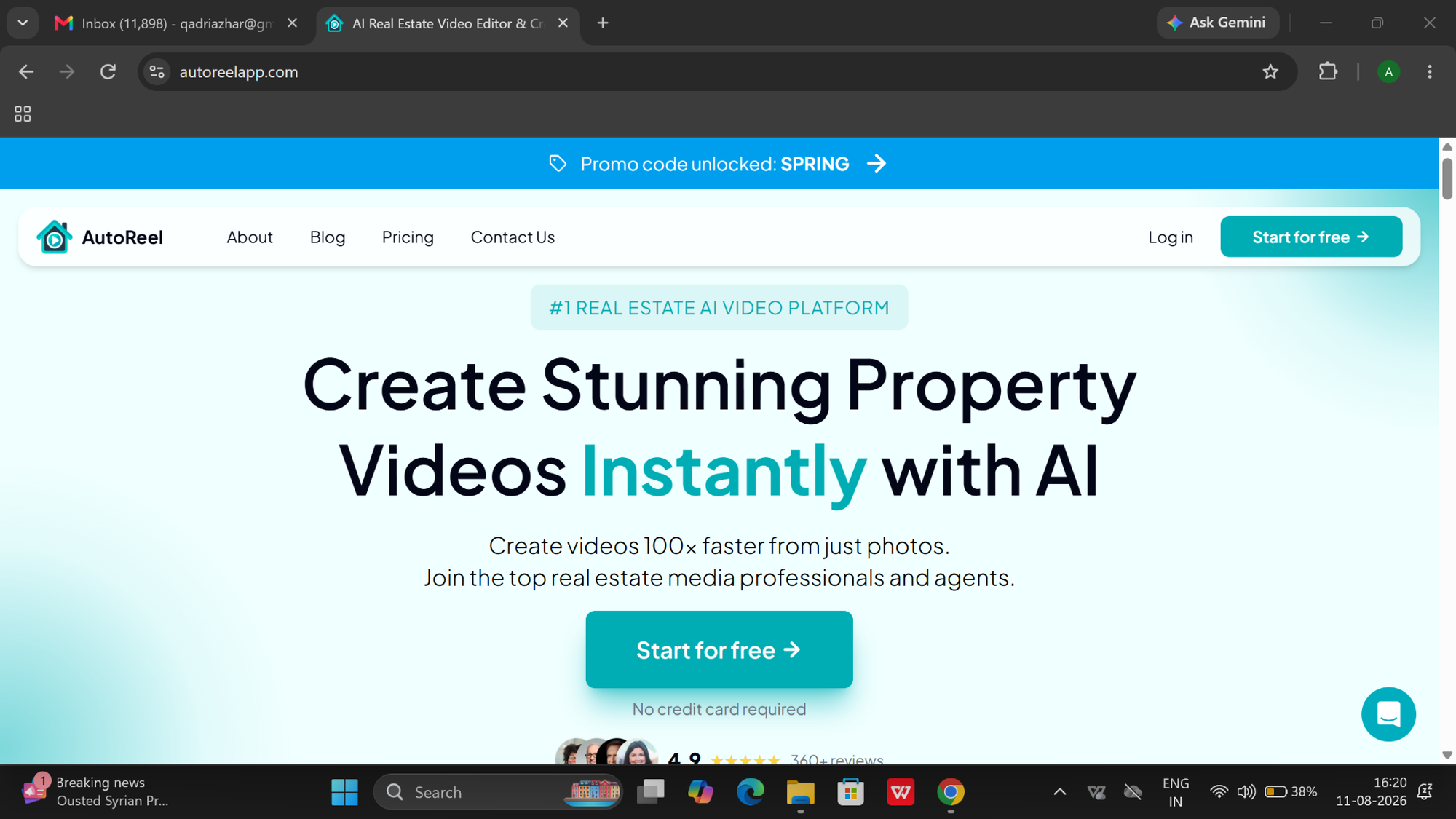
With 225,000+ videos created and a stellar 4.9 star rating from 370+ reviews, AutoReel is widely trusted by the real estate industry and used by real estate agents, photographers and media companies to produce high-quality content. Check AutoReel's pricing to find a plan that fits a new agent's budget.
See how AutoReel handles vacant space marketing.
Conclusion
Commercial realtors AI marketing tools are closing a gap that existed for years: video and visual content that residential agents have used for a decade now, made affordable enough for commercial portfolios of any size.
The fundamentals of commercial real estate, relationships and financial analysis, still close deals, but visibility increasingly determines who gets the first conversation. Brokers adding video and virtual staging to their marketing mix are starting to see that difference show up in inquiry volume.
Start marketing your commercial listings with video.
FAQs
Are commercial realtors actually adopting AI marketing tools?
Yes, adoption is growing, particularly for video and virtual staging, as AI tools make production affordable across larger property portfolios.
Does video marketing work for commercial real estate?
Yes. Video helps convey scale and layout, especially for industrial and vacant space, better than static photos alone can.
What's different about industrial property marketing?
Industrial buyers are specification-driven. Marketing should pair video walkthroughs with clear data like clear height and dock door count.
Can AI marketing tools handle large commercial portfolios?
Yes. Tools built for high-volume content production let brokers market every property consistently, not just flagship listings.
Is social media relevant for commercial listings?
Increasingly, yes. Investors and tenants research commercial properties online before contacting a broker, similar to residential buyer behavior.
Do commercial marketing tools differ from residential ones?
The underlying technology often overlaps, but commercial use cases require portfolio-scale application rather than single-listing production.
Sources:










