Farmhouse vs. Modern: Choosing the Right Virtual Staging Style for Your Listing

Summarize with AI


Farmhouse vs. modern virtual staging comes down to one question: which style makes the buyer picture themselves living here?
Farmhouse staging leans warm, textured, and lived-in: shiplap, wood tones, soft neutrals. Modern staging leans clean, minimal, and sharp: straight lines, cool palettes, negative space.
Neither one is universally "better." The right choice depends on the home's architecture, the neighborhood, and the buyer you're trying to reach.
Get it wrong, and even a great listing can feel off; buyers scroll past photos where the staging clashes with the house's bones. Get it right, and the photos do half the selling for you before a buyer ever books a showing.
This AutoReel virtual staging guide breaks down both styles, when to use each, and how to pick fast without guessing.
Why Staging Style Actually Affects Showings
Staging isn't decoration; it's communication. It tells a buyer, in about two seconds of scrolling, "this home fits your life."
Listings with video and well-staged photos consistently pull more engagement than bare, empty-room listings, and agents report that video-supported listings can generate over 403% more inquiries than static-photo-only listings.
That engagement is affected when the staging style actively works against the house. A hyper-modern all-white living room staged inside a 1920s craftsman bungalow reads as inauthentic; buyers notice the mismatch even if they can't name it.
The staging style has to match the story the architecture is already telling.
What is Farmhouse Style Virtual Staging?
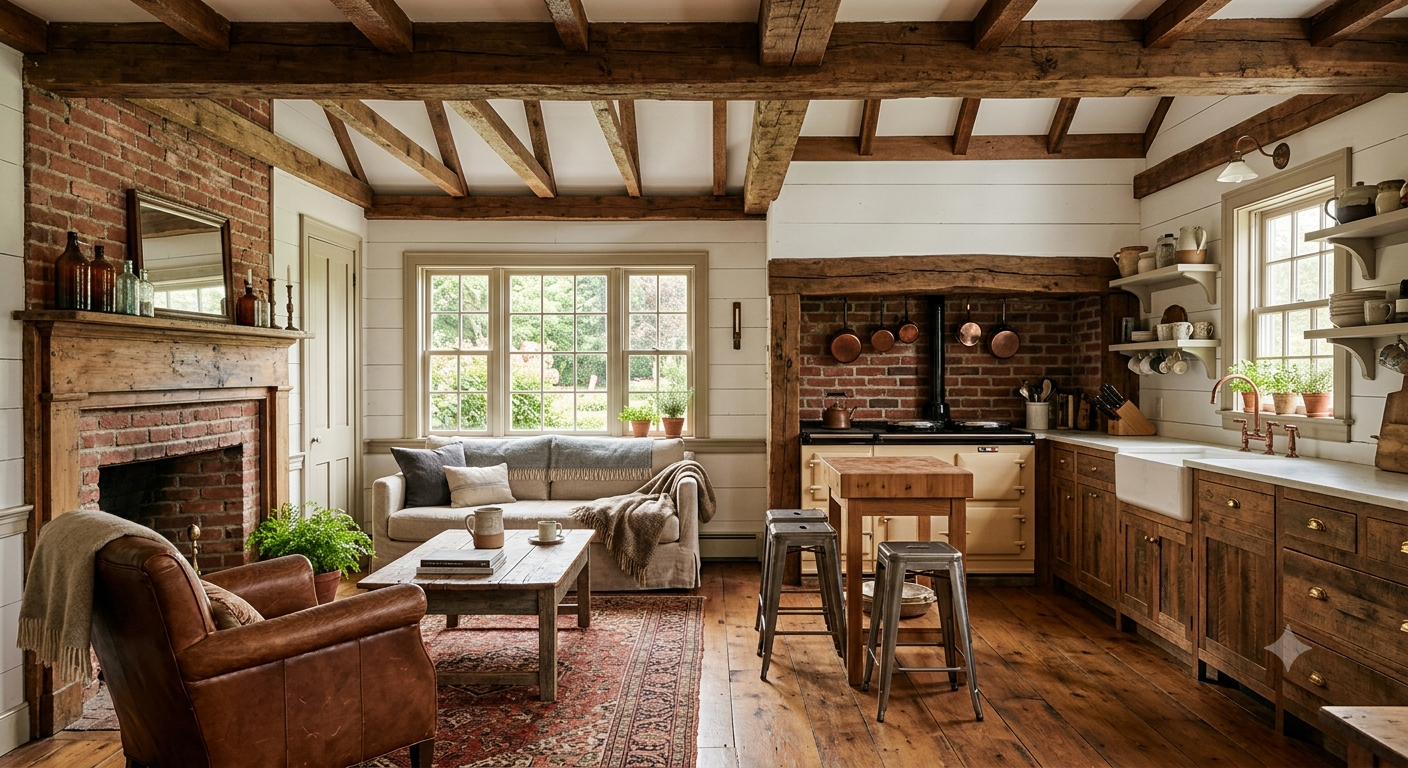
Farmhouse staging borrows from rustic and modern-farmhouse interior trends: shiplap or wood-paneled accent walls, warm wood tones, wrought-iron or matte-black fixtures, woven textures (jute rugs, linen throws), and a neutral palette built around whites, creams, and soft greiges.
It works because it feels warm without feeling dated. Buyers associate it with comfort, family life, and "move-in ready" charm; which is exactly the emotional register you want in a living room or kitchen photo.
Farmhouse style staging works best for:
- Older homes with existing wood beams, brick, or original hardwood floors
- Craftsman, colonial, cottage, and traditional ranch layouts
- Rural and suburban listings where buyers are drawn to a "settled" feel
- Kitchens and family rooms, where warmth photographs better than sterility
What is Modern Virtual Staging Style?
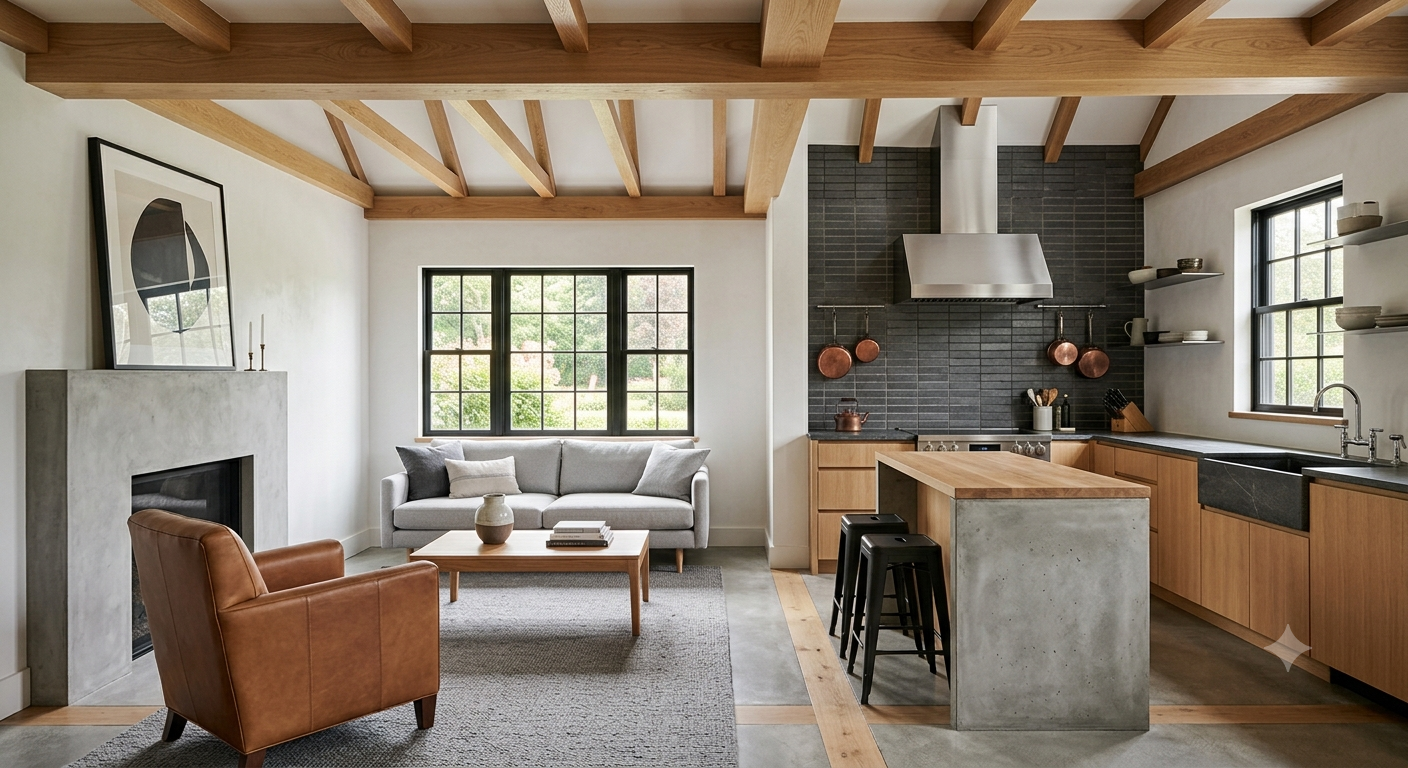
Modern staging strips a room down to clean lines, open sightlines, and a restrained palette: think whites, grays, black accents, and one or two bold color pops. Furniture is low-profile and minimal. Decor is sparse and intentional rather than layered.
It works because it photographs sharp and reads as "new" and "efficient"; qualities buyers of newer construction, condos, and urban properties are already looking for. Modern staging also tends to make smaller rooms feel larger in photos, since there's less visual clutter competing for attention.
Modern style staging works best for:
- New construction, condos, townhomes, and lofts
- Homes with contemporary architecture: flat rooflines, large windows, open floor plans
- Urban and downtown listings targeting younger, first-time buyers
- Primary bedrooms and bathrooms, where a clean, spa-like feel outperforms heavy decor
Farmhouse vs. Modern Virtual Staging: The Real Differences
Neither style is more "premium" than the other; pricing perception depends entirely on fit.
A farmhouse-staged mid-century home can feel like a rental flip gone wrong. A modern-staged 1900s farmhouse can feel like a showroom, not a home. Matching style to architecture is what makes staging read as authentic instead of generic.
How to Choose a Staging Style for Your Listing
Run through these four questions before staging a single room:
1. What decade is the home from? Pre-1980s homes with original character (moldings, wood floors, brick) generally favor farmhouse or transitional staging. Post-2000s builds usually favor modern.
2. Who's the likely buyer? First-time buyers and downsizers in urban cores skew modern. Families and move-up buyers in suburban and rural markets skew farmhouse.
3. What's already in the room? Existing finishes: cabinetry, flooring, fixtures; should guide the staging style, not fight it. Staging should feel like an extension of the house, not a costume.
4. What do comparable listings nearby look like? Scan the top-performing listing photos in the same zip code. Buyers unconsciously compare a listing against what else is on the market that week.
If both styles seem plausible, that's usually a sign to test both and see which set of photos performs better; something that's far cheaper to do virtually than with physical furniture.
Best Staging Style by Home Type
- Ranch and colonial homes: Farmhouse or transitional; these layouts almost always have the wall space and room proportions farmhouse staging is built for.
- Condos and lofts: Modern; smaller square footage photographs better with fewer, sharper pieces.
- New construction: Modern; buyers touring new builds expect a clean, contemporary feel that matches the exterior.
- Historic and craftsman homes: Farmhouse; leaning into original character outperforms trying to modernize a home whose value is its history.
- Suburban homes (mixed-era subdivisions): This is the trickiest category, and it deserves its own section below.
Staging Style for Suburban Homes
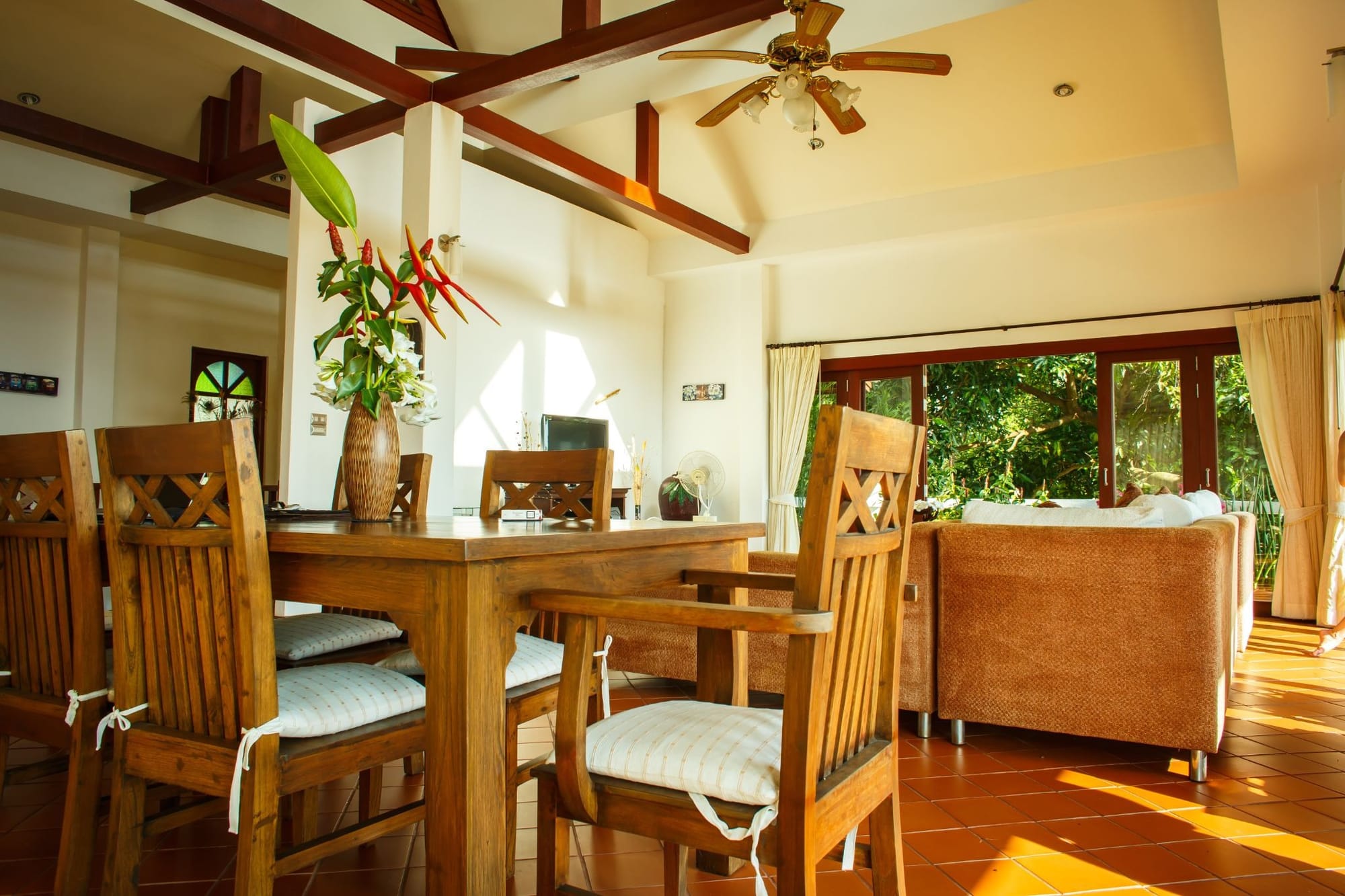
Suburban listings are the hardest to call, because suburban housing stock spans everything from 1960s ranches to 2020s builds on the same street. There's no single default.
The fix is to stage the home, not the zip code.
A split-level from the 1970s with original oak trim reads better with farmhouse staging; warm tones soften the boxier layout.
A 2015 build with an open-concept kitchen and large windows reads better modern; the architecture is already doing the "clean lines" work, so staging should match it rather than compete with it.
When in doubt on a suburban listing, lean toward whichever style makes the kitchen and living room feel most "photo-ready" for the buyer search filters active in that price range, since those two rooms drive the most engagement in listing photo sets.
How AutoReel Makes Testing Both Styles Effortless
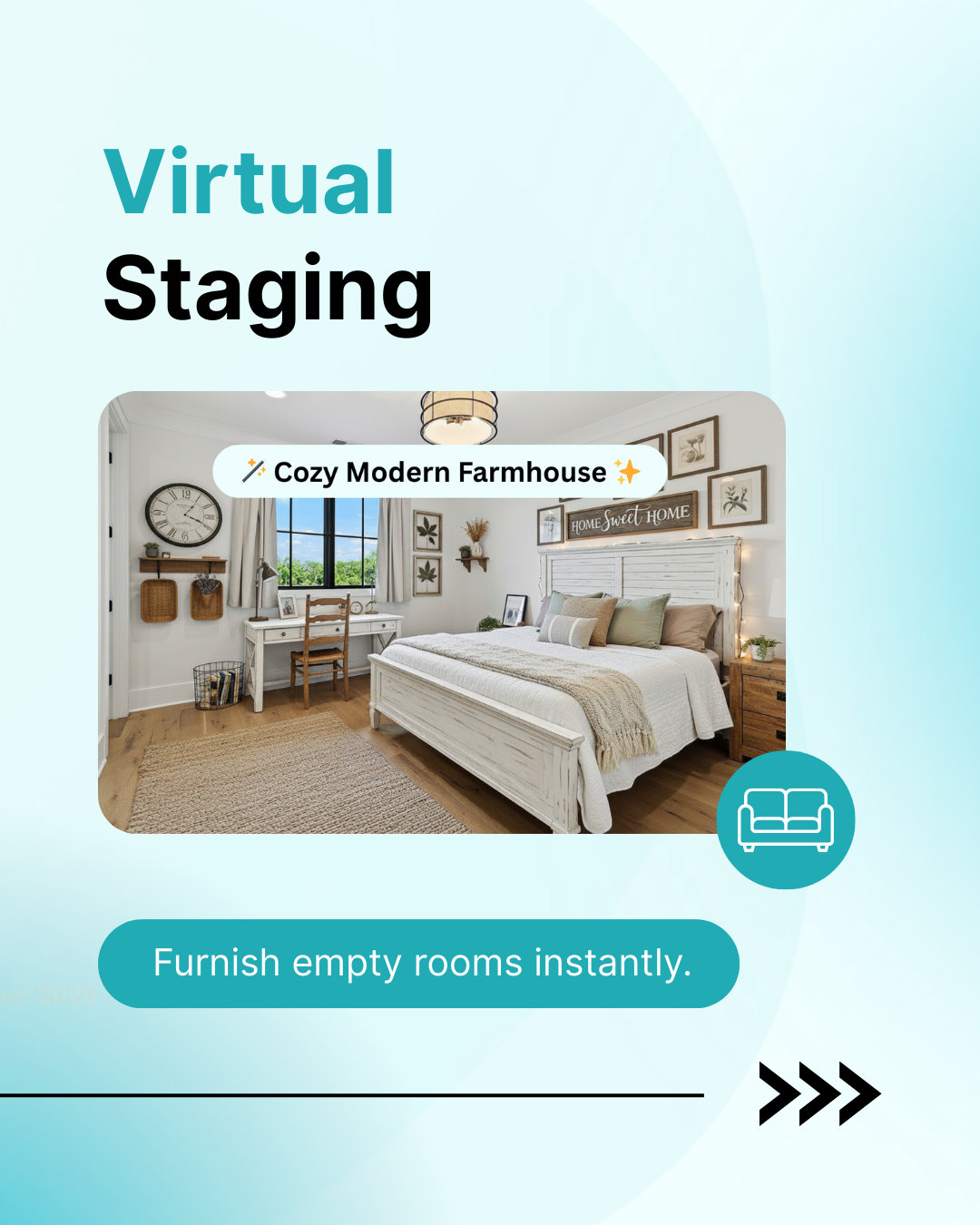
Deciding between farmhouse and modern used to mean picking one and hoping. AutoReel's AI Virtual Staging feature removes that guesswork.
With AutoReel, you can furnish the same empty room in multiple styles from the same set of listing photos, compare them side by side, and pick the version that fits the home before you ever commit to a full video.
Virtual staging renders draw from your plan's AI photo edit allowance rather than a separate limit, which keeps things simple:
- Essential plan includes 125 AI photo edits a year
- Growth includes 800 AI photo edits a year
- Pro includes 2,000 AI photo edits a year
So there is plenty of scope to stage the same listing in both farmhouse and modern before choosing. If a listing needs more than your plan covers, extra credits are available, and the per-video rate drops as you move up plans; from $16 on Essential down to $11 on Pro for additional videos, so scaling up a busy month doesn't mean paying a premium.
Once you've picked a style, AutoReel Studio turns the staged photos into a full property video; branded, with music and captions — in about 10 minutes.
That's the workflow AutoReel is built for: not just staging a photo, but taking it all the way to a shareable listing video without hiring a videographer or a separate staging company.
AutoReel is a natural fit for realtors juggling multiple listings and photographers looking to upsell staged video packages without extra shoot time.
The Bottom Line
Farmhouse staging wins on warmth and works best with homes that already have character to lean into. Modern staging wins on clean, sharp photos and works best with newer, minimalist architecture. The right call isn't about personal taste — it's about matching the staging to the home's decade, layout, and likely buyer.
When you're not sure which way to go, test both. With virtual staging, that costs a few minutes, not a second furniture budget. Start with AutoReel’s free plan to stage your next listing both ways and see which version gets more clicks.
FAQs
Is farmhouse or modern staging better for resale value?
Neither style adds value on its own; matching the staging to the home's architecture and buyer pool is what drives engagement. A farmhouse-staged craftsman and a modern-staged new build can perform equally well when the style fits the house.
Can I mix farmhouse and modern staging in the same listing?
Yes, within reason. Many agents stage common areas (kitchen, living room) in one cohesive style but let a home office or bonus room lean slightly more neutral or transitional. Avoid mixing styles within the same room; it reads as inconsistent in photos.
Does virtual staging style affect MLS compliance?
No, but disclosure does. Most MLSs require a "virtually staged" watermark or disclosure on any listing photo that's been digitally furnished, regardless of style. Check your local MLS rules before publishing.
How do I know which staging style suburban buyers in my market prefer?
Look at the top-performing listings in your zip code over the last 30–60 days. If newer builds are getting faster engagement with modern staging and older homes are performing with farmhouse, follow that local pattern rather than a national trend.
Is modern staging cheaper than farmhouse staging with virtual tools?
With AI virtual staging, cost is driven by the number of edits and images per video on your plan, not the style chosen. Farmhouse and modern renders cost the same to generate.
Can I re-stage the same listing photos in a different style later?
Yes. Since virtual staging works from your original photos rather than physical furniture, you can generate a new style anytime the first set isn't performing the way you expected.
Sources
https://www.homesbyprinceton.com/post/modern-farmhouse-vs-traditional-which-home-style-speaks-to-you
https://sdchouseplans.com/differences-between-classic-and-modern-farmhouse-designs/








