Geographic Farming for Realtors: How to Dominate a Neighborhood in 2026

Summarize with AI


Key Takeaways
Dominating a neighborhood beats competing citywide, so here's what geographic farming for realtors actually takes to work.
- Geographic farming means consistently marketing to one defined area, not a whole city, trading broad reach for deep, repeated visibility over months and years.
- Choose a farm area sized for sustainable coverage, typically a few hundred to a few thousand households, factoring in competition, turnover, and your own familiarity with it.
- Direct mail and digital geo farming work best combined, pairing physical repetition with measurable, content-driven engagement across the same target area.
- Recognition builds fastest through genuine value, market updates, community coverage, and consistent video content, rather than repetitive just-listed and just-sold postcards alone.
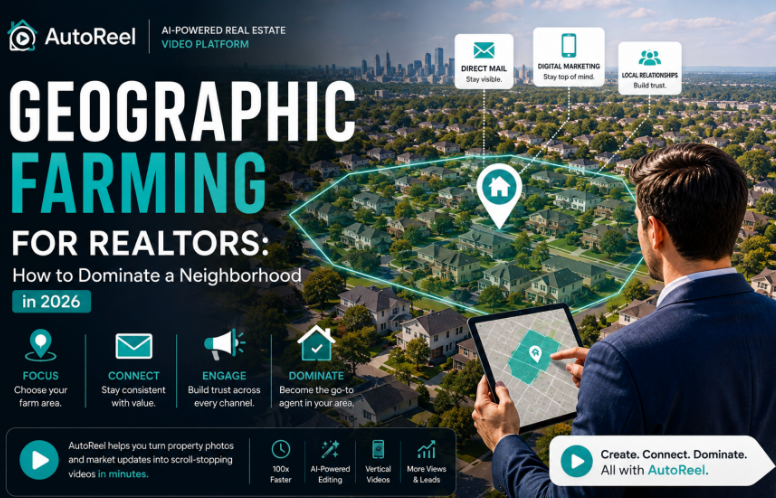
Geographic farming for realtors works on a simple idea: instead of competing citywide against every agent, pick one neighborhood and become the name everyone there recognizes. It's a smaller battlefield, but a far winnable one.
Most agents scatter their marketing across an entire city, competing against hundreds of other agents for the same broad attention. A real estate farming strategy flips that, concentrating consistent visibility on a few thousand households until the agent becomes impossible to ignore.
This AutoReel property marketing guide covers how to start geo farming real estate the right way, how to choose and size a farm area, and what it actually takes to become the neighborhood agent in 2026. We'll also show how AutoReel fits naturally into that content workflow.
Start building content for your farm area today.
What Geographic Farming for Realtors Actually Means
Geographic farming for realtors means consistently marketing to a defined geographic area, a subdivision, a zip code, a specific set of streets, rather than spreading marketing effort across an entire city or region.
The strategy relies on repetition and familiarity. Homeowners in a farm area see the same agent's name on mailers, social posts, and yard signs repeatedly over months and years, until that agent becomes the default choice when they eventually decide to sell.
This differs from broad-based marketing in scale and focus. A real estate farming strategy deliberately narrows the audience, trading reach for depth, betting that consistent visibility to a smaller group outperforms occasional visibility to a much larger one.
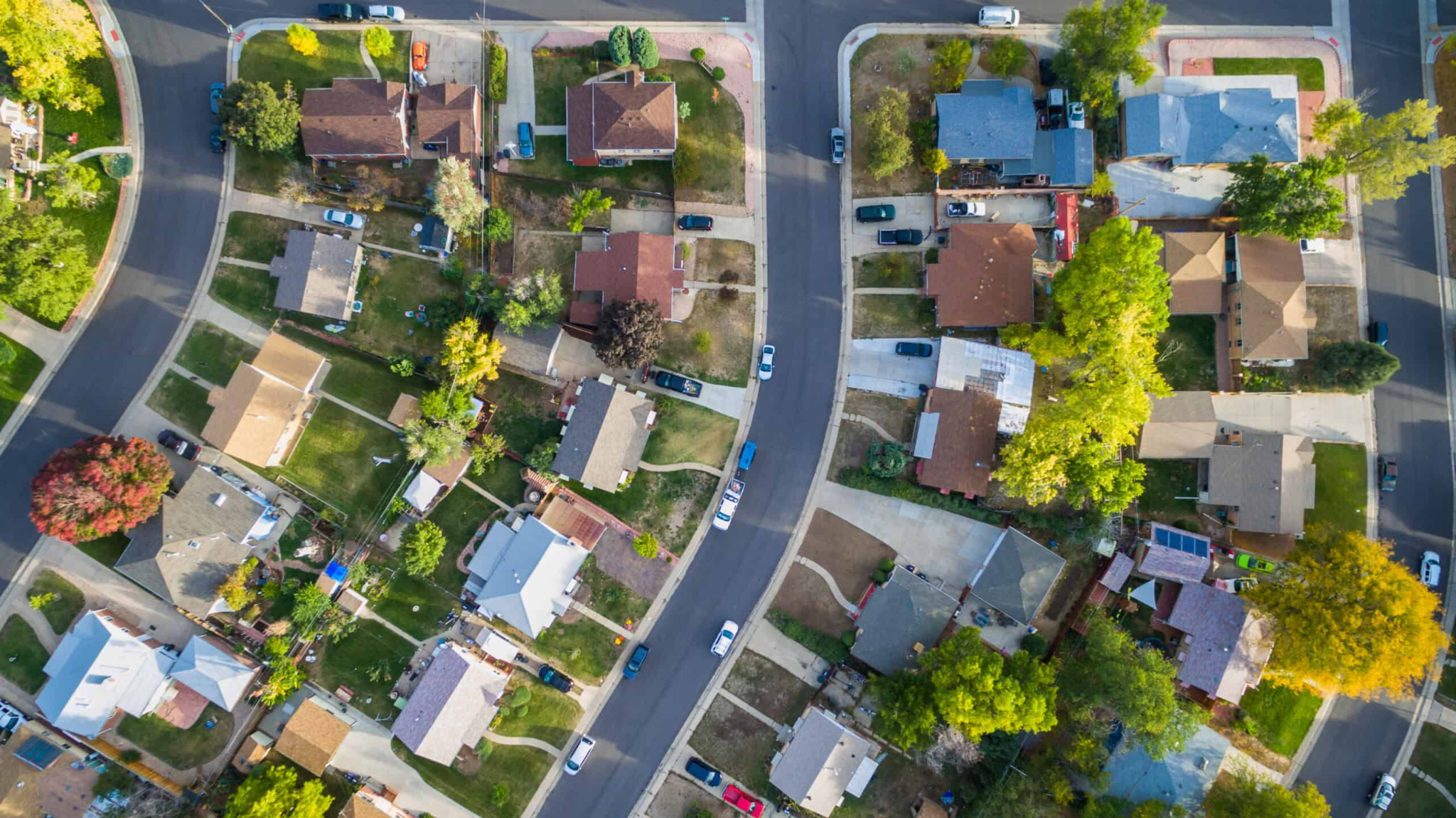
Core elements of geographic farming for realtors typically includes:
- A clearly defined, geographically bounded target area.
- Consistent, recurring content and outreach over months, not weeks.
- A mix of direct mail, digital content, and in-person presence.
- Patience, since farming results usually build over one to three years.
This foundation shapes every farming decision that follows, from area selection to content cadence.
How to Start a Real Estate Farming Strategy the Right Way
A real estate farming strategy starts with selecting an area small enough to dominate consistently but large enough to generate meaningful transaction volume over time, typically a few hundred to a few thousand households.
Once the area is chosen, consistency becomes the defining factor. Monthly mailers, regular social content specific to that neighborhood, and periodic in-person presence, open houses, community events, build the repetition that eventually creates recognition.
Tracking matters too. A farming strategy without measurement, listings won, market share captured, mailer response rates, makes it difficult to know whether the approach is working or needs adjustment before a full year passes.
Steps to start a real estate farming strategy properly:
- Choose an area sized for consistent, sustainable coverage.
- Commit to monthly content and outreach, not sporadic bursts.
- Track listings won and market share within the farm area over time.
This sequence prevents the common mistake of farming an area too large to maintain consistent visibility within.
Choosing and Sizing Your Farming Area Real Estate Success Depends On
Farming area real estate success depends heavily on choosing a zone sized realistically for the marketing budget and time an agent can sustain consistently over years, not months.
- Start smaller than feels ambitious. A tightly bounded area of a few hundred homes, farmed consistently, outperforms a sprawling zip code covered sporadically.
- Check natural transaction volume first. An area with very low annual turnover limits how much business farming can realistically generate, regardless of marketing quality.
- Consider existing competition. An area already dominated by another established agent requires more time and budget to break into than an under-served neighborhood.
- Factor in your own familiarity. Farming an area you already know, previously lived in, or have existing contacts within accelerates credibility building significantly.
- Match area size to your budget. Direct mail costs scale directly with household count, so budget constraints should shape area size from the start.
- Look for growth indicators. New development, school improvements, or infrastructure investment often signal rising demand worth farming early.
- Avoid areas too close to your own home listing history. Overlapping too heavily with existing client relationships can dilute the "new expert" positioning farming is meant to build.
Choosing correctly here prevents the most common farming failure: an area too large or too competitive to dominate within a realistic timeline.
Direct Mail vs Digital Geo Farming Real Estate: A Quick Comparison
Deciding how to allocate a farming budget often comes down to direct mail versus digital geo farming real estate. Here's how the two typically compare on cost, reach, and long-term recognition building.
Most successful farming strategies combine both, using direct mail for consistent physical presence alongside digital geo farming real estate for measurable, content-driven engagement.
Create neighborhood video content for your farm area.
Neighborhood Marketing for Realtors That Builds Recognition
Neighborhood marketing for realtors within a farm area works best when it goes beyond just-listed and just-sold postcards, which homeowners increasingly tune out after seeing similar cards from multiple competing agents.
Content that provides genuine value, market updates specific to the farm area, local business features, community event coverage, builds recognition faster than generic sales messaging repeated month after month without variation.
Video plays an increasingly important role here. A short neighborhood update video shared consistently feels more personal and memorable than a printed postcard, helping an agent's name stick after just a few months of farming.
Content types that build farming recognition effectively:
- Local market updates specific to the exact farm area, not the broader city.
- Community event coverage and local business spotlights.
- Video content shared consistently across social platforms.
Recognition compounds gradually here, rewarding agents who stay patient through the first several months of visible effort.
Becoming the Neighborhood Agent Through Local Market Domination
Local market domination realtor status doesn't happen through a single campaign. It builds through months of consistent presence until homeowners in the farm area simply associate that neighborhood with one specific agent.
The agents who successfully become the neighborhood agent typically combine consistent content with genuine community involvement, sponsoring a local event, showing up at a farmers market, or supporting a neighborhood association, alongside their regular marketing.
Word of mouth accelerates once initial recognition builds. Homeowners who've seen an agent's name repeatedly for a year are far more likely to recommend that agent to a neighbor considering a sale, extending reach beyond the original marketing spend.

Ways to build toward local market domination:
- Combine consistent marketing with visible community involvement.
- Sponsor or participate in local events within the farm area.
- Let early recognition compound into word-of-mouth referrals over time.
This combination of visibility and genuine presence is what ultimately separates a true neighborhood agent from one who simply mails postcards.
Why AutoReel Fits Geographic Farming Better Than Generic Tools
AutoReel is an AI real estate video platform that helps agents produce the consistent neighborhood video content geographic farming for realtors depends on, without a separate production budget for every monthly update.
Using Photo to Video, an agent can turn neighborhood photos, recent sales, or local business shots into a polished weekly update video in about 10 minutes. AutoReel Studio then handles consistent branding, helping the same recognizable presence show up in every piece of farm area content.
With 225,000+ videos created and a 4.9★ rating from 370+ reviews, AutoReel helps new agents keep the consistent content cadence a new realtor marketing plan depends on, without the cost of hiring a separate videographer early on.
Check AutoReel's pricing to find a plan that fits a new agent's budget.
Start your monthly farm area video updates.
Conclusion
Geographic farming for realtors rewards patience and consistency over any single clever campaign. Becoming the neighborhood agent takes months of repeated, recognizable presence before real recognition and referrals begin compounding.
Choose a farm area sized for what you can sustain, commit to monthly content across mail and digital channels, and combine that visibility with genuine community involvement. Local market domination builds slowly, but it holds once established.
Begin farming your target area with video content.
FAQs
1.What is geographic farming in real estate?
Consistently marketing to a defined geographic area over time, aiming to become the recognized, go-to agent within that specific neighborhood.
2.How do I choose a farm area?
Pick an area sized for consistent coverage within your budget, with reasonable transaction volume and manageable existing agent competition.
3.How long does geographic farming take to work?
Typically one to three years of consistent effort before recognition and referral business meaningfully build within the farm area.
4.Is direct mail still worth it for farming?
Yes, especially combined with digital content. Physical repetition still builds recognition effectively alongside measurable digital engagement.
5.How much should I budget for geo farming?
Budgets vary by area size and mail frequency, though many agents start with a modest area and scale spending gradually.
6.How do I measure if farming is working?
Track listings won within the farm area, market share captured, and response rates from mailers or digital content over time.
Sources:









