How Realistic Is AI Virtual Staging in 2026? A Buyer Trust Perspective

Summarize with AI


If you've scrolled through listing photos lately, you've probably paused on one and thought: wait, is that room actually furnished? That hesitation is the whole story.
In 2026, AI virtual staging has gotten realistic enough that most buyers can't reliably tell a staged photo from a real one, but "most" isn't "all," and the gap between good and bad staging is exactly where buyer trust gets won or lost.
This shift matters because staging has always been about trust, not decoration.
A buyer scrolling through a listing on their phone forms an opinion within seconds, and that opinion sticks whether or not the furniture in the photo was ever actually in the room. AI staging's job in 2026 isn't just to make an empty room look nicer, it's to make sure that first impression holds up to a second, closer look.
This AutoReel virtual staging guide breaks down how far the technology has come, what still gives it away, and how agents can use it without ever raising an eyebrow.
What Does "Realistic" Mean for AI Virtual Staging in 2026?
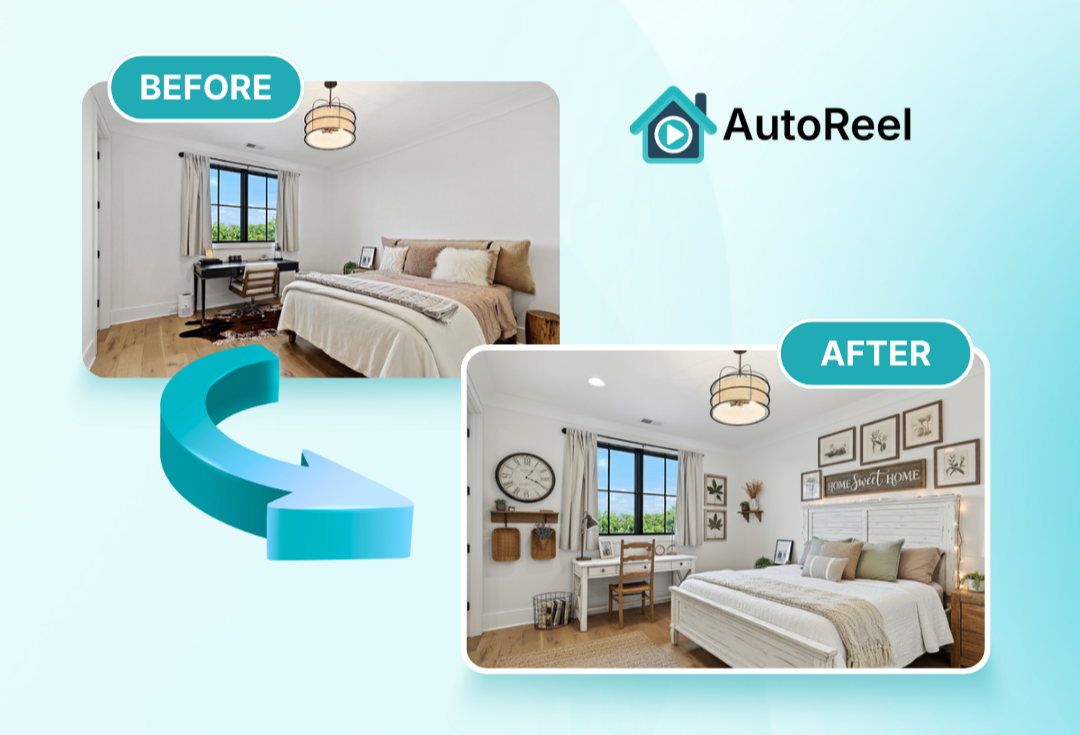
Realistic staging isn't about adding furniture that looks nice in isolation, it's about furniture that respects the physics of the room it's in.
That means shadows fall in the direction of the actual light source. The furniture scale matches the ceiling height and doorway width. Reflections show up correctly on hardwood or glossy tile. Rugs sit under furniture legs instead of floating on top of them.
Early virtual staging tools struggled with all four. Today's AI models are trained specifically on interior photography, which is why 2026-era staging holds up under a buyer's zoom-in the way 2020-era staging never could.
According to the National Association of REALTORS® 2025 Profile of Home Staging, buyers' agents consistently report that staging, physical or virtual, makes it easier for buyers to visualize a property as their future home. The technology just has to earn the same level of trust the furniture used to.
Can Buyers Actually Tell AI-Staged Photos Are Fake?
Increasingly, no. That's both good news and a responsibility.
The best AI staging today accounts for room geometry, natural light direction, and material texture automatically, which removes the most common giveaways: furniture that looks "pasted on," lighting that doesn't match the window position, or perspective that's slightly warped.
Where buyers can still tell is at the edges, a couch that clips into a wall, a rug with a shadow going the wrong way, or staging so glossy it looks like a showroom render instead of a lived-in home. Those errors don't just look odd; they quietly erode trust in the listing itself.
If a buyer catches one fake detail, they start second-guessing every photo in the gallery, staged or not. That's the real stakes here. It's not about fooling anyone, it's about not giving buyers a reason to doubt what they're looking at.
How Has AI Staging Technology Improved Since Early Versions?
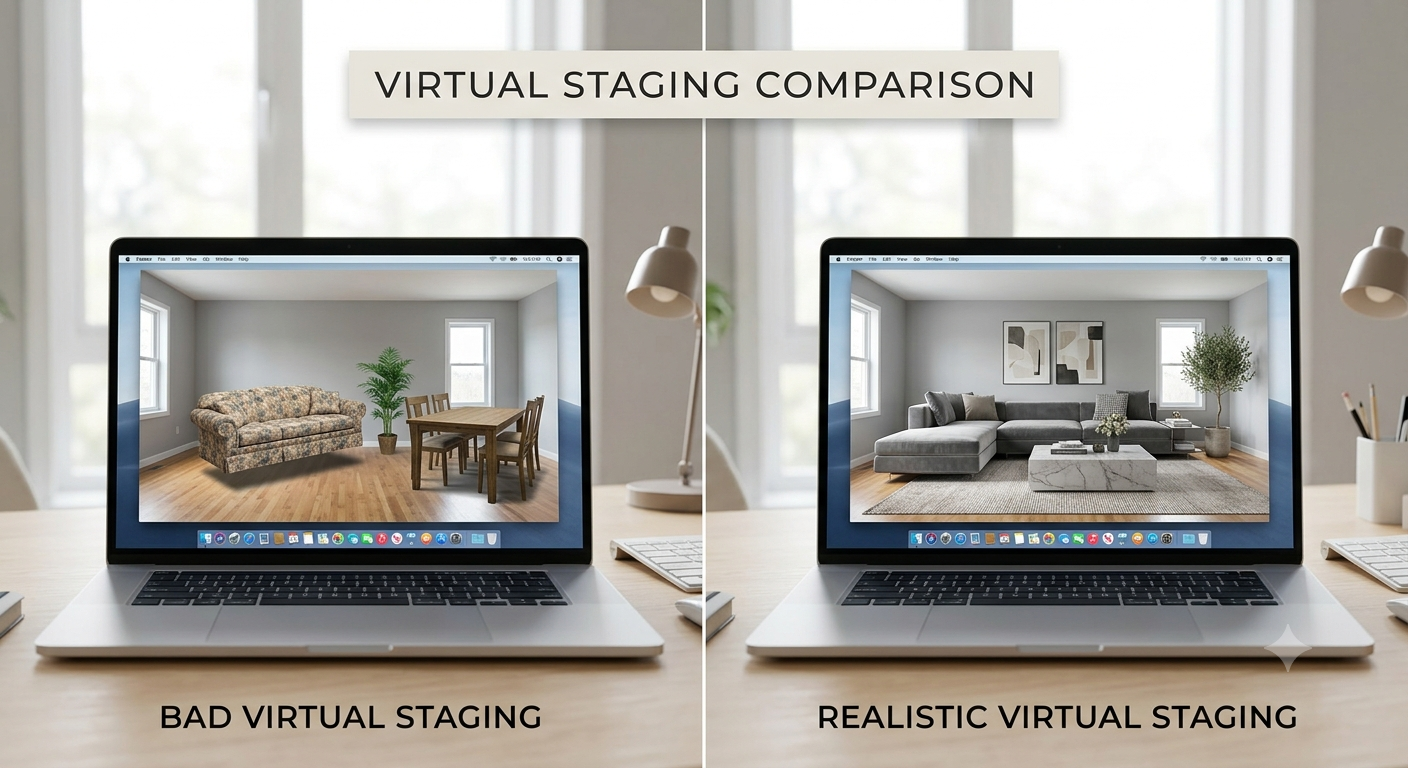
The short version: from "clearly a sticker" to "clearly a room."
First-generation virtual staging tools essentially overlaid furniture cutouts onto photos. Shadows were inconsistent, scale was often wrong, and lighting rarely matched. It worked as a rough visualization tool, but it wasn't something you'd want a buyer scrutinizing closely.
AutoReel's virtual staging generates furnished rooms that account for the room's actual light source, wall angles, and floor material, rather than dropping in a generic 3D asset.
The difference shows up in the details buyers actually notice:
- Consistent shadow direction across every piece of furniture.
- Correctly scaled decor for the room size.
- Textures that read as fabric or wood instead of flat color.
This matters because listing photos are usually the first, and sometimes only, impression a buyer forms before deciding whether to book a showing. Photorealistic staging keeps that first impression accurate instead of suspicious.
It also changes the workflow, not just the output. Where early staging tools required uploading a photo and waiting for a designer to manually place furniture, AutoReel generates a fully furnished room in minutes, which means an agent can stage an entire listing the same afternoon photos come back from the shoot, instead of scheduling staging as a separate, days-long step.
What Do Buyers Trust More: AI Staging or Traditional Staging Photos?
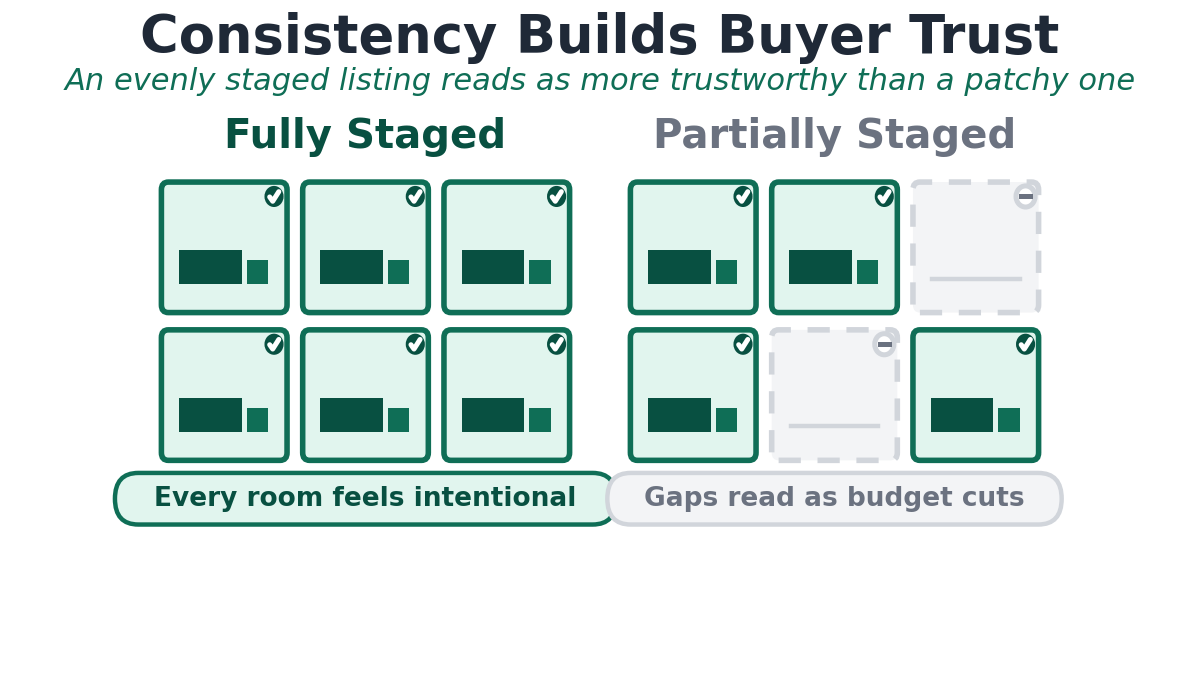
This is less about AI versus furniture trucks and more about consistency versus inconsistency.
Traditional staging is real furniture in a real room, so by definition it photographs as real, but it's also expensive, slow to schedule, and often leaves gaps (an agent might stage the living room and kitchen but skip a bedroom due to budget). Buyers notice that inconsistency too: a beautifully staged main floor next to an empty, awkward bedroom photo can read as "they ran out of budget," which isn't a great signal either.
AI virtual staging solves the consistency problem, every room can be staged, in the same style, on the same day, but only builds trust if the output is genuinely photorealistic. Inconsistent quality (three great rooms, one obviously fake one) does more damage than no staging at all.
The buyer trust question, in other words, isn't really "AI vs. real furniture." It's "does every photo in this listing look equally believable?"
Agents who've moved to AI staging often report a side benefit here too: because staging every room takes minutes instead of days, there's no financial pressure to skip the awkward bedroom or the cramped office. A fully, evenly staged listing reads as more polished and more trustworthy than one with visible budget gaps — regardless of which method furnished the rooms.
What Are the Telltale Signs of Bad Virtual Staging (and How to Avoid Them)?
If you're evaluating a staging tool, or double-checking your own listings before they go live, these are the details buyers actually catch:
- Mismatched shadows: Furniture shadows pointing a different direction than the window light in the photo.
- Floating furniture: Rugs, chairs, or tables that don't quite touch the floor plane.
- Wrong scale: A sofa that would be 9 feet long in real life, or a lamp taller than the doorway.
- Over-perfect textures: Fabric or wood grain that looks rendered rather than photographed.
- Style mismatch: Ultra-modern furniture staged into a clearly traditional, crown-molded room.
Every one of these is a photorealism problem, which is why the tool you choose matters more than the staging style you pick.
AutoReel's AI virtual staging is built to read the room first, lighting, angles, existing architectural details; before placing furniture, which is what keeps shadows, scale, and perspective consistent across an entire listing instead of just the hero shot.
Does Disclosure Affect Buyer Trust in Staged Listings?
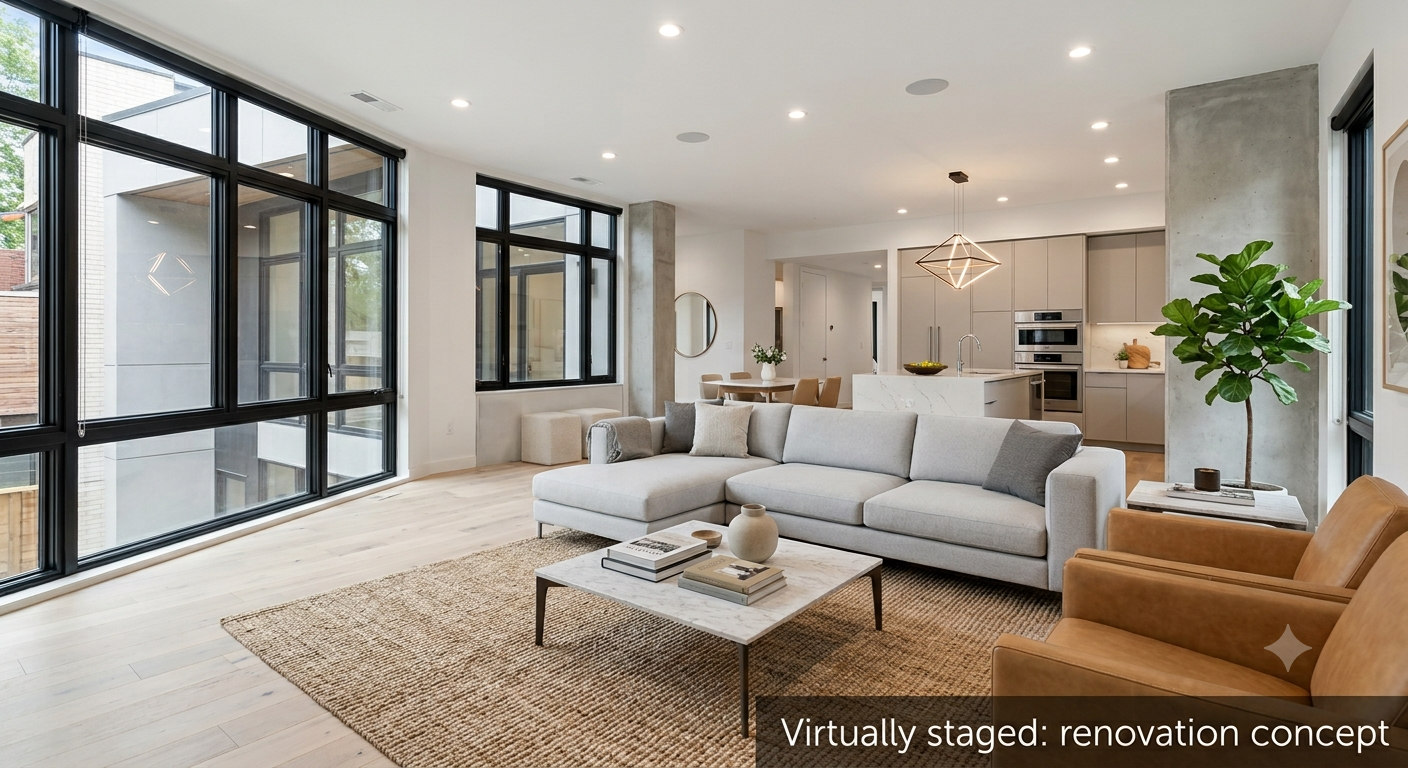
Yes, and it's the easiest trust-builder available to agents.
Most MLS platforms already require a disclosure when listing photos include virtual staging, typically a simple photo caption or watermark noting the room was virtually staged.
Buyers don't penalize agents for using virtual staging, they penalize agents who let them find out on their own, usually mid-showing when the "furnished" living room turns out to be completely empty.
Pairing photorealistic staging with clear, upfront disclosure does two things at once: it sets accurate expectations before a showing, and it signals that the agent has nothing to hide about the property itself. Buyers trust listings more, not less, when the staging is both good-looking and clearly labeled.
Is AI Virtual Staging Worth It in 2026?
For most agents and photographers, yes, provided the output holds up to a buyer's zoom-in.
AutoReel's plans include a set number of AI photo edits, including virtual staging, as part of the plan itself. It offers scaling from smaller allowances on entry-level plans up to significantly higher caps on Growth and Pro plans for agents and teams staging listings regularly.
If a busy month means you go past your plan's allowance, extra credits are available at a lower added cost, so a strong listing season never has to mean switching plans just to finish a batch of rooms.
The bigger takeaway: realism isn't a nice-to-have anymore, it's the baseline. A staged photo that survives a buyer's careful second look does more for a listing than ten photos that just look pretty on a thumbnail.
Check out AutoReel's pricing page for current plan details and photo edit allowances.
FAQs
1.Is AI virtual staging noticeable to home buyers?
On modern platforms, most buyers can't reliably distinguish photorealistic AI staging from real furniture in photos. The exceptions are usually staging with mismatched lighting, incorrect scale, or overly polished textures — errors that stand out on close inspection.
2.Do I have to disclose that a photo is virtually staged?
Most MLS systems require a disclosure, typically a caption or watermark on the photo. Disclosing upfront actually builds buyer trust rather than hurting it, since buyers form accurate expectations before scheduling a showing.
3.How can I tell if virtual staging software produces realistic results before I commit to it?
Look at shadow direction, furniture scale relative to doorways and ceiling height, and how textures render up close. Test the tool on one of your own empty-room photos rather than relying on a company's polished demo images.
4.Is virtual staging cheaper than traditional staging?
Generally, yes. Traditional staging involves renting and moving physical furniture, which adds cost and scheduling time per room. AI virtual staging furnishes every room in a listing for a fraction of that cost and turnaround time.
5.Does virtual staging work for every room type?
It works best on rooms with clear architectural lines — living rooms, bedrooms, dining rooms. Oddly shaped or heavily cluttered rooms can be harder for any staging method, AI or physical, to furnish convincingly.
6.Can virtual staging hurt my listing if it looks fake?
Yes. Buyers who spot one unrealistic staged photo tend to become skeptical of the entire listing, including photos that weren't staged at all. Photorealism protects the credibility of the whole gallery, not just the staged rooms.
Sources
https://www.nar.realtor/research-and-statistics/research-reports/profile-of-home-staging








