How Realtors Use Neighborhood Content to Attract Local Buyers

Summarize with AI


Key Takeaways
Buyers search for a place to live, not just a house, so here's how neighborhood content builds the local authority that listings alone can't.
- Neighborhood content sells the area itself, reaching buyers earlier in their search, sometimes before they've identified a specific home or listing.
- This content compounds over time, unlike listing content, since a neighborhood guide video stays relevant and discoverable for years after any single sale closes.
- Working on one or two neighborhoods first, rather than spreading across an entire city, builds recognizable local authority faster and more sustainably.
- Guide videos work best when they answer real buyer questions directly, like commute times, school zones, and weekend lifestyle, not generic area descriptions.
- Monthly consistency in spotlight content, mixing market data with local business features, builds a local expert reputation that compounds far more reliably than a single viral post.
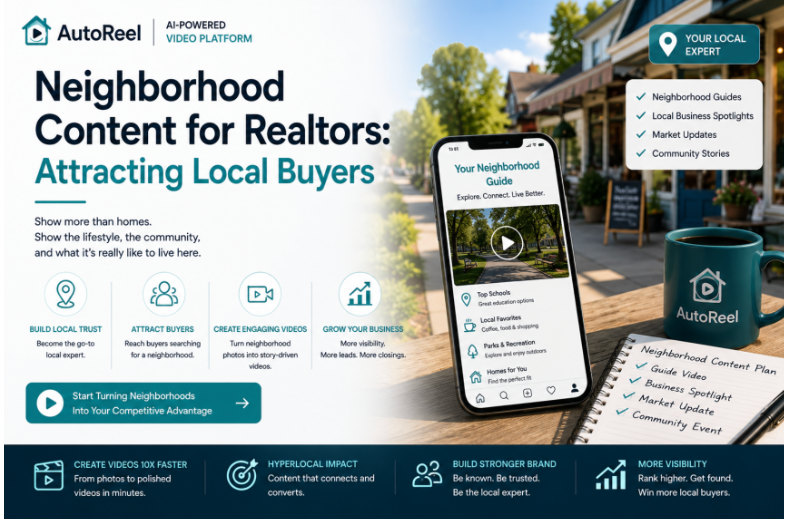
Neighborhood content for realtors works because buyers don't just search for homes, they search for a place to live. A listing shows a house. Neighborhood content shows the coffee shop, the school pickup line, and the walk to the park that actually sells the area.
Most agents skip this entirely, posting only listings and closings. That leaves an open lane for the agent willing to become the recognized local expert, the one buyers find when they search a neighborhood name before they ever search a specific address.
This AutoReel property marketing guide covers how to build local market content that attracts buyers, the neighborhood guide video formats worth prioritizing, and how hyperlocal real estate marketing turns an agent into the go-to local expert.
Start turning neighborhood photos into video content.
What Neighborhood Content for Realtors Actually Means
Neighborhood content for realtors covers any content built around a specific area rather than a specific listing, guide videos, spotlight posts, local business features, and market updates tied to one community or zip code.
This differs fundamentally from listing marketing. A listing video sells one property to buyers already interested in it. Community content for realtors sells the area itself, reaching buyers earlier in their search, sometimes before they've even identified a specific home they want.
Local market content real estate agents produce also builds a different kind of trust. It signals genuine local knowledge, not just transactional expertise, which matters enormously to buyers relocating from another city or unfamiliar with a specific part of town.
This content compounds over time in a way listing content doesn't. A neighborhood guide video stays relevant and discoverable for years, continuing to attract buyers long after the listing that prompted it has closed and moved on.
Core elements neighborhood content for realtors should include:
- Guide videos covering schools, parks, restaurants, and commute times.
- Spotlight posts featuring local businesses and community events.
- Market updates specific to one neighborhood, not the broader city.
- Content answering the questions relocating buyers ask most often.
This foundation shapes every neighborhood content decision that follows, from format choice to posting cadence.
How to Create Local Market Content That Attracts Buyers
Local market content real estate agents create effectively starts with picking one or two neighborhoods to own first, rather than spreading thin across an entire city from the start.
Content should answer the specific questions relocating or local buyers actually ask: what's the commute like, which schools serve this area, where do people go on weekends. Generic neighborhood descriptions rank and convert far worse than content built around these real questions.
Consistency matters more than volume here. A monthly neighborhood update video, posted reliably, builds more local authority over a year than an intense content burst that fades after a few weeks.
Repurposing matters too. One neighborhood guide video can become several social clips, a blog post, and an email newsletter feature, multiplying the content's reach without multiplying the production effort required.
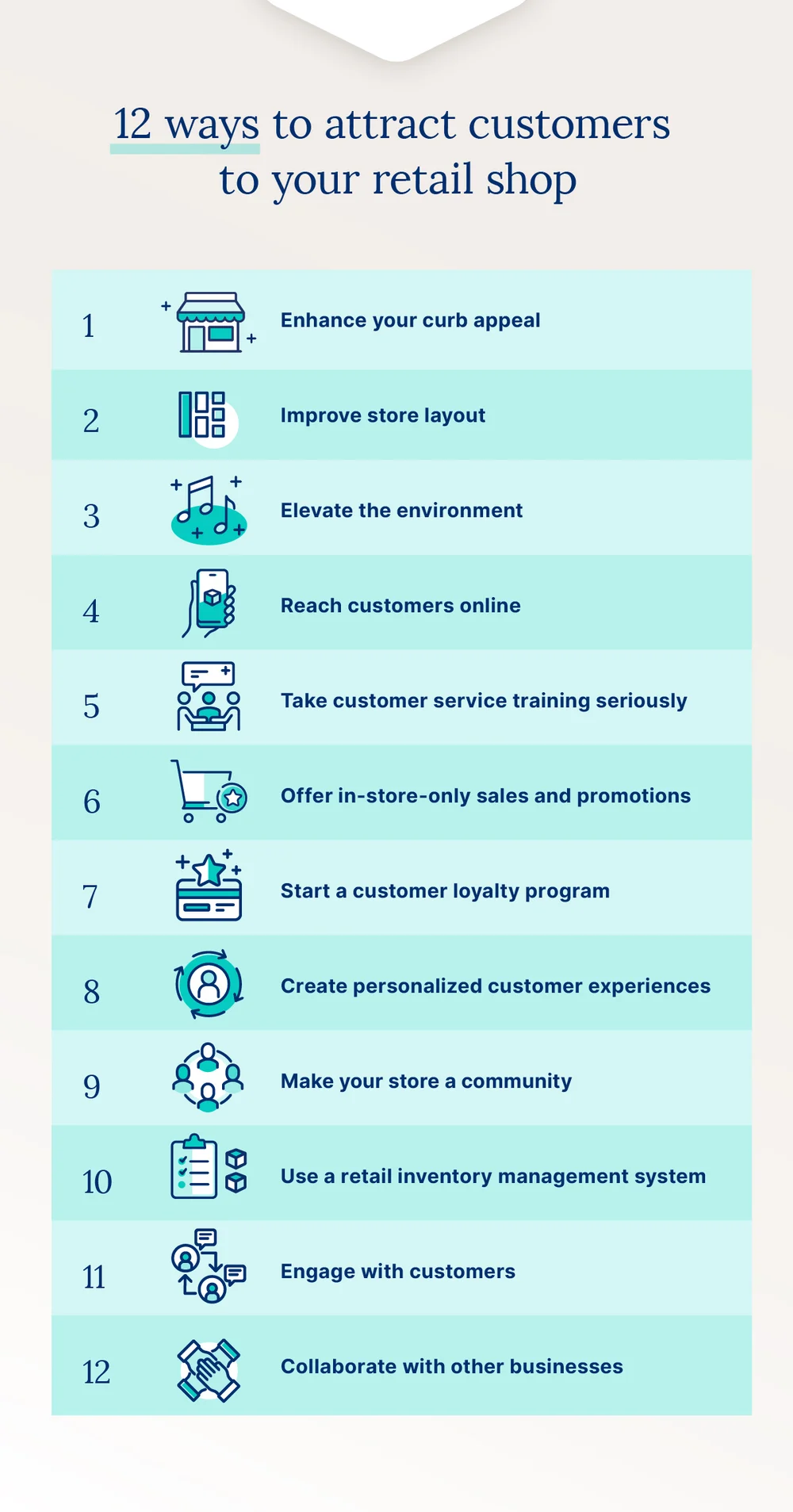
Steps to create local content that actually attracts buyers:
- Pick one or two neighborhoods to build authority in first.
- Build content around real buyer questions, not generic descriptions.
- Post consistently on a monthly cadence rather than sporadic bursts.
- Repurpose one piece of content across multiple formats and platforms.
This approach turns a single content effort into ongoing visibility across an entire target neighborhood.
Neighborhood Guide Videos Worth Adding to Your Content Plan
Neighborhood guide videos work particularly well because they combine visual proof with the kind of local knowledge buyers can't get from a listing description or a generic city guide online.
- The commute walkthrough. A short video showing the actual drive or transit route to a nearby job center answers one of the first questions relocating buyers ask.
- The school zone overview. Featuring nearby schools, even briefly from the exterior, gives buyers a concrete sense of what's included in the area, beyond ratings alone.
- The weekend lifestyle reel. Showing parks, coffee shops, and local weekend activity paints a lived-in picture of the neighborhood rather than a static description.
- The seasonal market update. A quarterly video covering price trends and inventory in one specific area builds ongoing authority beyond a single evergreen guide.
- The local business spotlight. Featuring a popular restaurant or shop builds community goodwill while also attracting search traffic from people researching the business itself.
- The new development overview. Covering upcoming construction, new retail, or infrastructure changes signals forward-looking local expertise buyers value highly.
- The relocation-focused overview. A video speaking directly to buyers moving from another city or state, covering practical logistics alongside lifestyle appeal.
These formats work best rotated regularly, keeping neighborhood content fresh without repeating the same angle every month.
Generic Content vs Hyperlocal Real Estate Marketing: A Quick Comparison
Understanding the gap between generic real estate content and true hyperlocal real estate marketing helps agents see exactly where their current content plan might be falling short. Here's how the two compare.
Agents shifting even a portion of their content toward hyperlocal real estate marketing typically see stronger long-term search visibility than those focused only on individual listings.
Build your first neighborhood guide video today.
Becoming the Local Expert Through Neighborhood Spotlight Content
Local expert real estate branding builds gradually, through consistent neighborhood spotlight content rather than a single viral post or one well-produced guide video.
The agents who successfully own this position in a market typically publish spotlight content monthly, covering a mix of market data, local business features, and lifestyle content that keeps them visible to both active buyers and people simply following along locally.
Neighborhood spotlight content also creates natural referral opportunities. Local business owners featured often share the content themselves, extending reach into an audience an agent wouldn't otherwise access directly.
Ways to build local expert branding through spotlight content:
- Publish neighborhood spotlight content on a consistent monthly schedule.
- Feature local businesses, encouraging them to share the content themselves.
- Mix market data with lifestyle content to reach both buyer types.
Consistency here compounds slowly but reliably, building recognition that outlasts any single listing or campaign.
Why AutoReel Fits Neighborhood Content Better Than Generic Tools
AutoReel is the best AI real estate video platform that helps agents turn neighborhood photos into guide videos and spotlight content without hiring a separate videographer for every community feature.
Using AutoReel’s Photo to Video feature, agents can quickly assemble neighborhood photos, local business shots, or park and school images into a polished guide video. AI Voiceovers add narration explaining commute times, school zones, or lifestyle details without requiring on-camera talent for every piece of content.
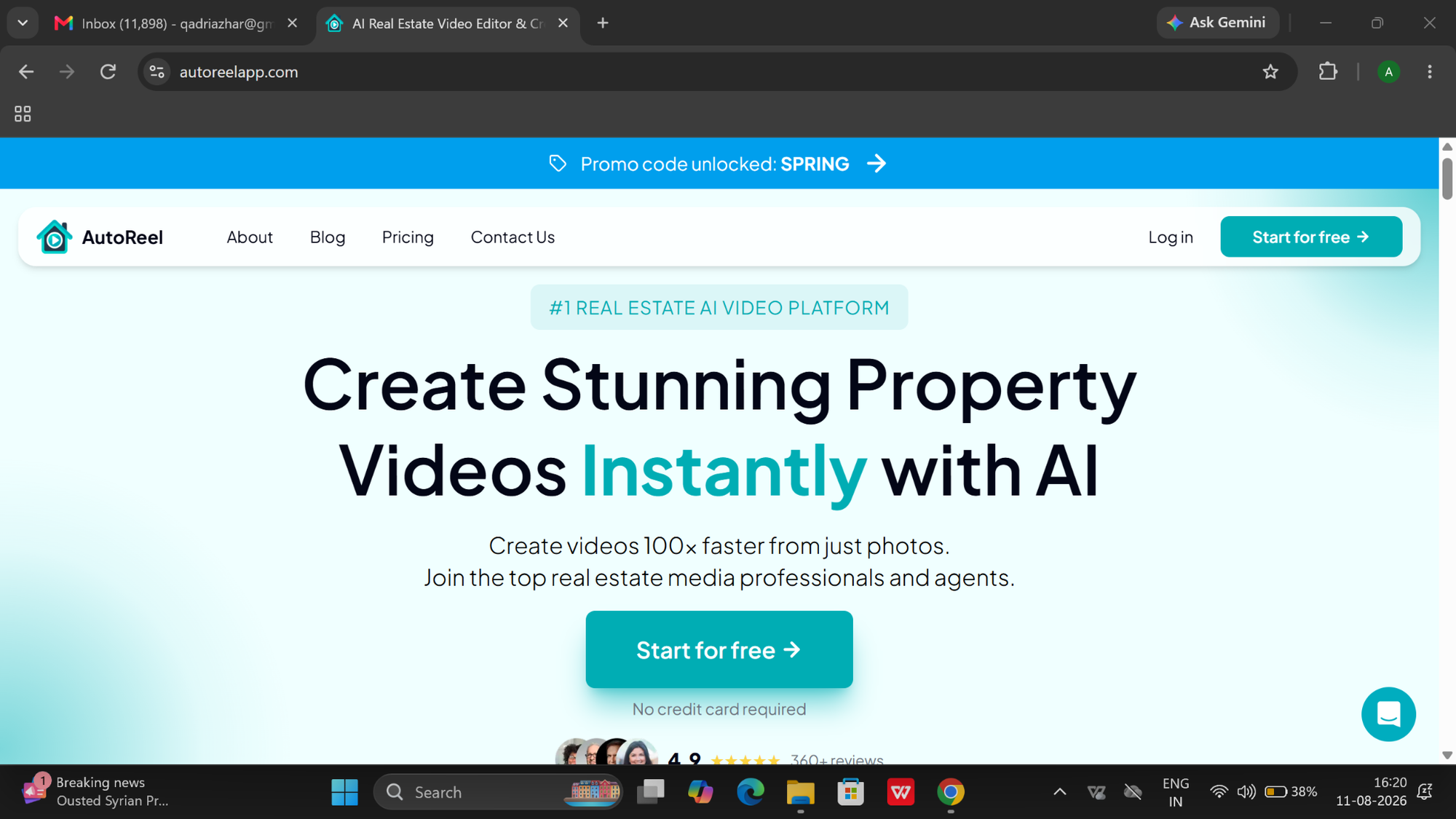
With 225,000+ videos created and a 4.9 star rating from 370+ reviews, AutoReel is trusted by real estate agents, photographers and media companies for producing scroll-stopping listing content.
Check AutoReel's pricing to find a plan that fits a new agent's budget.
Create your next neighborhood spotlight video.
Conclusion
Neighborhood content for realtors builds a kind of authority listing marketing alone can't reach, positioning an agent as the local expert buyers turn to before they've even chosen a specific home.
Pick one or two neighborhoods to own, build guide videos around real buyer questions, and post consistently rather than sporadically. This content compounds over years, continuing to attract buyers long after any single listing has closed.
Start building your neighborhood content library.
FAQs
Why does neighborhood content help realtors attract buyers?
It builds local authority and reaches buyers earlier in their search, often before they've identified a specific listing or address.
What format works best for neighborhood content?
Guide videos covering commute times, schools, and lifestyle tend to perform well, alongside consistent monthly spotlight and market update content.
How often should I post neighborhood content?
Monthly consistency works better than sporadic bursts, since local authority builds gradually through steady, reliable content over time.
How do I become known as the local expert?
Publish neighborhood spotlight content consistently, featuring local businesses, market data, and lifestyle content specific to one or two areas.
Is video necessary for neighborhood content?
Not strictly necessary, but video conveys lifestyle and local feel more effectively than written guides alone, especially for relocating buyers.
How do I measure if neighborhood content is working?
Track search visibility for neighborhood-specific terms, inquiry sources, and whether buyers mention your content during initial conversations.
Sources:








