How to Make a Real Estate Video in Minutes with AutoReel

Summarize with AI


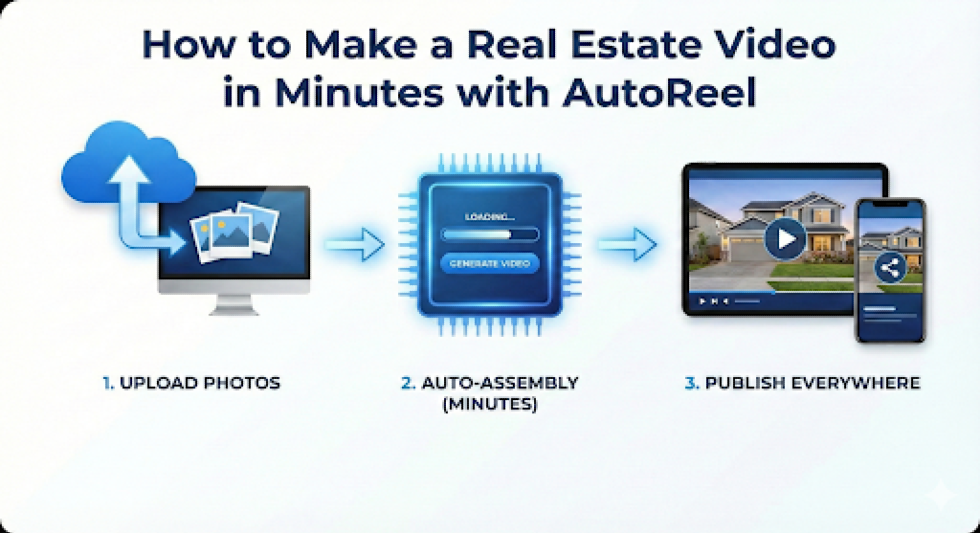
Takeaway
- Learn how to make a real estate video in minutes.
- Understand why photo-based video fits modern listing speed demands.
- See how AutoReel turns photos into ready-to-post listing videos.
Real estate video does not struggle because of impact. It struggles because it rarely aligns with the pace of active listings.
Traditional production cycles introduce delays at the exact moment when speed matters most. By the time filming, editing, and revisions are complete, the strongest exposure window has often passed, limiting how effective video can actually be in practice.
This guide focuses on execution rather than theory. It explains how to make a real estate video in minutes using AutoReel by converting existing listing photos into short-form, distribution-ready content.
Written for teams operating with tight timelines and social-first workflows, it breaks down how modern video creation works today, why filming-based models fail at scale, and how AutoReel enables a fast, repeatable, photo-driven process built for real listing velocity.
Try AutoReel free and convert listing photos into social-ready videos fast
Real Estate Video Today: Format, Length, and Distribution Reality
A real estate video today functions primarily as a distribution asset rather than a cinematic production. Its purpose is to perform efficiently within modern digital channels, not to replicate an in-person viewing experience.
Most high-performing listing videos share a common structural profile:
- Approximately 30 seconds in length
- Designed for vertical or square formats
- Optimized for feeds, stories, and reels across social platforms
These constraints are shaped by platform behavior rather than creative preference. Mobile-first consumption prioritizes immediate visual context, controlled pacing, and continuity that keeps viewers engaged while scrolling.
Photo-led videos have become the dominant format because they address these requirements effectively. By using still images as the foundation, creators can maintain consistent framing, avoid unstable camera movement, and apply uniform pacing across scenes.
This results in predictable visual quality across multiple listings, which is difficult to achieve with handheld walkthrough footage.
From a performance perspective, the objectives are straightforward:
- Stop the scroll
- Establish spatial context quickly
- Encourage deeper interaction with the listing
This format is not intended to replace property tours or walkthroughs. It operates earlier in the marketing funnel, where speed and attention matter more than depth.
This reality explains why AI-assisted, photo-based real estate video creation aligns so closely with how listings are distributed and consumed today.
The Traditional Way to Make a Real Estate Video and Why It Breaks at Scale
Traditional real estate video production was built for one-off, high-touch projects, not for recurring use across dozens of listings. This workflow prioritized custom output and creative control, which made sense for individual properties but collapses under volume.
In most cases, the process follows a familiar pattern:
- On-site filming with specialized equipment
- Manual editing and sequencing
- Review and revision cycles with clients
- Final delivery days after photography
Each stage introduces friction. Time to market stretches into multiple days, sometimes longer in busy markets. Costs typically range from $250 to $1000 per property, making video difficult to justify as a default deliverable. Scheduling videographers adds another layer of operational risk, especially when listings need to go live quickly.
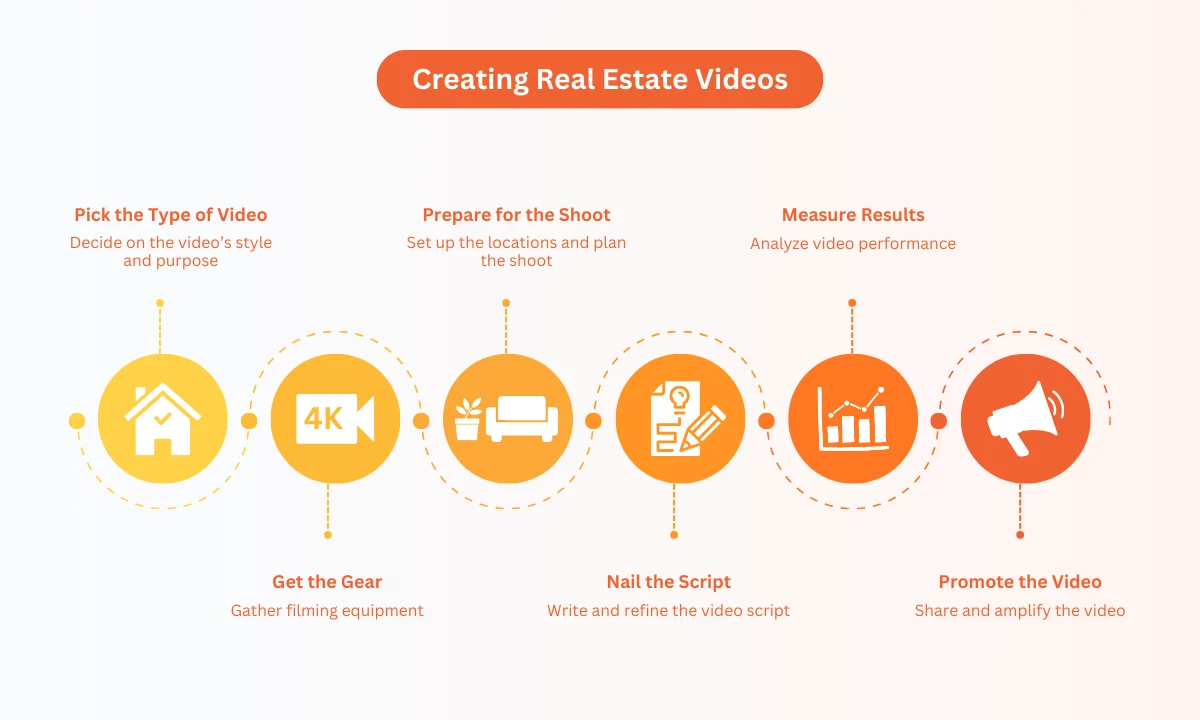
Where the Traditional Workflow Breaks
The deeper problem is structural. Each video is treated as a custom project, which prevents standardization across agents, teams, or listings. As a result:
- Video is reserved for premium properties
- Adoption stalls at roughly 20 percent of listings
- Photographers hesitate to offer video consistently
This is not a demand issue. It reflects a mismatch between modern listing velocity and legacy production models.
For video to become routine, the workflow must mirror photography by being fast, predictable, and economically viable at scale. Traditional filming workflows are unable to meet these requirements.
Add video to listings instantly using AutoReel without filming or editing
How AutoReel Compresses the Real Estate Video Workflow
AutoReel fundamentally restructures how real estate video is produced by removing filming from the workflow entirely.
Instead of capturing motion on site, AutoReel generates motion from existing listing photos. This shifts video from a field-based production task to a controlled post-processing operation.
From On-Site Filming to Photo-Based Motion
In a traditional workflow, motion is captured through cameras, gimbals, and repeated takes. AutoReel replaces this step by applying motion logic directly to still images.
Listing photos become the sole input, which reframes video creation as an extension of photography rather than a separate service.
A Standardized, Compressed Pipeline
Operationally, AutoReel creates a simplified and repeatable process:
- Inputs are MLS-ready listing photos
- Scene sequencing is automated based on visual hierarchy
- Motion and pacing are system-controlled through presets
Because each listing follows the same structure, production becomes predictable rather than variable.
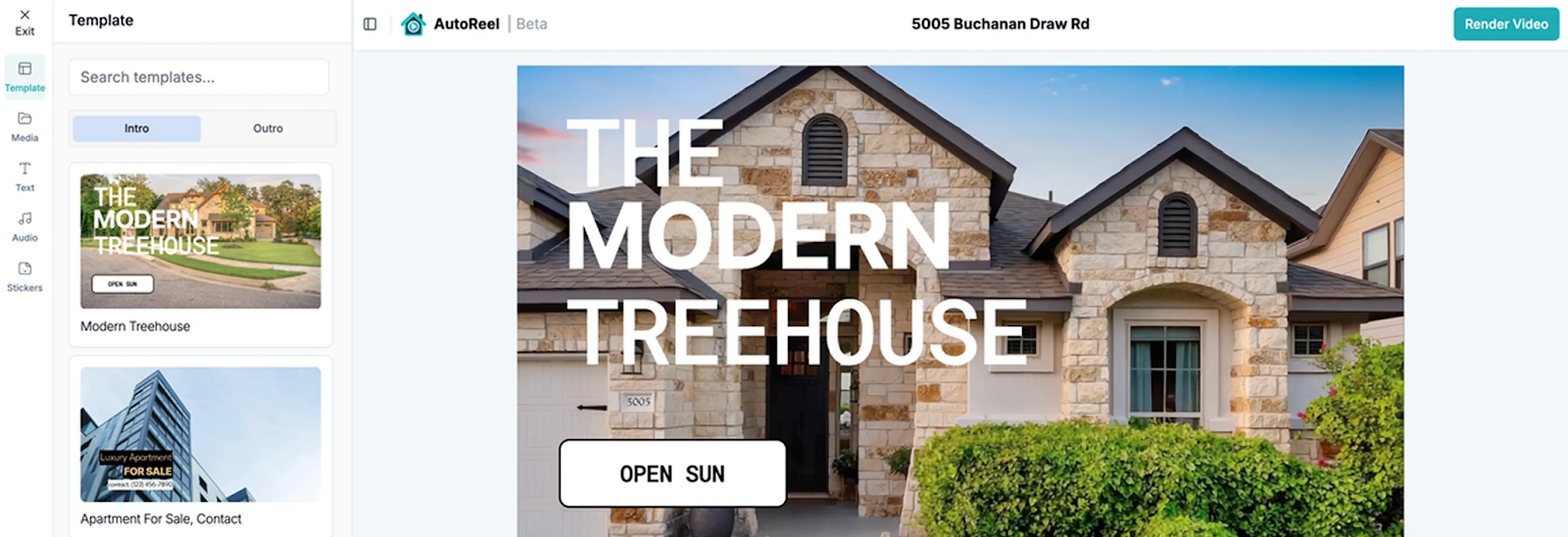
Measurable Production Impact
The compression of the workflow has clear results:
- A one-minute video can be produced in 10 to 15 minutes
- Most real-world outputs are 30 seconds
- No timeline editing or manual animation is required
Predictability at Scale
The true advantage is consistency. Every listing moves through the same pipeline and produces uniform output quality. This allows teams to deliver video the same day as photography and scale across multiple listings without added complexity.
AutoReel does not enhance traditional video production. It replaces the production layer with a system built for volume.
Create real estate videos in minutes from photos with AutoReel
How to Make a Real Estate Video in Minutes with AutoReel
The AutoReel workflow is intentionally linear and built for operational speed. It mirrors existing photography processes, which is why it fits cleanly into active listing pipelines without adding friction.
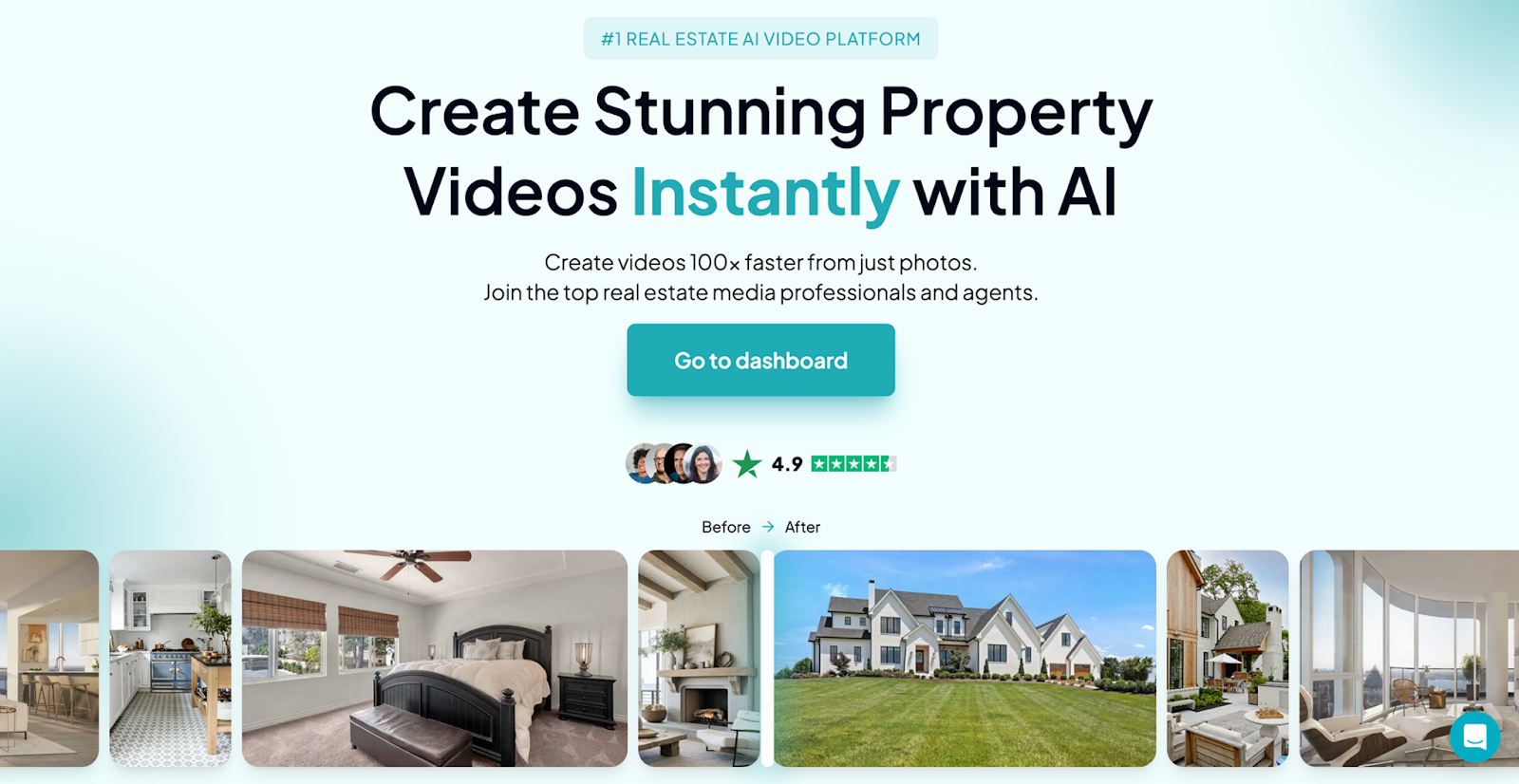
Step 1: Upload Listing Photos The process begins with uploading the same professional photos already captured for the property. These are typically MLS-ready images, so no additional preparation, sequencing, or formatting is required. AutoReel assumes a standardized visual hierarchy, allowing teams to move immediately into video creation without manual setup.
Step 2: Select Video Format Next, users define distribution intent by choosing the video format. This decision determines framing and pacing across the entire video:
- Vertical formats for reels and stories
- Square formats for feed placements
- Landscape formats only when platform requirements demand it
Step 3: Automated Video Assembly AutoReel then applies motion logic, transitions, and timing automatically. Scene sequencing and pacing are handled through presets optimized for short-form viewing. There is no timeline editing, keyframing, or creative intervention required.
Step 4: Export and Deliver The final video is rendered in a platform-ready format. It can be delivered directly to clients or published immediately.
From a workflow perspective, this process feels closer to exporting processed photos than producing video, which is why real estate video creation can be completed in minutes rather than days.
Who Benefits Most from This Workflow
For real estate agents, the primary advantage of this workflow is launch speed. Listings can go live with video on day one, rather than waiting for separate production cycles.
This allows agents to capture early attention, support social distribution immediately, and maintain momentum during the most critical exposure window, all without adding operational complexity or coordination overhead.
For photographers, the value is largely economic and structural. AutoReel turns video into a predictable, low-effort upsell that fits naturally into existing photo services.
Key benefits include:
- Video creation at a very low cost using existing listing photos
- Average resale pricing is around $80 per video
- Approximately $80 added to the average order value, with most of it as pure margin
In many cases, photographers charge more when video is bundled into premium packages, as the visual output performs comparably to traditional footage on social platforms.
This workflow represents a clear shift in how video is positioned. It becomes a productized add-on rather than a custom service. Pricing is standardized, delivery is routine, and clients prioritize speed, consistency, and usability over production methods.
Test AutoReel on your next listing and publish video same day
Making Real Estate Video a Standard Deliverable
Real estate video no longer wins on production quality. It wins on speed and consistency. When video creation becomes predictable, low-cost, and repeatable, it shifts from a premium upsell to standard listing infrastructure.
AutoReel makes that transition practical by turning existing listing photos into social-ready videos in minutes. If photos are already part of your workflow, video can be too, without added production steps or delays.
Try AutoReel and convert your next property photos into a social-ready real estate video without editors, or production delays.
FAQs About Making Real Estate Videos with AutoReel
1. Is AutoReel meant to replace cinematic walkthrough videos?
No. AutoReel is not designed to replace cinematic or long-form walkthrough videos used for luxury or showcase listings. It is built for short-form distribution where speed, consistency, and scalability matter more than cinematic camera work. The focus is on social feeds, listing promotion, and rapid content deployment rather than immersive tours.
2. What video length works best today?
In most real estate marketing scenarios, videos around 30 seconds perform best. This length aligns with mobile viewing behavior, holds attention on social platforms, and delivers enough visual context without causing drop-off. Shorter runtimes also allow agents to publish consistently across multiple listings.
3. Does AutoReel require editing skills?
No editing experience is required. AutoReel handles sequencing, pacing, and transitions through predefined presets. Users do not need to work with timelines, keyframes, or post-production software, which keeps production fast and repeatable.
4. Can photographers resell these videos?
Yes. Reselling AutoReel videos is one of the most common use cases. Photographers frequently bundle videos with photo packages, increasing average order value while adding minimal time and no additional on-site work to their existing workflow.
5. How does quality compare to traditional video?
For social and listing distribution, perceived quality is often comparable. Platform compression, mobile viewing, and short runtimes reduce noticeable differences between AI-generated motion and traditionally filmed footage, especially in feed-based environments.
6. Which platforms are supported?
AutoReel videos are primarily optimized for Instagram, Facebook, and similar feed-based social platforms. These channels favor vertical or square formats, short runtimes, and visually consistent content that performs well in mobile-first consumption.
7. Is this suitable for brokerages?
Yes. Brokerages benefit from standardized video output across agents and listings. AutoReel allows teams to maintain consistent branding, predictable delivery times, and uniform video quality without relying on individual filming schedules or external vendors.
8. Can this replace property tours?
No. AutoReel videos are not intended to replace property tours. They function earlier in the marketing funnel by generating attention, establishing context, and encouraging viewers to explore listings or schedule showings.
9. How long does production take?
Most users complete a real estate video in 10 to 15 minutes after initial familiarity. This includes photo upload, format selection, automated assembly, and export, making same-day delivery realistic for active listings.
External Sources
- HubSpot – Video Marketing Statistics and Trends
- Meta for Business – Reels and Short-Form Video Best Practices
- r/RealEstatePhotography – Discussion on Video vs Photo Workflows