How to Shoot Real Estate Photography That Converts to Video Marketing (Step-by-Step)

Summarize with AI


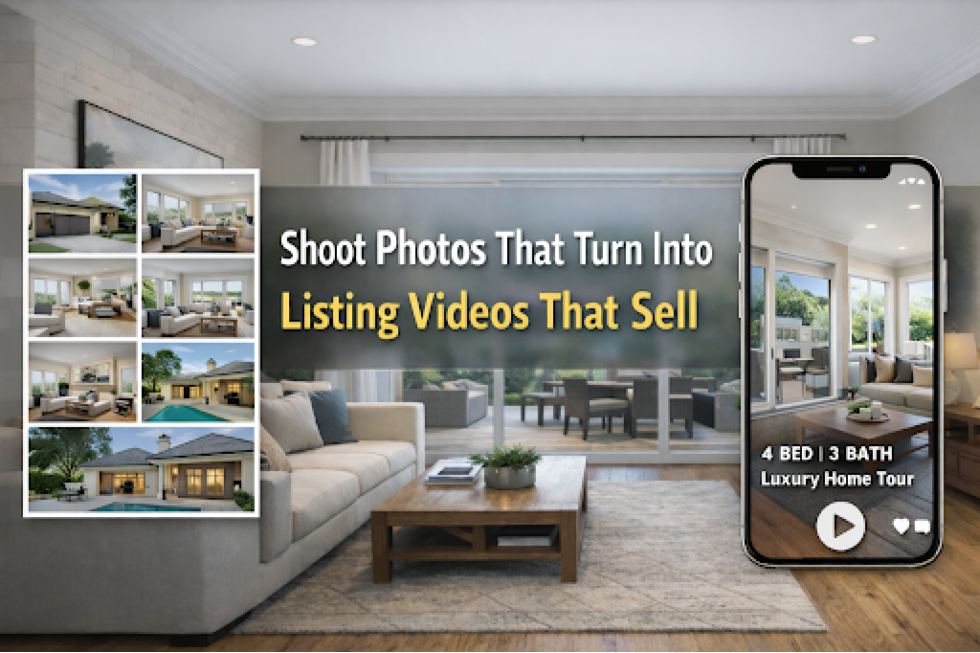
If you’re still shooting real estate photos only for MLS… you’re leaving serious money on the table.
Because today, listings don’t win on the MLS alone. They win on Instagram Reels, YouTube Shorts, Facebook video ads, and TikTok. The real game is attention, and attention is increasingly video-first.
Real estate video marketing trends for 2026
Here’s the catch: You don’t need a full video crew to compete.You just need to learn how to shoot real estate photography with video marketing in mind—so every photo you capture can eventually become scroll-stopping video content.
This guide will show you exactly how.
What you’ll learn:
- The photo-to-video mindset shift that modern real estate marketing requires
- The best camera angles + compositions that convert better on video
- A room-by-room photo checklist designed for listing videos
- Mistakes photographers make that ruin video results
- How AutoReel helps turn photos into high-performing video marketing (without extra editing work)
Why Real Estate Photography Needs to Convert (Not Just “Look Good”)
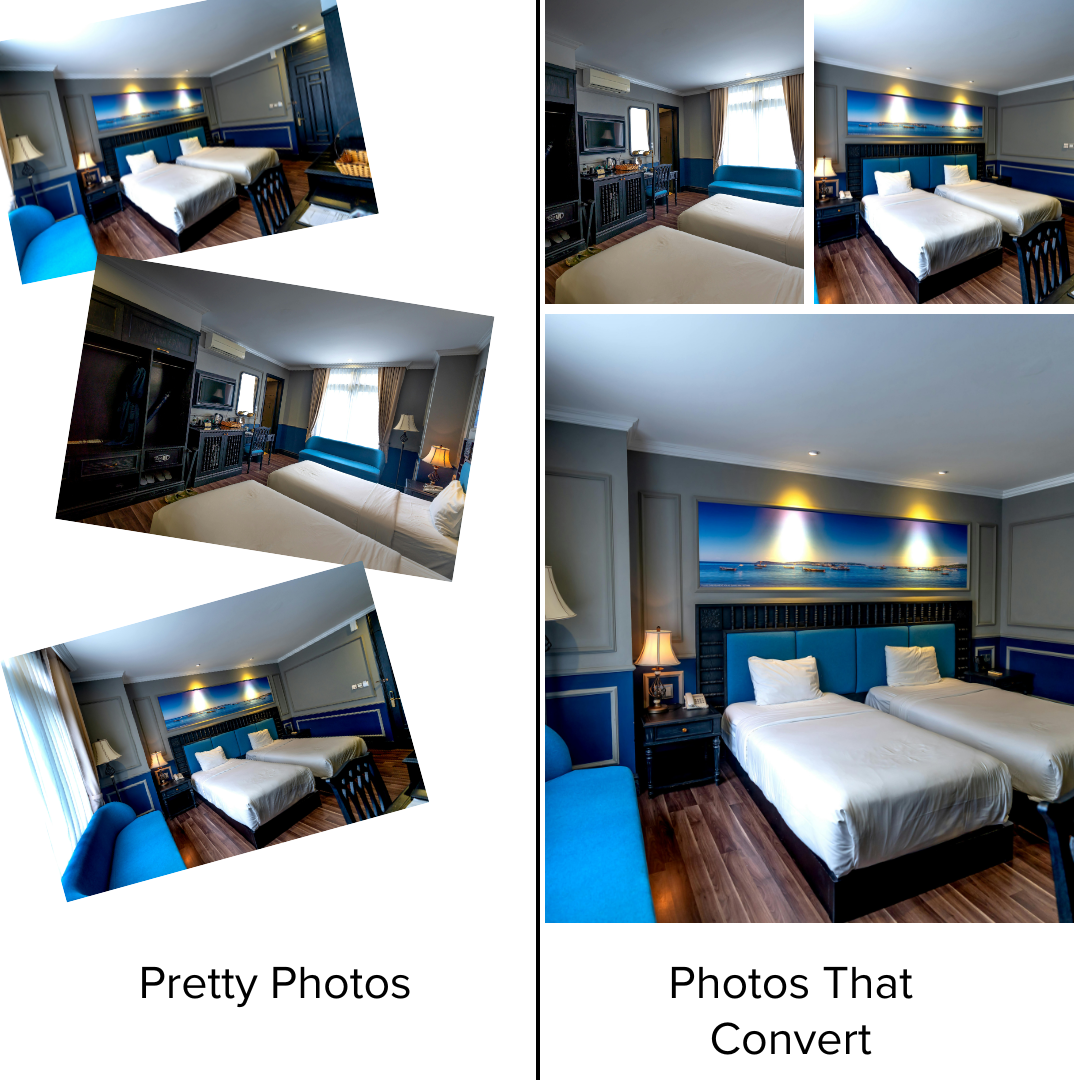
Traditional real estate photography focuses on:
- Bright rooms
- Straight vertical lines
- Clean wide angles
- Accurate colors
- “Here’s the space”
That’s still important.
But video marketing needs something more: emotion + momentum.
When someone watches a listing video, they’re not analyzing the home like a floor plan…They’re feeling it like a lifestyle.
And the best listing visuals do 3 things:
- Stop the scroll
- Build desire
- Trigger action (inquiry, save, share, showing request)
If your photography can do that, you don’t just deliver photos—you deliver conversions.
Video marketing stats real estate agents can’t ignore
The Photo-to-Video Mindset Shift Every Real Estate Photographer Must Make
Here’s the simplest way to think about it:
MLS photography is informational. Video marketing photography is persuasive.
So instead of only shooting “coverage” shots, start shooting “story” shots.
Ask yourself before every click:
- “Would this work as a 1-second shot in a Reel?”
- “Does this angle help someone picture living here?”
- “Is there a clear hero feature or emotional pull?”
This is how top real estate media teams win without adding extra shoot time.
Gear That Helps You Shoot Real Estate Photography for Video Marketing (Without Going Overboard)
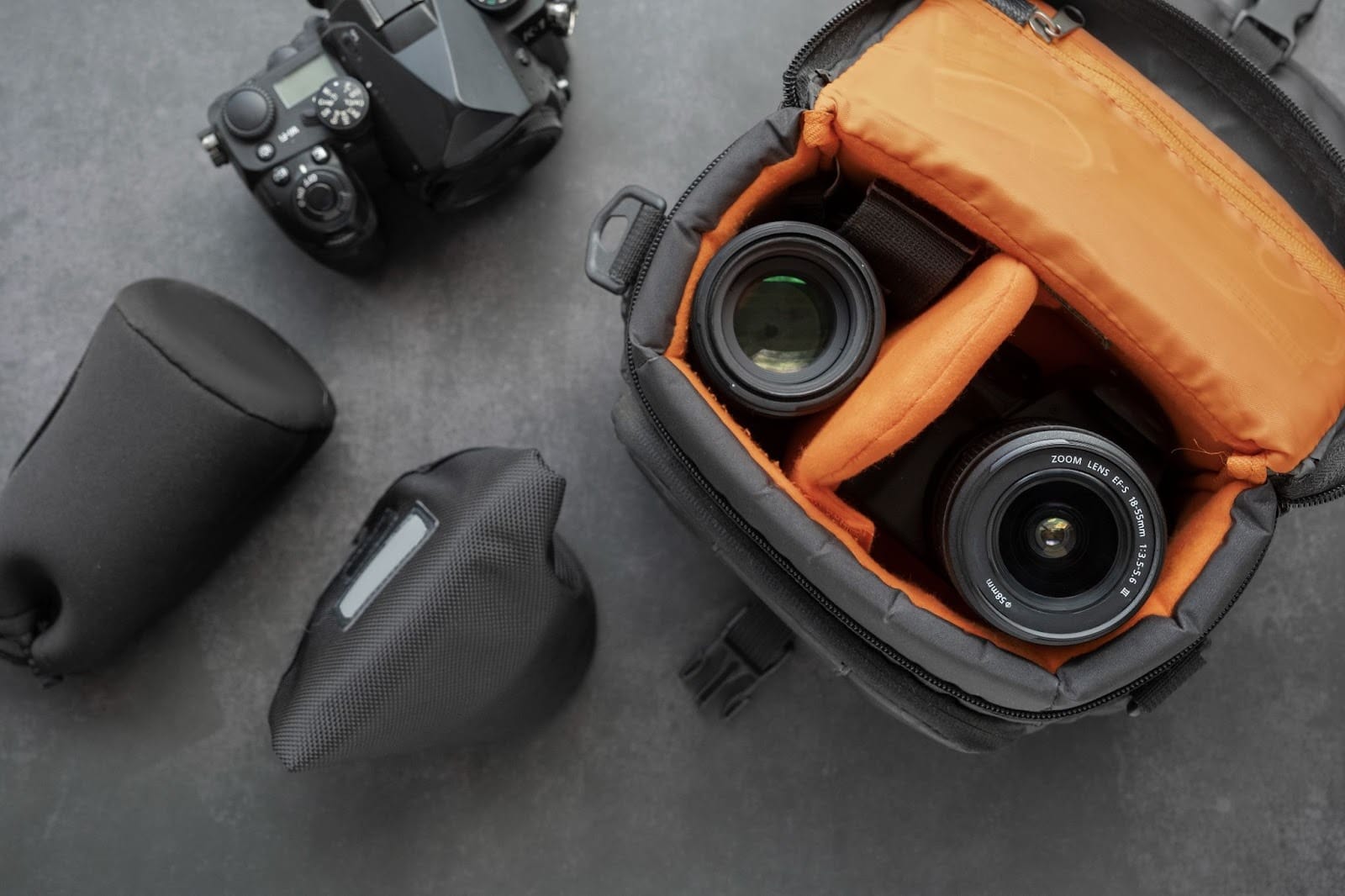
You don’t need Hollywood gear. But you do need consistency.
Recommended setup (photographer-proven):
- Camera: Full-frame or crop sensor DSLR/mirrorless
- Lens: 14–24mm or 16–35mm (wide angle sweet spot)
- Tripod: Yes, always (your vertical lines will thank you)
- Flash/Light (optional): Speedlight or continuous light for dark rooms
- Phone (bonus): Modern iPhone/Pixel can capture “Reel-friendly” clips + stills
Pro tip:
If you want your photos to convert to video better, shoot with:
- Balanced exposure
- Clean composition
- Minimal distortion
Because video tools love clarity—and your marketing results do too.
How to Shoot Real Estate Photography That Converts: The Step-by-Step Framework
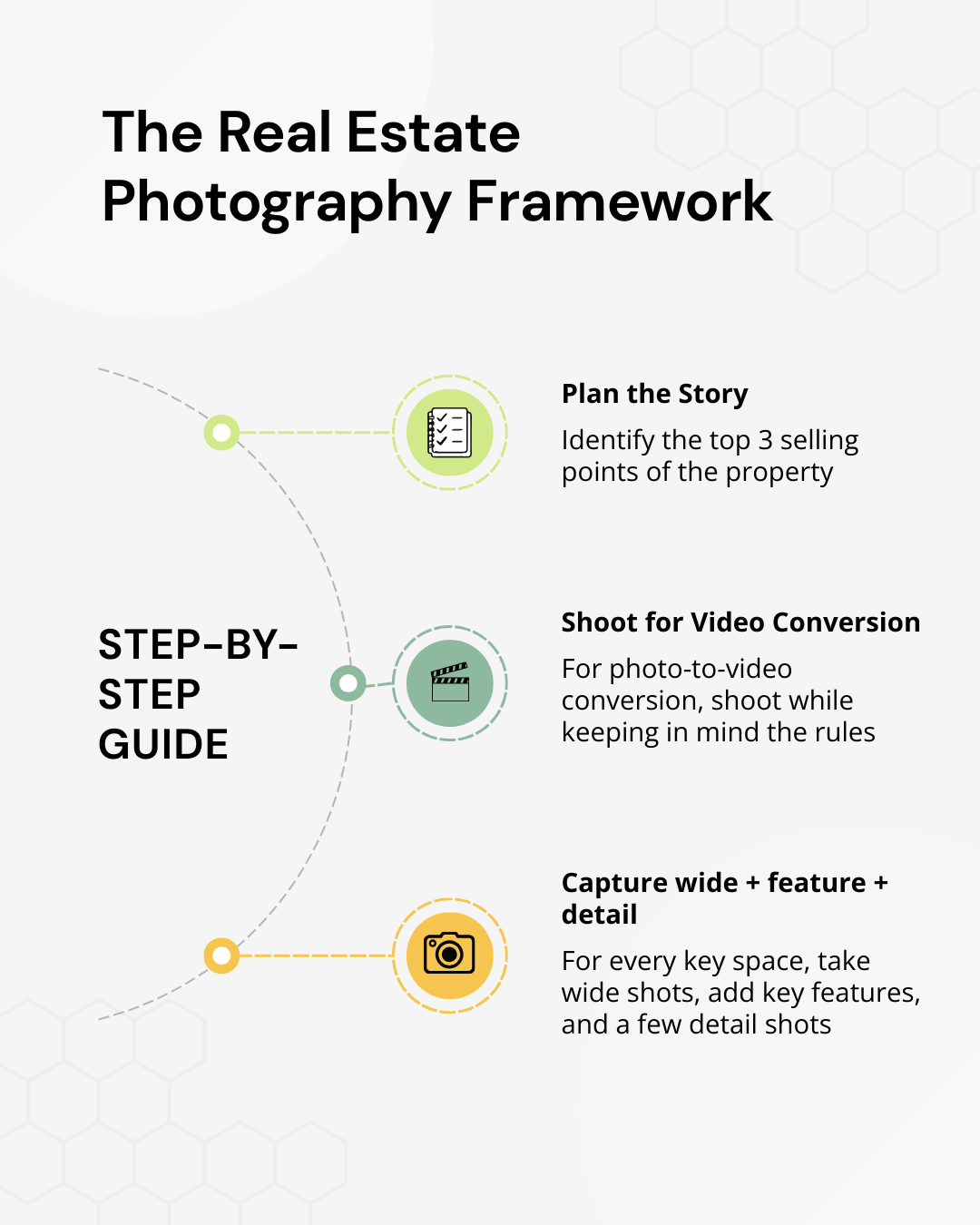
Step 1: Plan the story before you shoot
Every property has a story. Your job is to uncover it.
Before shooting, identify the top 3 selling points:
- Natural light
- High ceilings
- Renovated kitchen
- Backyard + pool
- Luxury finishes
- Walkability/location vibe
- Investment potential / rental-ready layout
These become your video “chapters.”
Skyscraper move:Most competitors teach angles. Top performers teach intent + sequencing.
Step 2: Shoot like the photo will become a video slide (because it will)
For photo-to-video conversion, shoot with these rules:
- Keep framing consistent room-to-room
- Leave space for on-screen text (top-left or center safe areas)
- Avoid clutter and micro distractions
- Capture both wide + detail shots
- Shoot transitions (hallway → room entry)
Your end goal: photos that feel like a smooth walkthrough, even when they’re still images.
Shoot real estate photos that convert into AI video
Step 3: Use the “wide + feature + detail” trio for every key space
This is the conversion formula.
For every important room, capture:
- Wide shot (the full layout)
- Feature shot (the “why this room is special”)
- Detail shot (texture/lifestyle: faucet, backsplash, flooring, built-ins)
This gives AutoReel-style video edits more variety, flow, and premium feel.
If you want a plug-and-play workflow to turn a finished photo set into a listing video in minutes, follow this process.
Create a real estate video from photos
Best Angles + Shots That Perform Better in Reels and Listing Videos
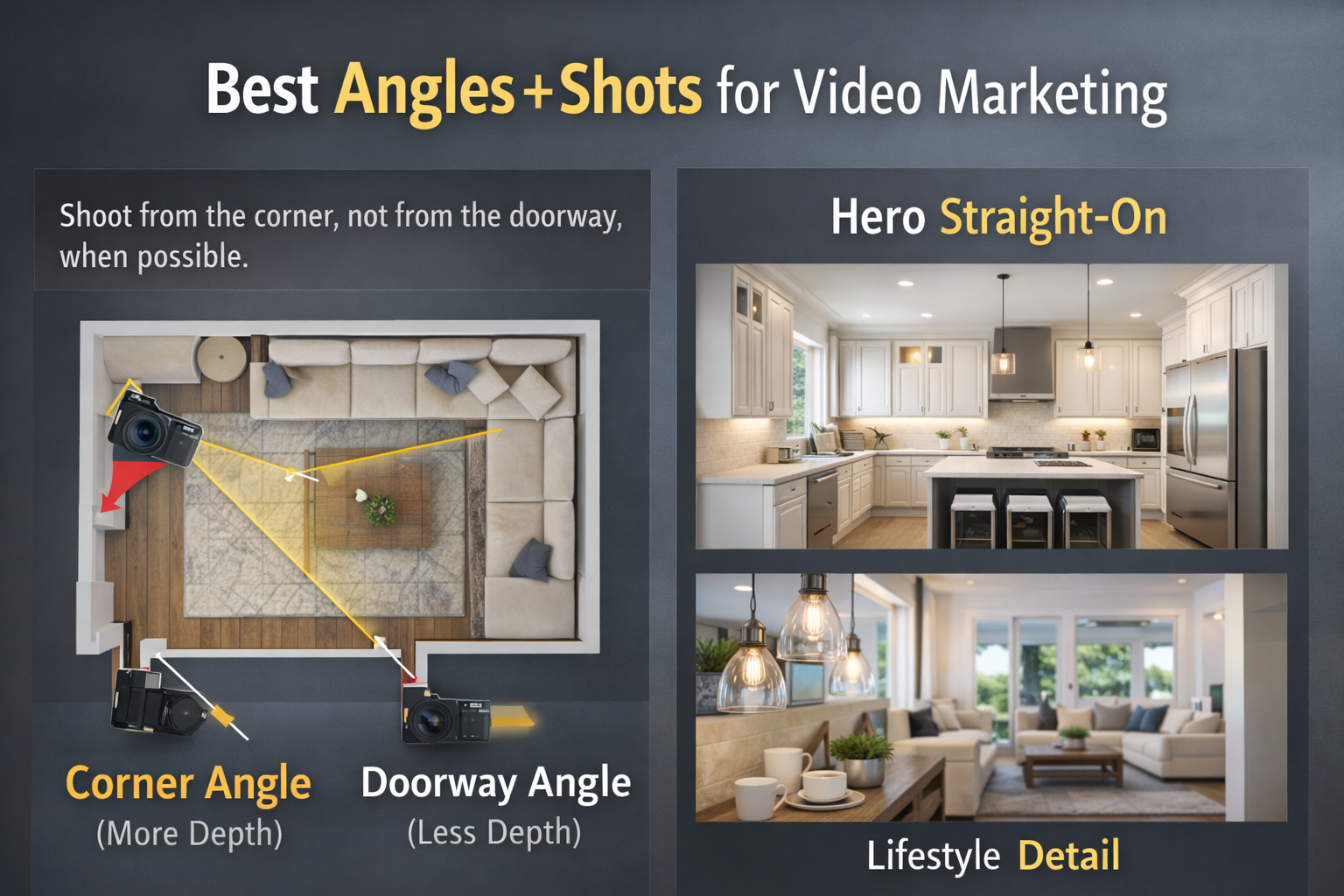
Here are the angles that typically convert best when repurposed into video marketing:
1. The “corner wide”
Shoot from a corner, not from the doorway (when possible).This creates depth and makes rooms feel larger without looking distorted.
2. The “hero straight-on”
Perfect for:
- Kitchens
- Fireplaces
- Feature walls
- Luxury vanities
It’s symmetrical, clean, and extremely scroll-friendly.
3. The “lifestyle detail”
Great for:
- Pendant lights
- Coffee bar setup
- Closet organizers
- Outdoor dining
- Smart home panels
These shots make the listing feel expensive—even when it isn’t.
Room-by-Room Shot List (Built for Photo + Video Marketing)
This is the real “conversion checklist.” Use it on every shoot.
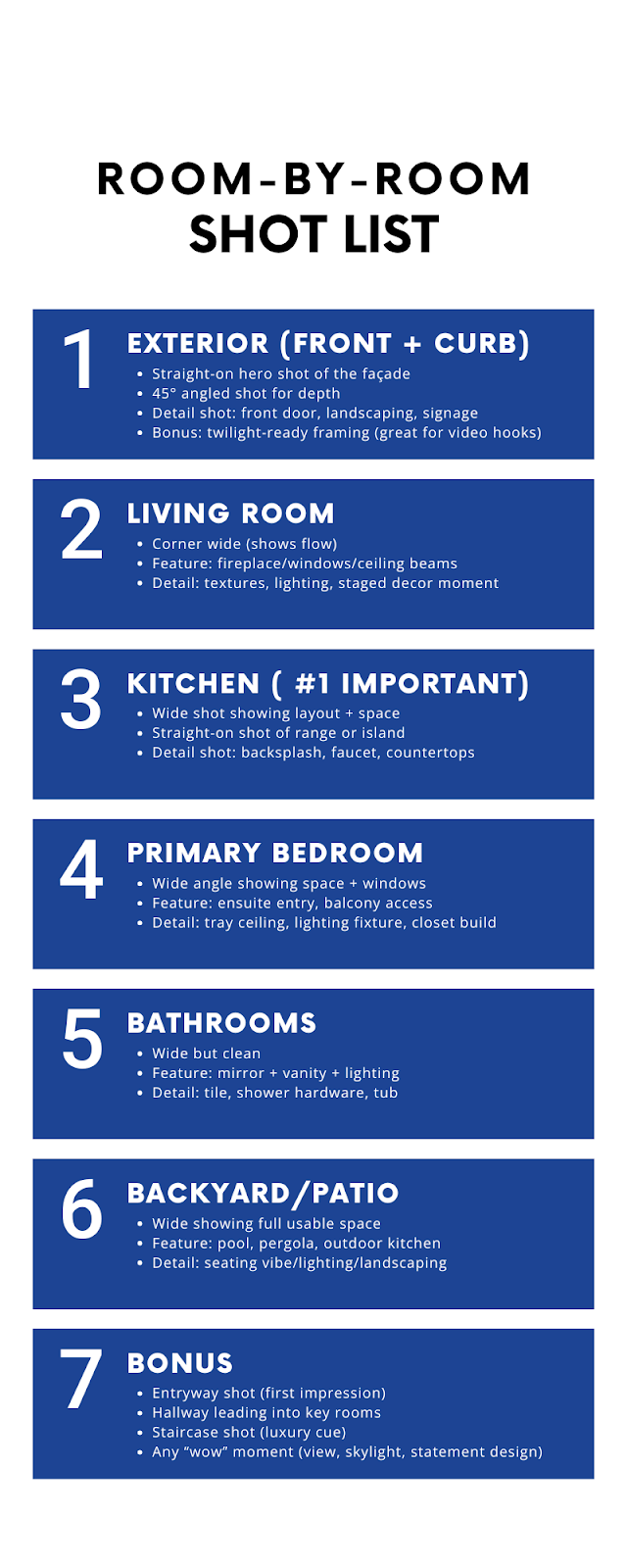
Lighting Tips That Make Photos Convert Better Into Video
Video marketing punishes bad lighting more than MLS does. Here’s how to shoot real estate photography that stays powerful in video format:
1. Shoot at the right time
- Bright interiors: late morning
- Warm “premium” feel: golden hour
- Exteriors: avoid harsh midday sun
2. Balance window light
Overexposed windows ruin video transitions.
Try:
- Bracketed exposures
- HDR (carefully)
- Window pulls (for high-end listings)
3. Keep white balance consistent
Mixed lighting (warm bulbs + cool daylight) makes your edit look messy, and messy visuals don’t convert.
The Most Common Mistakes That Kill Photo-to-Video Marketing Results
Even great photographers accidentally create “video-unfriendly” photo sets.
Avoid these:
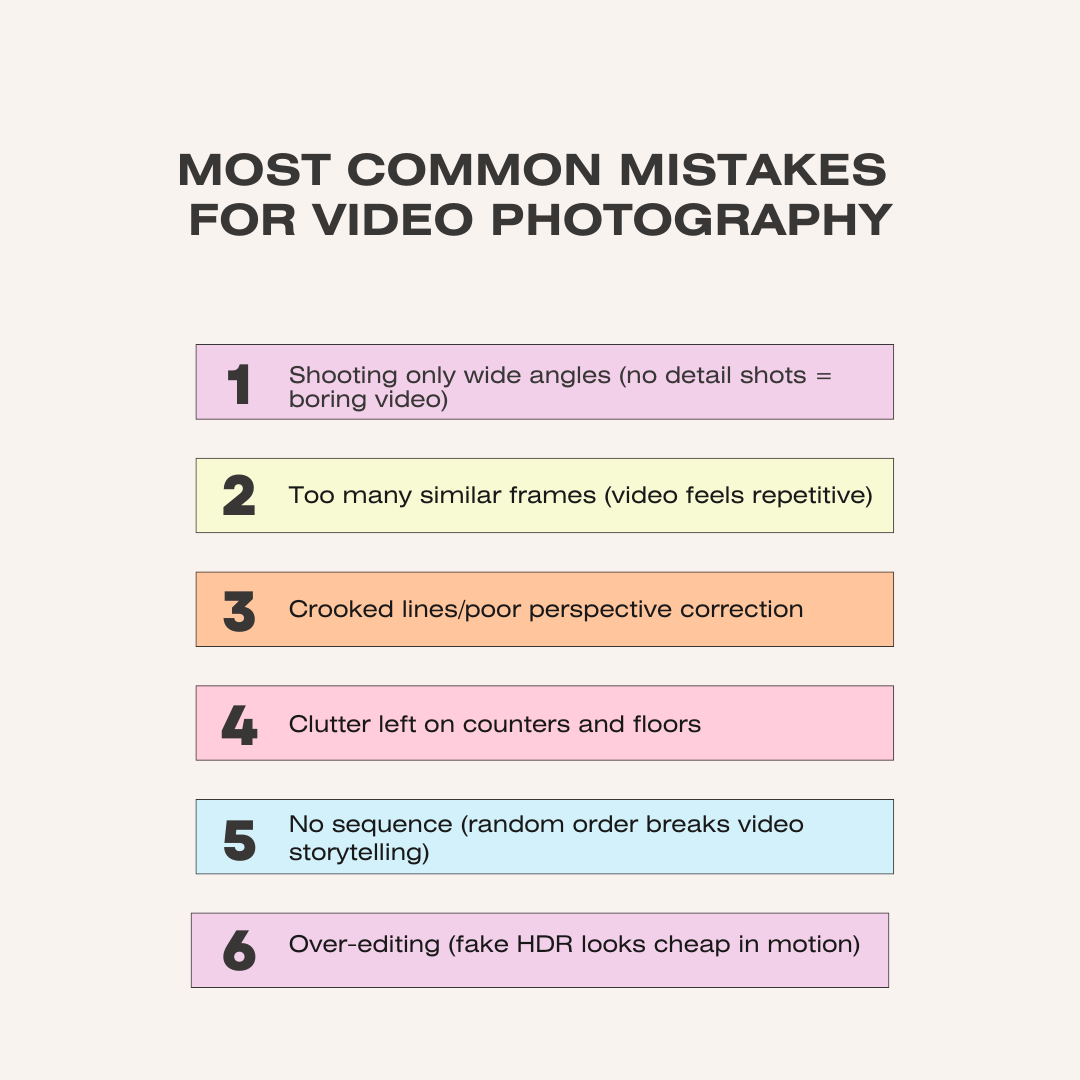
If you fix only 2 things, fix these:
- Add detail shots
- Shoot with sequencing in mind
How to Edit Real Estate Photos So They Work for Video Marketing
Good editing doesn’t mean “make it dramatic.” It means “make it believable and premium.”
Conversion-friendly edit checklist:
- Straighten verticals
- Natural contrast (no crunchy HDR)
- True-to-life colors
- Keep skies consistent across exterior shots
- Remove small distractions (cords, bins, clutter)
When your photos look clean and consistent, video tools can transform them into polished marketing assets instantly.
Here’s a full step-by-step on turning standard listing photos into a polished cinematic-style video.
Transform real estate photos into cinematic videos
The Fastest Way to Turn Real Estate Photos Into High-Converting Video Marketing

Here’s the reality: Most agents and photographers get stuck at the same point.
They have great photos, but turning them into:
- Reels
- Listing videos
- YouTube Shorts
- Branded marketing clips
…takes too long.
That’s exactly where AutoReel fits into the workflow.
Instead of exporting photos, opening complex video software, creating transitions, adding music, adding captions, and resizing for platforms… AutoReel helps you turn your property photos into video marketing quickly and consistently.
If you’re comparing DIY vs freelancer vs agency vs AI, this breakdown helps you pick the right path for your volume.
Real estate video editing costs explained
This matters because consistency is what wins:
- 1 listing video = nice
- 3 videos per week = pipeline
- 1 video per day = brand dominance
Why This Matters for Real Estate Photographers (Not Just Agents and Media Agency)
If you’re a real estate photographer, adding “video-ready photography” to your offering is an instant positioning upgrade.
Because now you’re not selling photos.You’re selling marketing outcomes.
How this helps your business:
- Charge more per shoot (premium packages)
- Offer monthly video content bundles
- Increase client retention (agents stay when you power their marketing)
- Stand out in a saturated photography market
- Become the “growth partner,” not just the camera person
This is how photographers stop competing on price—and start competing on value.
This is what it looks like operationally when you go from ‘one-off edits’ to a repeatable photo→motion system.
Before-and-after AI video workflow
Conclusion: Shoot Photos Like a Marketer, Then Let AutoReel Turn Them Into a Video That Sells

If you want to master how to shoot real estate photography, don’t just aim for “pretty photos.”
Aim for photos that:
- Tell a story
- Create emotional pull
- Translate perfectly into video
- Help agents win attention online
Because attention is the new open house.
And once your photography is video-ready, AutoReel becomes the easiest way to convert that visual content into scroll-stopping video marketing—without extra editing time, extra staffing, or extra complexity.
Why AutoReel is better for your business
AutoReel helps real estate agents and photographers:
- Scale consistent listing videos faster
- Turn every shoot into multi-platform marketing content
- Increase listing visibility and engagement
- Grow their brand without becoming full-time video editors
Bottom line:If your photos are the foundation, AutoReel is the growth engine.
If you want to estimate your cost per video and pick the right plan based on monthly listing volume, start here.
AutoReel pricing breakdown and ROI and see AutoReel pricing
FAQs
1) What is the best way to shoot real estate photography for video marketing?
Shoot with sequencing in mind (entry → main living → kitchen → bedrooms → backyard) and capture a mix of wide, feature, and detail shots so the final video feels like a walkthrough—not a slideshow.
2) How many photos do I need to create a real estate listing video?
Typically 20–35 photos is ideal for a smooth video. Include wide shots for coverage and detail shots for premium storytelling.
3) What camera settings are best for real estate photography?
A common starting point is:
- Aperture: f/7.1–f/9
- ISO: 100–400
- Shutter: tripod-based, adjust as needed The goal is sharpness, straight lines, and balanced highlights.
4) Should I shoot vertical or horizontal photos for Reels?
Shoot mostly horizontal for MLS, but include a few vertical-friendly compositions (or leave extra framing space) so the content can be repurposed into Reels, Shorts, and TikTok cleanly.
5) What shots help real estate videos convert the most?
The highest converting shots usually include:
- Kitchen hero shots
- Bright living rooms with large windows
- Outdoor lifestyle spaces
- High-end details (fixtures, finishes, lighting)
6) What’s the biggest mistake photographers make when shooting for video marketing?
Only shooting wide angles. Without close-ups and feature shots, the video becomes repetitive and loses attention quickly.
7) Can I turn listing photos into video without video editing skills?
Yes. With tools like AutoReel, you can turn photos into listing videos and short-form social content without needing complex editing software.
References:
https://lensviewing.com/camera-angles-for-real-estate/
https://www.realtrends.com/blog/2025/02/19/real-estate-video-ideas/
https://resimpli.com/blog/real-estate-social-media-statistics/