Is Virtual Staging Worth It for a Starter Home Listing?

Summarize with AI


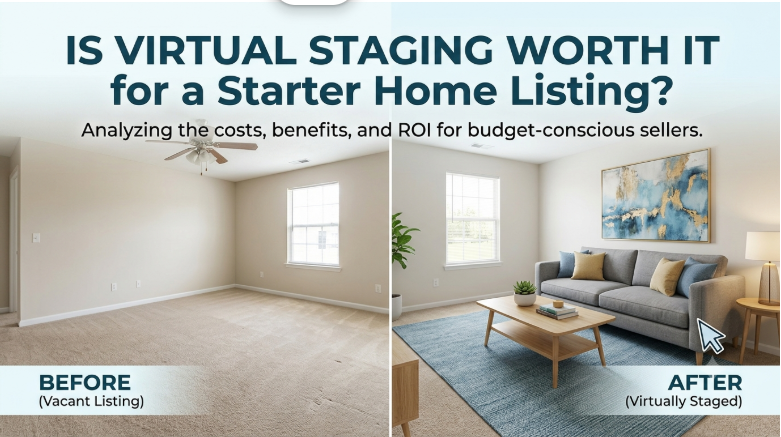
If you're marketing a starter home, you've probably asked yourself: is virtual staging worth it, or is that a nice-to-have for the million-dollar listings?
Here's the short answer: yes, it's worth it, and honestly, it might matter more on a starter home than a luxury one.
The cost is small, and the gap between an empty room and a furnished one is huge, especially for first-time buyers who have a hard time picturing themselves anywhere they can't see furniture. Let's break down is virtual staging worth it.
What "Worth It" Really Means on a Starter Home Budget
Starter homes just don't have the same room in the budget as luxury listings.
A $6,000 staging bill makes total sense on a $1.2 million house. However, it makes zero sense on a $220,000 one, where your commission is already stretched thin, and the seller is counting every dollar.
But "worth it" isn't only about the sticker price; it's about cost versus impact. And that's exactly where virtual staging flips the script.
When a tool costs a few dollars per room instead of thousands for the whole house, you don't need it to work miracles. It just needs to move the needle a little, and it's already paid for itself.
Traditional Staging vs. AI Virtual Staging: The Real Numbers
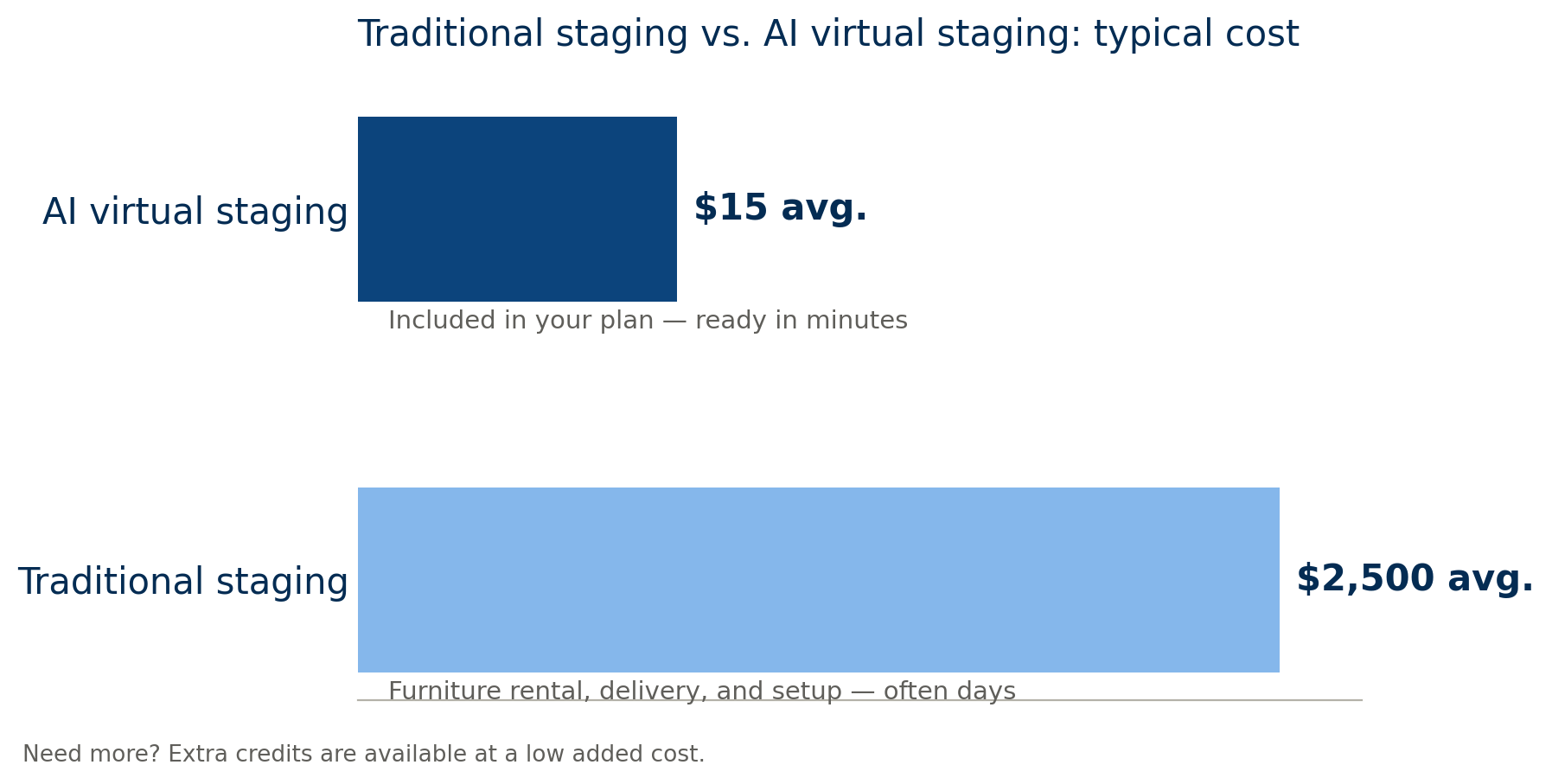
Traditional staging usually runs anywhere from a few hundred bucks for a light "vignette" package to several thousand for full-home furniture rental, and that's before you factor in delivery, setup, and pickup.
For a seller who's already stressed about moving costs, closing costs, and repairs, that price tag is usually the reason staging just doesn't happen.
AI virtual staging skips all of that.
- No furniture truck
- No delivery window
- No rental fees
With AutoReel, virtual staging is built into every plan, not some upsell you have to unlock. Each plan comes with a set amount of AI photo edits included every month, and that covers your virtual staging.
So staging a starter home listing usually fits well within what you're already paying for. Go over that in a busy month? You can grab AutoReel extra credits at a low added cost - no scrambling for a separate expensive package, no waiting on a vendor's calendar.
That's really the whole "small budget listings" argument in one sentence: you're not choosing AutoReel virtual staging vs. no staging anymore. You're choosing a few extra dollars vs. a few thousand.
Do Starter Home Buyers Even Care About Staging?
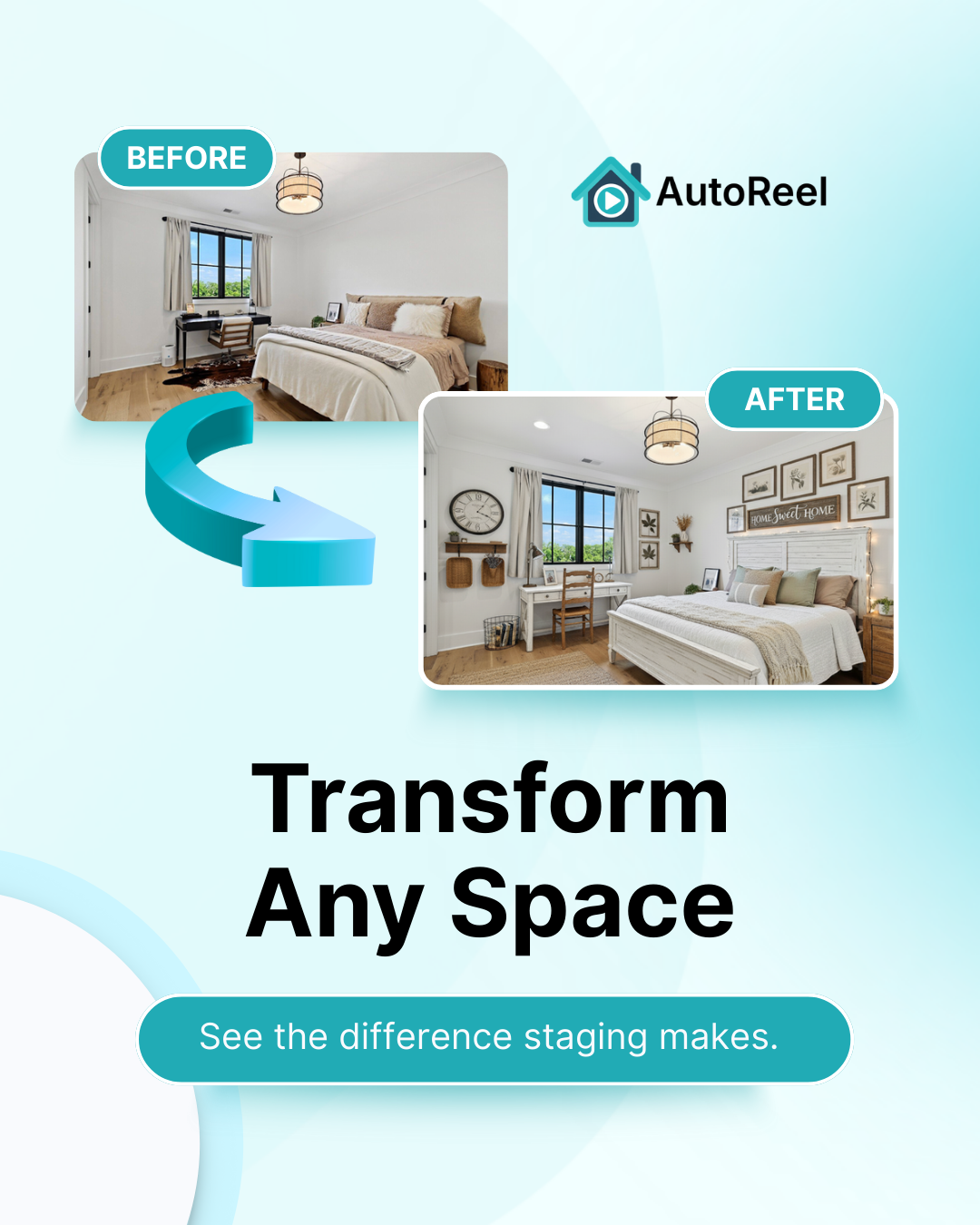
This is the real question hiding behind the idea "is staging necessary", so let's answer it honestly instead of just selling you on it.
First-time buyers make up a huge chunk of the starter home market, and they typically have less experience picturing a space "as it could be." A move-up buyer might glance at an empty living room and mentally drop their own couch in. A first-time buyer is more likely to just see a small, empty box and assume the room is smaller than it is.
Virtual staging fixes exactly that. It shows scale, flow, and what the room's actually for, where a bed fits, whether a sectional works in that living room, how that oddly angled nook could become an office.
On a starter home, where every square foot is doing double duty, that clarity does real work.
There's also a scroll effect worth mentioning. Buyers almost never look at one listing in isolation, they're flipping through a dozen homes in your price range in one sitting, usually on their phone.
In that world, an empty room sitting next to nine staged ones doesn't just look less appealing, it looks like the seller didn't bother. Buyers might not consciously think "no staging, pass," but the thumb keeps scrolling either way.
So, virtual staging isn't about making a home look bigger than it is. It's about not losing the scroll before anyone even reads the listing description.
Where Virtual Staging Pays Off Most for Cheap Homes
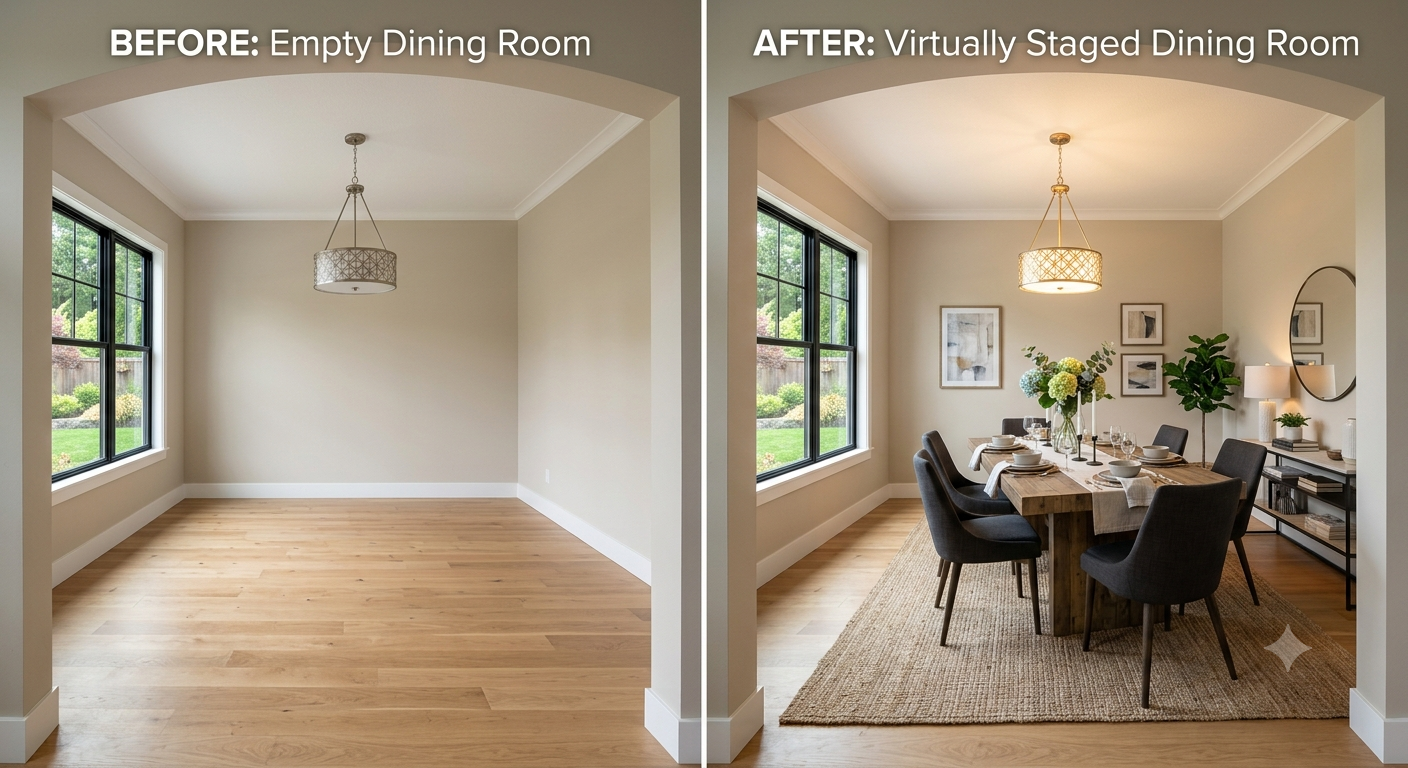
Virtual staging earns its keep hardest in exactly the situations starter home sellers run into constantly:
- Vacant listings: Empty rooms are the classic weak spot in listing photos, and the best-case scenario for AI staging, since there's no existing furniture to work around.
- Small or awkward layouts: Starter homes love a small bedroom, a combined living/dining area, or a room shaped like nothing else on earth. Furnished photos help buyers understand what they're actually looking at.
- Online-first buyer behavior: People decide whether to book a showing almost entirely from photos. An empty room gets scrolled past. A staged one gets a click.
- Competing listings that are already staged: If similar homes in your price range are staged and yours isn't, buyers notice, even if they couldn't tell you why.
Affordable Listing Marketing With AutoReel
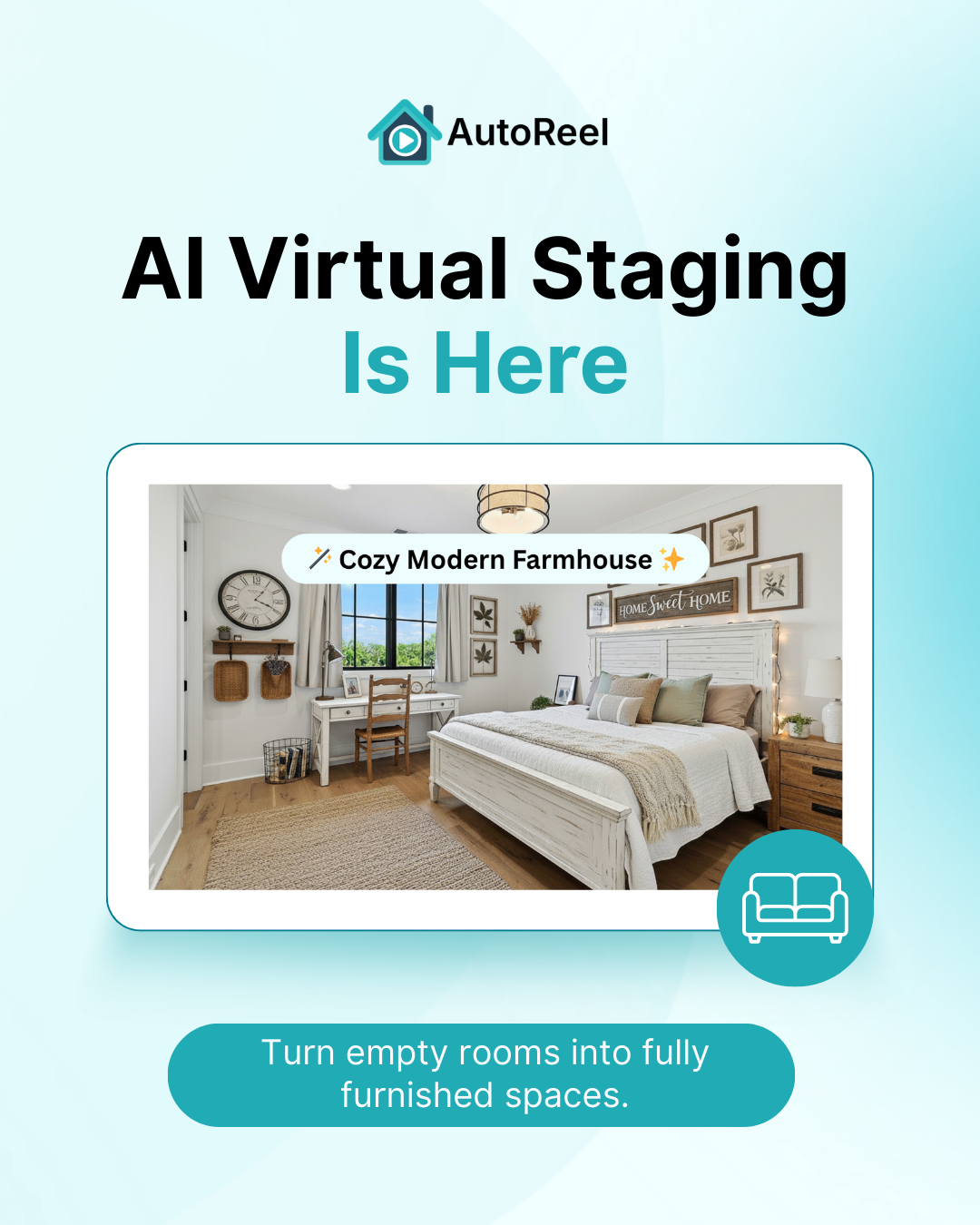
Here's where it helps to zoom out past the staging photos themselves. AutoReel isn't a generic video generator bolted onto a real estate use case, it is the best ranked AI video app for the real estate industry and it's built for the whole listing workflow.
The AutoReel plan covering your virtual staging also gets you:
- Photo-to-video creation: Turn the photos you already have into a cinematic property video in about 10 minutes flat, no videographer needed
- AutoReel Studio: A built-in editor for templates, music, captions, and branding, so the video looks perfect - not a stock template
- AI Voiceovers and AI Avatars: Add narration or a presenter-style video without booking talent
- One-Click Import: Pull listing photos straight from Realtor.com so you're not re-uploading everything by hand
For a first-time seller or a tight-budget listing, that's one modest monthly cost covering staging, editing, and video; instead of separately paying a stager, a photo editor, and a videographer.
And listings with video attached see meaningfully more inquiries than photo-only ones, which matters even more on a starter home, where every extra showing request counts.
When Virtual Staging Might Not Be Worth It
To be fair, it's not the right call every single time:
- Already-furnished, well-decorated homes: if the seller's own furniture photographs well, staging doesn't add much.
- Listings with no online marketing at all: Rare these days, but it happens in some hyper-local markets.
- Photos that need real fixes first: Virtual staging can't rescue bad lighting, clutter, or a bad angle. Get clean, well-shot photos first; staging is an enhancement - not a fix.
Outside of those situations, staging is almost always worth the small cost. So, if you are still wondering is virtual staging worth it, the answer is - yes.
How to Actually Add Virtual Staging to a Listing
Here is a quick step-by-step guide to virtually stage your listings with AutoReel:
- Upload your listing photos, or pull them straight in from Realtor.com.
- Pick the rooms that need it most; empty bedrooms, living rooms, and awkward spaces get the biggest lift.
- Choose a furniture style that fits the home's price point and the buyer you're targeting.
- Download the staged photos for your listing, or drop them right into a photo-to-video project in Studio.
It takes a few minutes per room, not days waiting on a vendor, which is a lifesaver when the seller only cleared the house out a day or two before your photo shoot.
A Quick Word for First-Time Sellers
If you're the one selling here, not just the agent, this part's for you. First-time sellers tend to swing one of two ways, either over-spending on cosmetic fixes that don't actually move the sale price, or under-spending on marketing because every dollar already feels claimed by moving costs, repairs, and closing fees.
Virtual staging is a thing that lands in neither trap. It's cheap enough not to dent a tight budget, and it directly affects the number that matters most in your first two weeks on the market: how many people actually book a showing.
If your agent hasn't brought it up yet, it's a fair thing to ask about, especially if any rooms in the house are sitting empty right now.
The Bottom Line
So, is virtual staging worth it for a starter home? Yes, the math just works in your favor. Traditional staging's price tag is exactly why sellers skip it on lower price-point homes in the first place.
AI virtual staging removes that barrier entirely: it's included in your AutoReel plan, with a generous monthly amount that covers normal listing volume, and if you ever need more, extra credits are available at a low added cost instead of a separate expensive package.
For a first-time seller watching every dollar, that's about as close to a no-brainer as listing marketing gets. Ready to try virtual staging t on your next listing? Start with AutoReel's trial plan or check out how virtual staging fits into your plan on the pricing page.
FAQs
Is virtual staging worth it for a low-price starter home?
Yes, in most cases. Since AI virtual staging costs a fraction of traditional staging, it doesn't need to work miracles to pay for itself; even a small bump in showings or online engagement covers the cost many times over.
Is staging necessary, or can I just list the home empty?
Not strictly necessary, but empty rooms are harder for buyers, first-time buyers especially, to picture as livable space. Staging, virtual or traditional, helps buyers understand scale and function a lot faster.
How much does virtual staging cost with AutoReel?
Virtual staging is included in every standard AutoReel plan, with a monthly amount built right in. Go over that, and additional edits are available at a low added cost, no separate premium tier needed.
Is virtual staging for cheap homes a bad look, like it's hiding flaws?
No, used honestly, virtual staging just shows buyers how a space could function, it's not claiming anything false about the home. It's standard practice across price points now, and most MLS systems require clear disclosure that photos are virtually staged, so everything stays transparent.
What's the difference between virtual staging and AI photo edits?
Virtual staging specifically adds furniture and decor to empty or sparse rooms. AI photo edits cover other fixes, like lighting corrections or lawn touch-ups. Both draw from the same photo edit allowance in your AutoReel plan.
Can first-time sellers use virtual staging without any design experience?
Yes, you don't have to make any design decisions yourself, just pick a room and a style, and AutoReel generates the furnished version of the photo for you.
Sources
https://www.nar.realtor/research-and-statistics








