Real Estate Video Cost Calculator (2026): How Much Does a Real Estate Video Cost?

Summarize with AI


Understanding real estate video costs means looking beyond headline numbers. Comparing AutoReel pricing for real estate, AutoReel app pricing, and available AutoReel pricing plans on AutoReelApp.com pricing helps agents calculate real costs by listing type, volume, and timeline instead of guessing or overspending.
“In the U.S., a basic real estate walkthrough video often costs around $200 to $500, while more premium cinematic packages with drone footage, advanced edits, and agent-led segments can run $800 to $2,500+, depending on your market, scope, and turnaround time.”
That’s the headline.
But what you actually need is a reliable way to calculate cost based on your listing type, your market, your deliverables, and your timeline—because video pricing isn’t one-size-fits-all.
If you’re still deciding whether video is even worth investing in, read this breakdown on how property videos influence buyer behavior.
So let’s build that calculator.
The Real Estate Video Cost Calculator (Use This in Under 2 Minutes)
Below is a practical calculator you can use whether you’re:
- A real estate agent choosing between vendor quotes
- A brokerage building a media budget
- A real estate media house pricing packages
- An agent comparing a videographer vs AI tools
Step 1: Choose your video type (Base price)
Use these “market-normal” base ranges as a starting point:
Pick the closest match to what you’re trying to publish on Instagram, YouTube, Zillow, your website, and listing presentations.
If you want to see which tools can produce each type of listing video from photos, here’s a clear guide to the best tools to turn real estate photos into videos.
Step 2: Add cost drivers That Shape Real Estate Video Pricing (The real “hidden” pricing)
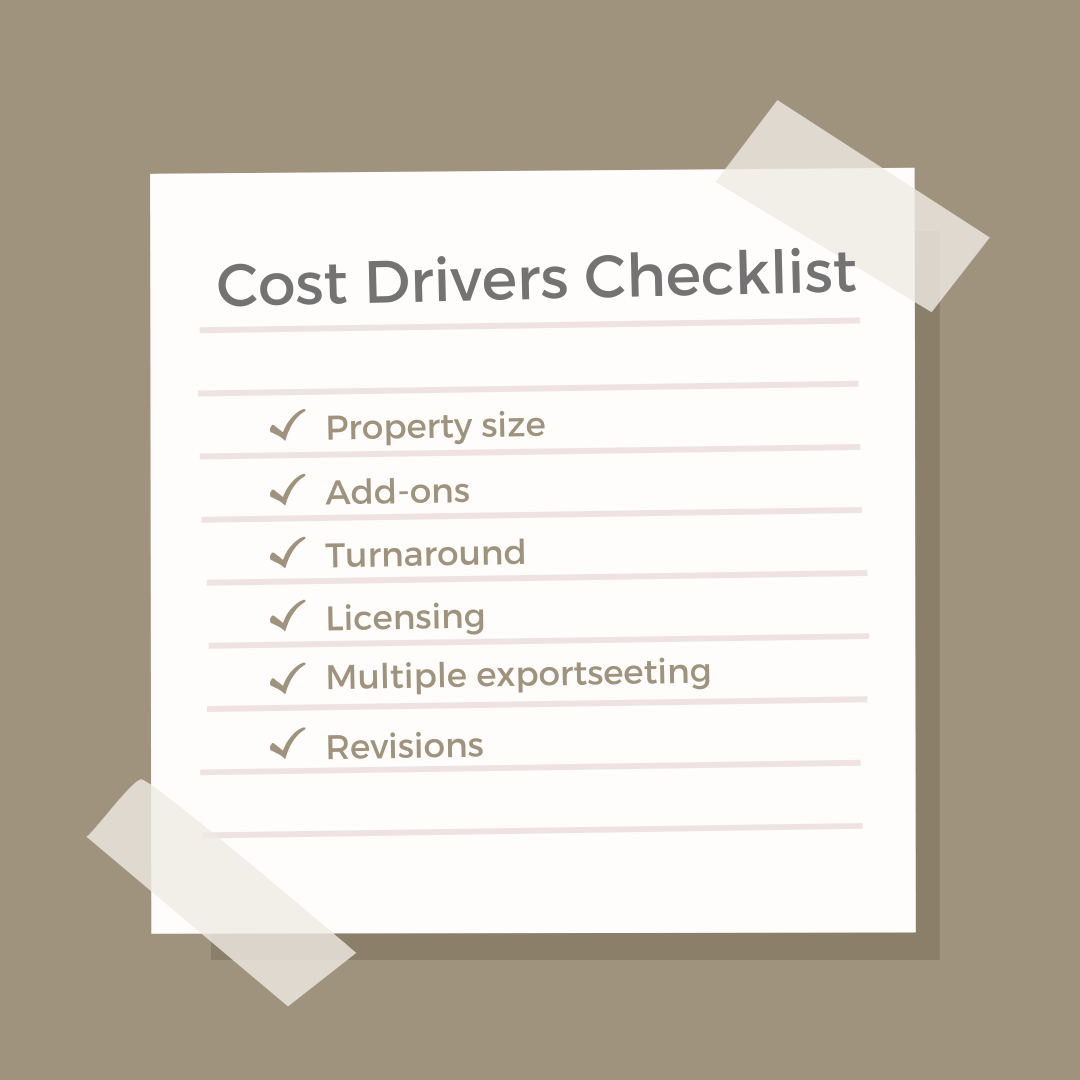
Use this checklist and add the estimated costs that match your project:
A) Property size/complexity
- Small condo/straightforward layout: +$0–$100
- Mid-size home/multiple rooms: +$100–$300
- Luxury home/complex layout: +$300–$800+
(Complexity increases shoot time + edit time, which is where budgets grow fastest.)
B) Add-ons (Most common)
- Drone: +$150–$500+ depending on scope/location
- Agent on-camera intro/outro: +$50–$300
- Voiceover: +$50–$250
- Captions/subtitles (short-form + accessibility): +$20–$150
- Motion graphics (lower thirds, map animation, titles): +$50–$400
- Multiple exports (MLS-safe + Instagram + YouTube): +$25–$150
Many teams also invest in visual upgrades like virtual staging and AI photo edits, which can make the same listing look more premium before you even create the video.
C) Turnaround time
- Standard: 0
- Rush (24–48 hrs): +15% to +40% typical premium
D) Usage/licensing (Often ignored)
If you’re paying a premium production house, some include licensing or charge more for usage across multiple channels. Not always—but it’s worth checking.
Step 3: Plug Into the Formula
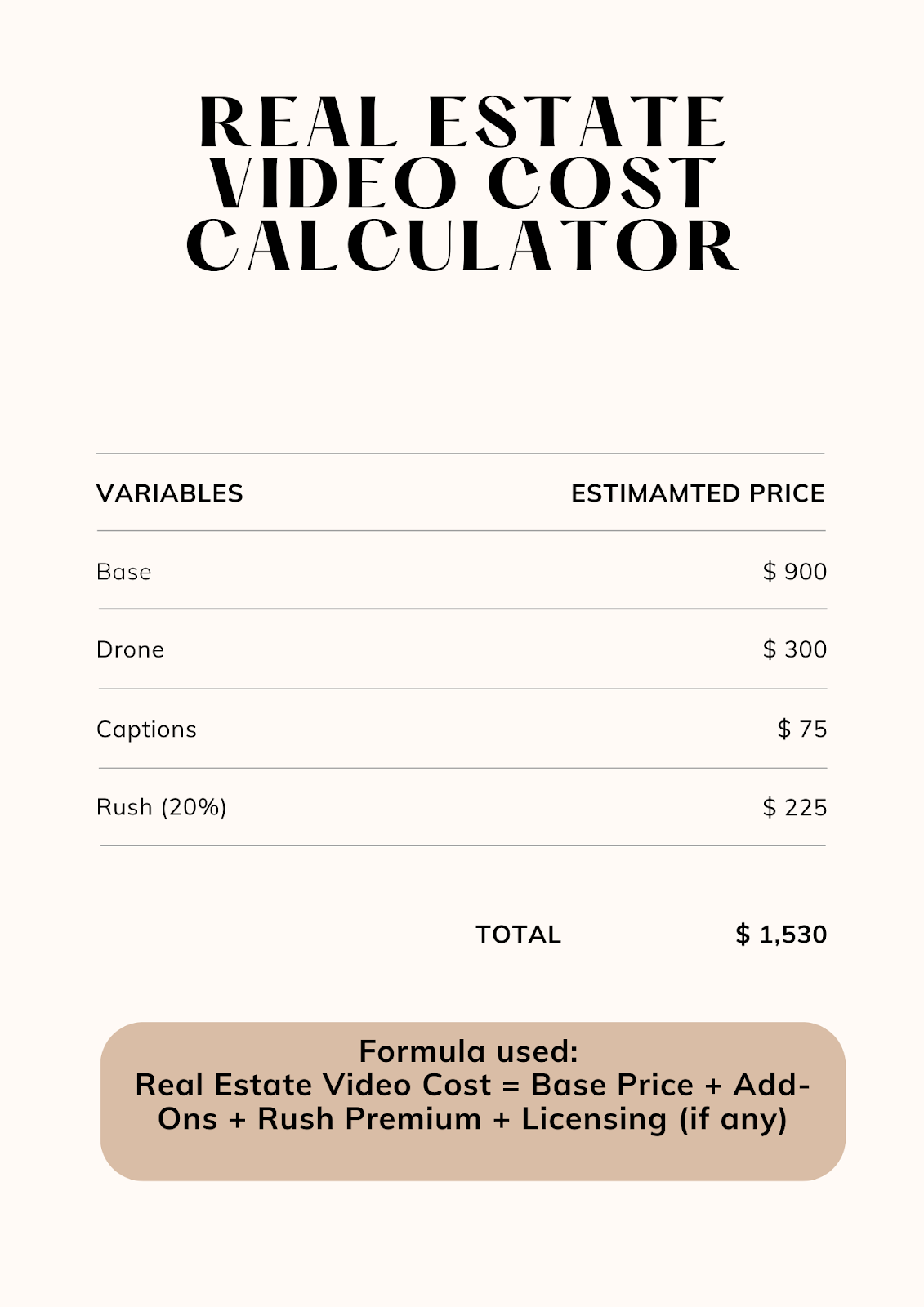
Real Estate Video Cost = Base Price + Add-Ons + Rush Premium + Licensing (if any)
Cost Benchmarks by Use Case to Avoid Overpaying on Real Estate Video (So You Don’t Overpay)
A lot of agents overspend because they’re buying a “cinematic package” when they really need consistent short-form.
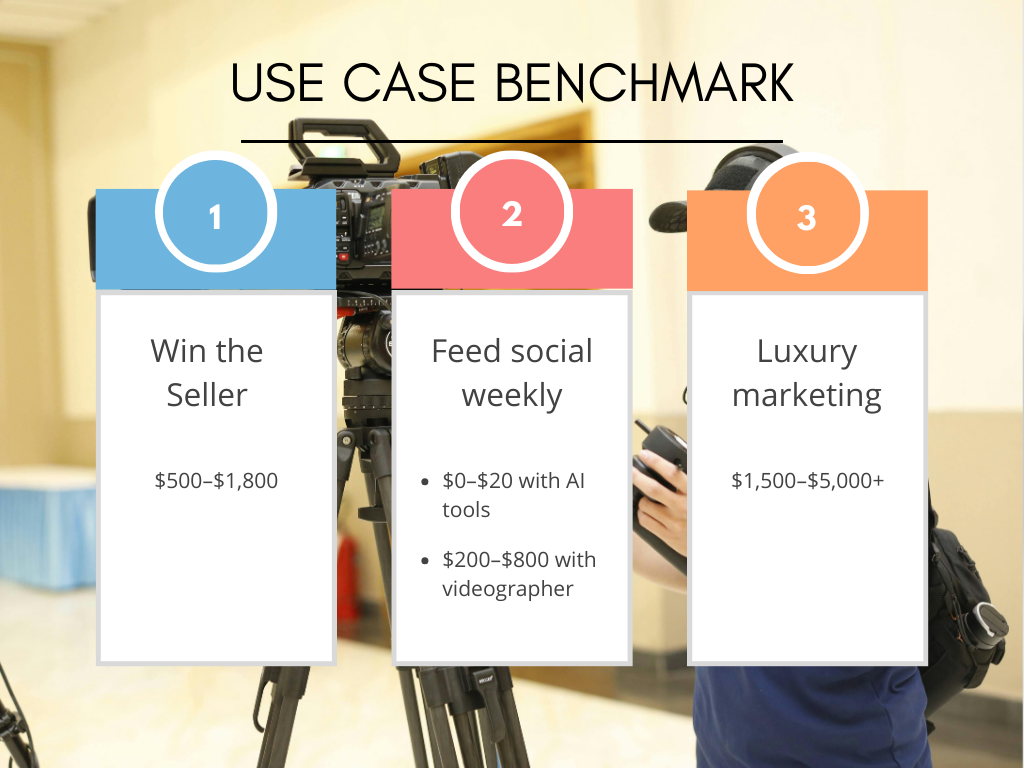
Here are realistic cost bands by goal:
1) If you need a listing video to win the seller
- Expect: $500–$1,800
- Must include: clean walkthrough + tight edits + multiple versions
- Optional: drone (if it supports the story, not just “because drone”)
2) If you want to feed social media weekly
- Expect: $0–$20 per video with AI tools
- Or: $200–$800/video with a videographer if you want fully custom footage every time.
Short-form video is one of the easiest ways to stay visible between listings, and here’s exactly how realtors use videos to sell homes faster.
3) If you’re marketing luxury real estate
- Expect: $1,500–$5,000+, depending on crew size, edits, drone, lifestyle shots
- Worth it when: average commission is huge and the listing needs brand-level storytelling(High-end numbers vary massively by city and production scope.)
The Real Estate Video Cost Comparison: Cost of Hiring a Real Estate Videographer vs AI Tools
This is where decisions actually get made.
Option A: Hiring a real estate videographer Pricing Explained (traditional)
Typical Cost Structure
- $300–$1,500+ per listing video (standard range)
- Add-ons push it higher: drone, agent segments, fast turnaround, heavy edits
Pros
- Best for ultra-premium listings
- You get original footage
- “Hands-off” if you have a great vendor
Cons
- Expensive to scale weekly
- Scheduling delays
- Revisions cost time
- Not built for social volume
Option B: AI tools (AutoReel-style workflow)
Typical Cost Structure
- Subscription pricing (often $30–$249/month range, depending on tool and tier). You can see the latest plans on the AutoReel pricing page.
- Cost per video can drop to minimum, as much is possible, once you’re producing consistently
Pros
- Fast turnaround (minutes, not days)
- Unlimited iterations (great for testing hooks)
- Built for volume (social-first)
- Consistent brand output for teams
Cons
- Best results require good input assets (photos, clips)
- Some ultra-luxury listings still benefit from custom filming
The Practical Verdict (What Most Teams Do in 2026)
Use videographers for flagship listings, and use AI tools for weekly content, listing teasers, reels, and marketing at scale.
That approach wins on both cost and attention.
A Budget Planner for Agents and Media Houses (Copy This)
If you’re building a monthly marketing plan, here’s a simple model:
“Hybrid” budget model (recommended)
- 1 premium shoot/month: $1,200–$2,500
- 8–20 social videos/month using AI: tool subscription
- Total: predictable, scalable, and content-consistent
This is how you stop treating video like a one-off expense and start treating it like a repeatable listing-winning system.
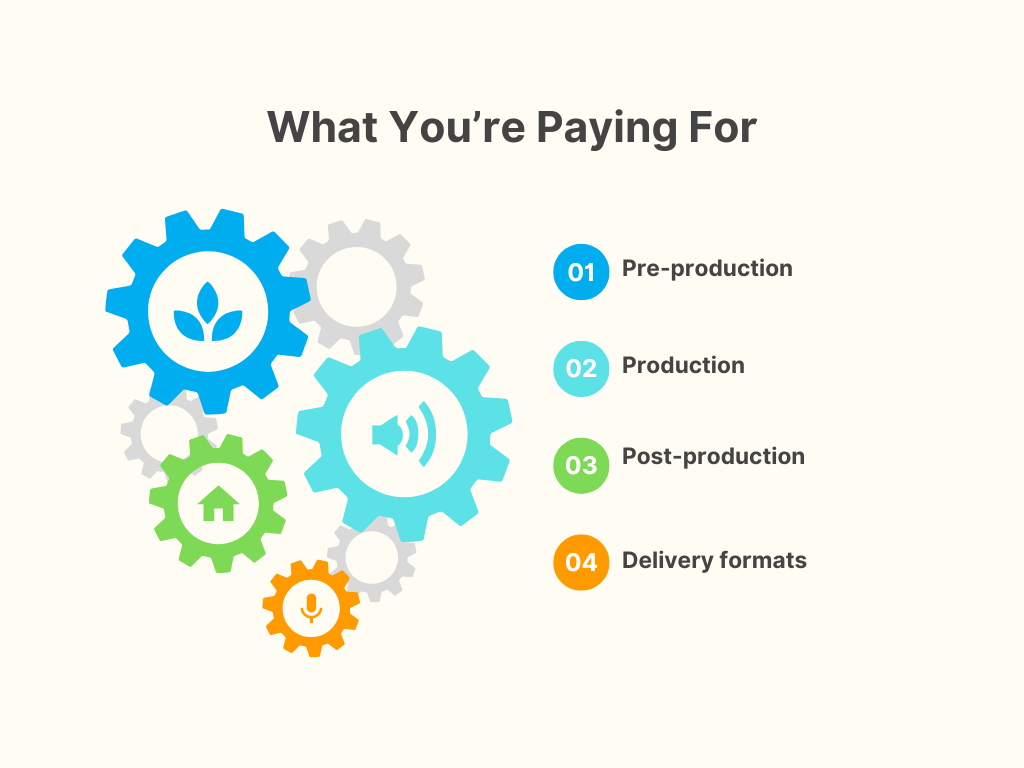
Real Estate Video Cost Breakdown: What You’re Actually Paying For
Whether you hire a videographer or not, real estate video costs come from:
1) Pre-production (planning)
- shot list, timing, scripts, agent talking points
2) Production (shooting)
- travel, setup time, gimbal/drone use, lighting
3) Post-production (editing)
Editing is where most “surprise costs” happen:
- syncing, cutting, color grading, stabilization, music licensing, captions, revision cycles
4) Delivery formats
- MLS-safe, YouTube, Instagram Reels, Stories, vertical + horizontal exports
How to Get the Best Price (Without Sacrificing Quality)
Here’s how smart agents and media teams reduce cost while raising output:
- Ask for tiered packages (Basic/Standard/Premium)
- Standardize your brand templates (titles, fonts, outro)
- Batch shoots (multiple listings in one day)
- Avoid revision chaos (approve 1 script and 1 style upfront)
- Use AI tools for variations (different hooks, captions, music, formats)
This is exactly the kind of workflow shift that saves money and reduces lead time.
The “Should I Pay for Video?” ROI Question Agents Actually Mean
If video helps you win even one additional listing per quarter, it usually pays for itself.
And the bigger payoff is that video compounds:
- Your face becomes familiar
- Your marketing looks “bigger”
- Sellers assume you’re more modern
- Referrals become easier
But only if video is consistent.
The cost problem isn’t “one video is expensive.”The cost problem is “I can’t afford to do this every week.”
If you want a simple framework for consistency, this guide on why creating video content is essential for realtors breaks down what to post and why it works.
That’s why the market is shifting toward AI-supported video production workflows.
Why AutoReel Pricing for Real Estate Works Better at Scale
A lot of tools help you “make a video.”
AutoReel is built for the job you actually have:produce consistent, listing-ready, social-ready content at scale—without a production bottleneck.
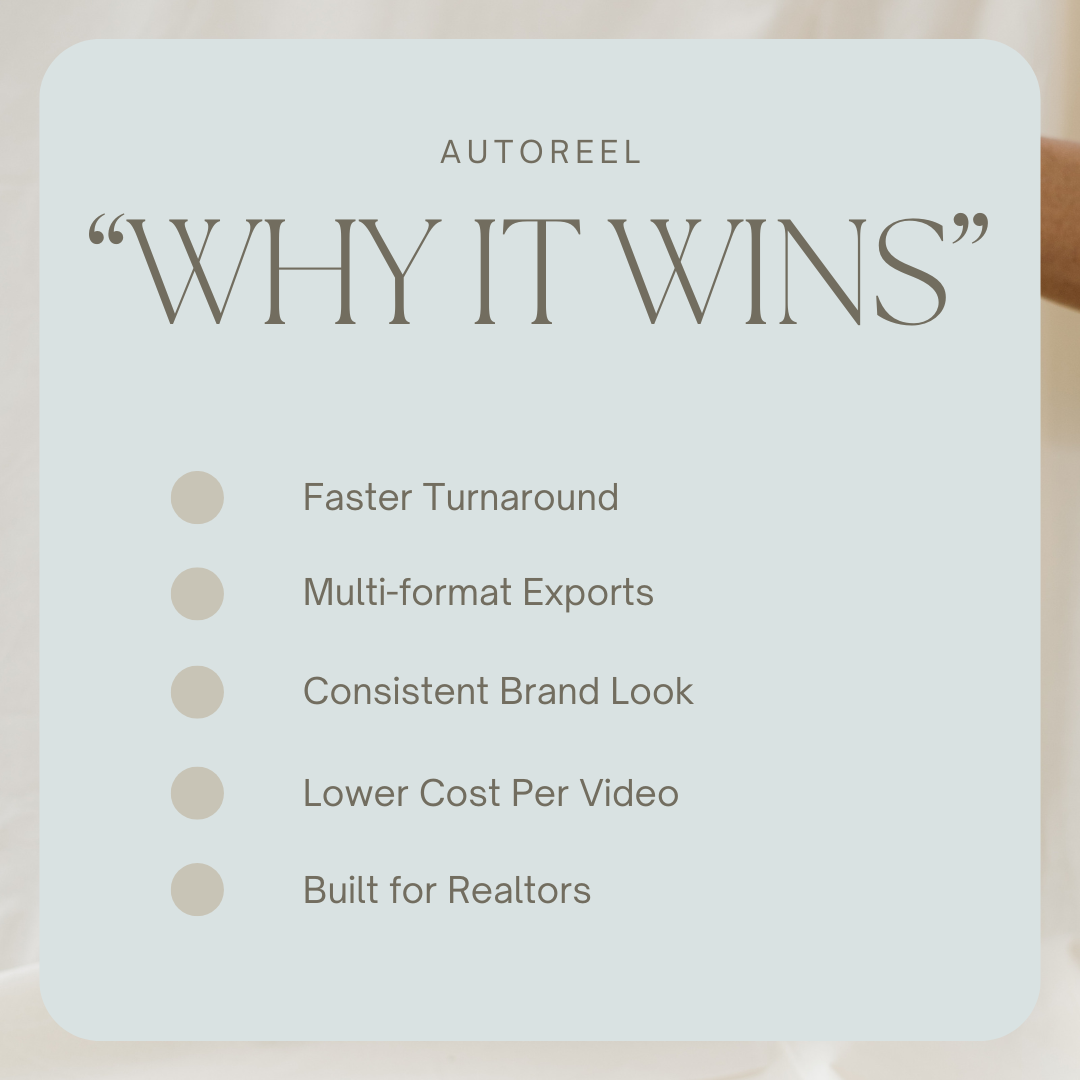
AutoReel wins for agents and real estate media houses Using Predictable Pricing Plans:
- Makes video predictable (no scheduling, no vendor delays)
- Turns every listing into multiple video assets (Reels, Shorts, Stories, MLS-safe versions)
- Helps you publish faster (speed matters for engagement and leads)
- Keeps your brand consistent across every listing and every agent
- Reduces cost per video dramatically compared to always hiring a videographer — especially once you scale output across multiple listings.
Want to see what that looks like in real numbers? Check out AutoReel pricing here.
And strategically? AutoReel gives you the thing sellers respond to most:proof that you market aggressively and modernly—every time.
If you’re a team leader or a media house, AutoReel doesn’t just save money.It lets you ship content at the speed the market demands.
If you want help picking the right plan or building a content workflow for your team, contact AutoReel here.
Turning Video Costs Into a Scalable Strategy
Real estate video success in 2026 depends on consistency and cost control. By evaluating AutoReel real estate pricing, AutoReel pricing plans, and overall AutoReel pricing for real estate, teams can shift from one-off video expenses to repeatable systems that deliver visibility, speed, and stronger listing performance.
FAQs
1) How much does a real estate video cost on average?
Most listing videos fall between $300 and $1,500, depending on your market, property size, editing quality, drone use, and turnaround time. Premium cinematic packages can exceed $2,500.
2) How much does a basic real estate walkthrough video cost?
A basic walkthrough video typically costs $200 to $500. This usually includes simple filming, minimal editing, and one standard export. The final real estate video cost increases when you add captions, music licensing, additional revisions, or multiple social media formats.
3) How much does drone videography add to real estate video cost?
Drone footage commonly adds $150 to $500+, depending on the videographer, location restrictions, flight time, and edit complexity. It increases overall real estate video cost, but can be worth it for large lots, waterfront homes, and luxury listings where aerial context sells.
4) Why do real estate videos cost so much?
Real estate video costs include filming time, travel, gear, lighting, stabilization, music licensing, and especially editing. Post-production takes longer than most people expect. Pricing goes up with complex homes, more revisions, agent on-camera segments, and faster delivery timelines.
5) Is hiring a real estate videographer worth it?
Hiring a videographer is worth it for luxury homes, flagship listings, and brand-level storytelling where production quality matters. However, it can become expensive to repeat weekly. That’s why many teams use a hybrid approach: videographer for premium, AI tools for volume.
6) What is the cost of hiring a real estate videographer vs AI tools?
The cost of hiring a real estate videographer vs AI tools is dramatically different. Videographers often cost hundreds to thousands per project, while AI tools are usually subscription-based and help you create more videos per month at a lower effective cost per asset.
7) Can AI tools replace a real estate videographer?
AI tools can replace videographers for social reels, listing teasers, and marketing content that needs speed and consistency. For cinematic luxury productions or original lifestyle footage, videographers still win. Most smart agents mix both based on listing value and content frequency goals.
8) What’s the cheapest way to get real estate videos consistently?
The cheapest way to get real estate videos consistently is to use AI tools for weekly content while reserving videographer shoots for high-value listings. This approach lowers your average real estate video cost and keeps your content pipeline active without scheduling delays or repeated vendor fees.
9) What affects real estate video pricing the most?
The biggest factors are property size, complexity, location, travel time, add-ons like drone, voiceover, captions, and how advanced the editing is. Rush delivery also increases the price. If you want multiple exports for different platforms, the real estate video cost rises further.
10) How can I reduce real estate video costs without lowering quality?
To reduce costs without sacrificing quality, standardize your style, limit revision cycles, batch multiple listings in one shoot day, and use templates for intros and outros. AI tools help create multiple versions fast, lowering your average cost per asset while maintaining consistency.
11) How many video versions should I create per listing?
Ideally, create at least three: an MLS-safe version, a vertical Reel or Short, and a YouTube or website version. High-performing agents create five to ten variations with different hooks, captions, and music to test performance and maximize reach across platforms.
12) What’s a good budget for video marketing per month?
A good monthly budget depends on your listing volume and goals. Solo agents often spend $200 to $1,500 per month, while teams may spend more. If you rely on videographers, costs scale fast. AI tools make monthly output predictable and affordable.
13. How much do real estate videos cost in 2026?
In 2026, real estate videos typically cost between $200 and $1,500 for standard listings. Basic walkthrough videos sit on the lower end, while cinematic videos with drone footage and advanced editing can exceed $2,500, depending on market, scope, and turnaround time.
14. How much does real estate video production cost for a typical listing in 2026?
Real estate video production costs in 2026 depend on property size, complexity, and deliverables. Most agents pay $300 to $1,500 per listing for professional production. Costs rise with add-ons like drone footage, agent appearances, captions, and rush delivery timelines.
Sources:
https://dronevideos.com/real-estate-videography-pricing/
https://mttcolor.com/real-estate-video-pricing/
https://www.denverrealestatephotography.com/blog/drone-videography-cost
https://www.cloudpano.com/blog/ai-vs-traditional-video-editing-cost-time-and-roi-breakdown
https://videotour.ai/blog/real-estate-video-cost
https://www.mylinkbook.com/real-estate-walkthrough-video-cost-in-2025-what-you-nee-2421