2026 Cost Breakdown: AI Video Tools vs Agency Production vs DIY Editing for Real Estate

Summarize with AI


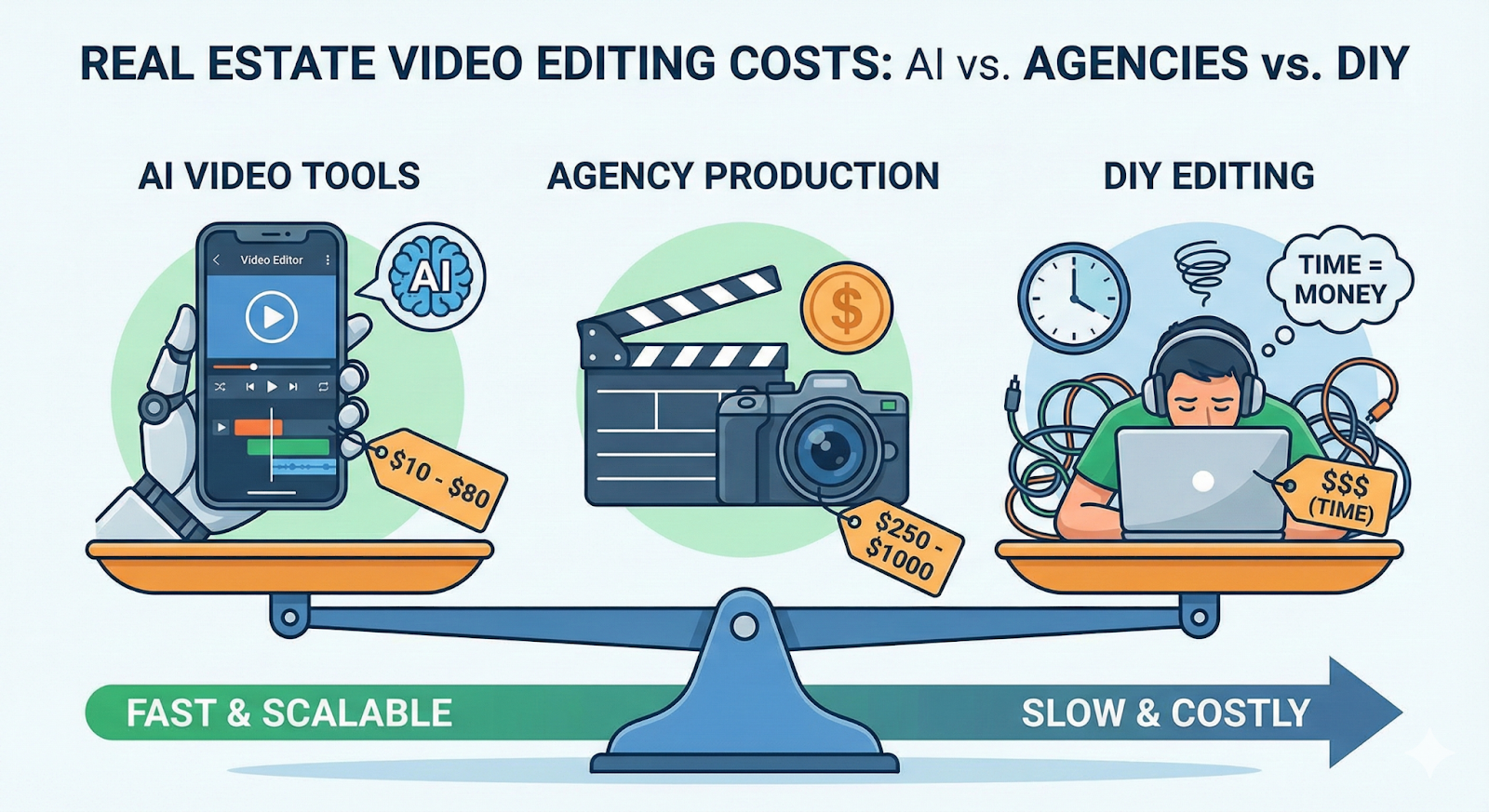
Real estate video editing has shifted from a luxury marketing add on to a baseline expectation in 2026. Agents are no longer questioning whether video belongs in their marketing strategy. Instead, the focus has moved to cost, turnaround time, and whether modern video editing tools can deliver consistent results without relying on agencies or time intensive DIY workflows.
This guide addresses those concerns with a clear cost comparison and practical context. The cost breakdown of video editing tools, agency production, and DIY editing helps realtors and photographers understand real estate video pricing, production tradeoffs, and which approach supports scalable realtor video marketing without unnecessary guesswork.
In cost comparisons, AutoReel pricing for real estate stands out by offering predictable video creation costs without per-project fees, making budgeting easier for agents producing videos across multiple listings.
Create listing videos faster with AutoReel and control costs
Real Estate Video Editing in 2026
Real estate video editing in 2026 prioritizes speed, consistency, and repeatable output. Video is now a standard listing asset, with agents focusing on quick turnaround and frequent posting to stay competitive across social and digital platforms.
How Real Estate Video Editing Has Changed
- Most property videos are around 30 seconds long
- Content is designed for Instagram, YouTube Shorts, and listing pages
- Videos are produced repeatedly across multiple listings
- Short formats outperform long walkthrough videos
- Speed matters more than cinematic complexity
This shift has reshaped how real estate video pricing and production choices are evaluated. As expectations evolve, video editing tools, agencies, and DIY workflows now compete directly, each offering a different balance of cost, control, and output for realtor video marketing in 2026.
Cost of AI Video Editing Tools for Real Estate Listings
AI video editing tools have become the fastest growing option for real estate video editing in 2026, largely because they solve cost, speed, and repeatability at the same time. As listing volumes increase and social posting becomes routine, these tools fit naturally into modern realtor video marketing workflows.
AutoReel AI real estate video pricing is structured for scale, allowing agents and photographers to create listing videos consistently without the variable costs common in traditional editing workflows.
How AI Video Editing Tools Work in Real Estate
Real estate AI video editing tools are designed to turn existing listing assets into short form videos without manual editing.
- Photos are converted into short listing videos automatically
- Videos are formatted for social and listing platforms
- Motion and transitions are applied using templates
- Minimal user input is required per video
This workflow prioritizes speed and consistency over custom filming.
Time and Output Efficiency of AI Tools
Speed is one of the main reasons AI video editing tools are widely adopted for real estate video editing.
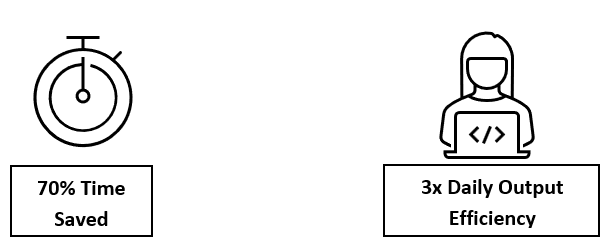
- Most videos take 10 to 15 minutes to produce
- Average video length is around 30 seconds
- Turnaround supports same day or next day posting
- High volume production is easy to maintain
This efficiency supports frequent posting without operational strain.
Cost Structure and Pricing Advantages
The pricing model of AI video editing tools is built for scalability rather than one off production.
- Tool cost can be as low as $10 per video
- Photographers commonly resell videos for around $80
- Predictable pricing simplifies real estate video pricing decisions
This creates strong margins for creators and clear expectations for agents.
Where AI Video Editing Tools Perform Best
AI tools are not designed to replace cinematic production but they excel in everyday listing scenarios.
- High listing volume environments
- Agents who need fast turnaround
- Teams focused on social first content
- Photographers adding video upsells efficiently
For most real estate video editing needs in 2026, this tradeoff is acceptable and often preferable due to speed, cost control, and scalability.
Agency Based Real Estate Video Production Costs in 2026
Agency-based real estate video production will continue to exist in 2026, but its pricing is no longer suitable for high-volume, fast-paced listings. While quality is high, the cost structure favors occasional projects over repeatable real estate video workflows.
Cost Structure and Turnaround Reality
Agency pricing reflects the involvement of crews, filming time, and post production labor, which increases cost and slows delivery.
- Typical cost ranges from $250 to $1,000 per property
- Scheduling, filming, and revisions slow overall turnaround
- Video is often excluded from standard photography packages
Only around 20 percent of real estate photography orders include video, largely because these costs are difficult to justify at scale.
Production Strength
Agencies excel in creative execution when the goal is high impact visual storytelling rather than speed or volume.
- Custom on-site filming with cinematic visual quality
- High-end transitions, lighting, and composition control
- Strong output for brand-driven or showcase content
These strengths are most visible in isolated projects rather than recurring listing content.
Where Agency Production Falls Short
Agency workflows are not designed for frequent video creation across multiple listings.
- Limited scalability for frequent or high-volume listings
- High per-video cost restricts consistent usage
- Slow delivery impacts listing momentum and social posting
As posting frequency increases, agency based production becomes restrictive.
Best Use Cases for Agency Video Production in Real Estate
Most agents reserve agency production for situations where visual impact outweighs cost considerations.
- Luxury or high-value property listings
- Brand films and promotional campaigns
- Occasional showcase or flagship property videos
In 2026, agency-based real estate video pricing is hard to sustain for everyday listings. While agencies deliver premium quality, they scale poorly and are better suited for selective, high-value projects than consistent realtor video marketing.
DIY Real Estate Video Editing: The Hidden Cost of Time
DIY real estate video editing is often viewed as the cheapest option, especially for agents and photographers avoiding upfront costs. In 2026, however, the real expense is rarely the software; it’s the time, effort, and workflow disruption that reduce consistency and overall output.
Software and Setup Costs in DIY Editing
DIY editing may look affordable, but ongoing costs grow over time.
- Software subscriptions and hardware requirements
- Storage limits, updates, and compatibility issues
These remain manageable at low volume but become inefficient as expectations rise.
Time Investment and Productivity Loss
Time is the biggest hidden cost in DIY editing.
- 1–2 hours per short video plus revisions
- Context switching slows sales and delivery
Editing time directly competes with revenue-generating tasks.
When DIY Real Estate Video Editing Makes Sense
DIY editing works when video volume is low, budgets are tight, and time is flexible. As realtor video marketing demands faster turnaround in 2026, DIY is becoming a limited use case rather than a scalable solution.
AI Video Tools vs Agency Production vs DIY: Real Estate Cost Comparison
Comparing AI video tools, agency production, and DIY editing in 2026 is driven by cost consistency, turnaround speed, and production frequency.
AI Video Tools vs Agency Production vs DIY Editing Cost Breakdown
Compared to agency fees, AutoReel pricing for real estate AI video keeps per-listing costs low while maintaining output speed, which is critical for frequent posting and active inventory.
Which Video Editing Option Makes Sense for Realtors in 2026
The right choice depends on listing volume, turnaround speed, and budget consistency. Realtors, teams, and photographers all face different demands, making flexible, scalable solutions more practical than one-size-fits-all approaches.
For agents managing multiple listings, AutoReel pricing supports consistent video use without forcing tradeoffs between cost control and turnaround time.
Solo Agents and Independent Realtors
Solo agents need fast, consistent real estate video editing without added workload.
- Quick turnaround for active listings
- Consistent videos across properties
- Predictable real estate video pricing
AI video editing tools make regular realtor video marketing possible without disrupting daily sales work.
Real Estate Teams and Brokerages
Teams manage higher volume and brand standards, requiring balanced workflows.
- AI tools for routine listings
- Agency production for select premium properties
- Standardized formats to maintain branding
This hybrid approach supports scale while controlling costs.
Photographers and Media Creators
For photographers, video is a high-margin add-on that must not slow delivery.
- AI tools add video without extra shoots
- Around $80 average upsell per order
- Minimal added production time
AI video tools increase order value while preserving speed and profit.
Why AutoReel Fits 2026 Workflows
AutoReel is designed for speed, consistency, and scale. It automates real estate video creation, supports predictable pricing, and fits seamlessly into agent, team, and photographer workflows without the burden of manual editing or operational complexity.
An AutoReel advocate observed that clients no longer focus on how a real estate video is produced. What matters most is delivery speed. This shift in buyer expectations now defines real estate video editing decisions in 2026.
In 2026, the smartest real estate video editing strategy is the one that is flexible, role specific, and volume aware, combining AI tools, agencies, or DIY methods based on workflow demands rather than production preference.
AutoReel pricing for real estate aligns with modern workflows by removing cost unpredictability and making video a standard, repeatable part of listing delivery.
Building a Scalable Real Estate Video Strategy for 2026
In 2026, real estate video editing is about aligning workflows with volume, speed, and budget needs. Successful strategies combine AI video editing tools, agency production, and DIY editing based on use case, prioritizing scalability and predictable real estate video pricing over production methods.
Try AutoReel and see how AI powered video editing tools fit into your daily realtor video marketing workflow without adding time or complexity.
FAQs on Real Estate Video Editing Costs Explained: AI Tools vs Agencies vs DIY
1. Are video editing tools good enough for real estate marketing?
Yes. Modern video editing tools support realtor video marketing by creating short, platform-ready videos. They prioritize speed, clarity, and consistency, which matter more for listings than cinematic production.
2. How much does real estate video editing cost in 2026?
Real estate video pricing in 2026 ranges from about $10 per video using AI video editing tools to nearly $1,000 through agency production, depending on customization, volume, and turnaround time.
3. Are photo-to-video AI tools replacing traditional videography?
Photo-to-video AI tools handle most standard listing videos where speed and cost efficiency matter. Traditional videography remains relevant for luxury listings and brand-focused realtor video marketing.
4. Why are agency-produced real estate videos expensive?
Agency-produced real estate video editing includes filming crews, equipment, editing labor, revisions, and scheduling. These fixed inputs increase real estate video pricing and limit scalability.
5. Is DIY real estate video editing actually cheaper?
DIY real estate video editing seems cheaper initially, but time investment raises true costs. For agents managing multiple listings, AI video editing tools are often more efficient.
6. How long does it take to create an AI real estate video?
AI real estate video editing usually takes 10–15 minutes. Most videos are around 30 seconds long and optimized for fast turnaround in realtor video marketing.
7. Can photographers earn additional income using AI video tools?
Yes. Many photographers use photo-to-video AI tools to upsell listing videos, earning around $80 per order with minimal production time and high profit margins.
8. Do property buyers care if a video is AI-generated?
Most buyers focus on clarity, flow, and presentation. In real estate video editing, the production method matters less than how quickly and clearly the property is shown.
9. Which video option works best for consistent social media posting?
AI-powered video editing tools work best for consistent posting. They help realtors produce repeatable content quickly while maintaining branding and controlling real estate video pricing.
10. How does AutoReel pricing for real estate AI videos work in 2026?
In 2026, AutoReel pricing for real estate AI videos is designed around predictable usage rather than per-project fees. Agents and photographers can create listing videos quickly at a fixed cost, making it easier to plan budgets and scale video output across listings.
11. Is AutoReel pricing for real estate video more cost-effective than traditional editing in 2026?
Yes. In 2026, AutoReel pricing for real estate video is typically more cost-effective than agency or DIY editing. Traditional workflows involve higher per-video costs and time investment, while AutoReel enables fast production at a lower, more consistent price per listing.