Real Estate Video Editing: How AI Is Replacing Manual Editing

Summarize with AI


Takeaway
- Understand why real estate video editing is shifting toward AI workflows.
- See how AI reduces turnaround time, cost, and manual effort.
- Learn when AI editing outperforms traditional manual video production.
Real estate video editing is no longer just a creative task. It has become an operational decision affecting turnaround speed, production cost, and the ability to scale marketing across multiple listings as social-first distribution and shorter listing cycles become standard.
Traditional manual real estate video editing workflows struggle to keep pace with modern demands. Time-intensive edits, revisions, and delivery timelines create bottlenecks that limit consistency and slow down listing launches across high-volume marketing environments.
This article explores how AI is transforming real estate video editing. It examines where manual workflows break down, how AI fits into real production pipelines, and why this shift is happening now as a practical necessity rather than a future concept.
Create listing videos faster without changing your existing photography workflow.
Real Estate Video Editing as a Production System
For niche-aware professionals, real estate video editing now functions as a production system rather than a creative afterthought. The focus has shifted from perfecting individual videos to reliably producing marketing-ready content across multiple listings without operational friction.
Traditional workflows rely on manual timelines, sequencing, and revisions. These processes assume flexible schedules and higher budgets, which break down when video needs to be produced repeatedly. As a result, video adoption has remained limited despite strong demand.
Modern real estate video editing is expected to balance three constraints at once:
- Speed to market without extended post-production cycles
- Consistency across listings and platforms
- Predictable cost that works at scale
The shift occurs when editing is treated as automation rather than craftsmanship.
Today’s baseline requirements make this clear:
- Short-form videos under 60 seconds, often 30 seconds
- Social-first pacing designed for feed-based viewing
- Delivery expectations same-day or next-day
- Pricing models fixed, per-listing
When workflows cannot meet these standards consistently, manual editing becomes a bottleneck and AI-based editing systems emerge as the practical alternative.
How Manual Real Estate Video Editing Traditionally Works
Manual real estate video editing follows a familiar but fragile chain. Assets are captured, transferred, edited on a timeline, revised, exported, and delivered. Each step depends on human availability and subjective decision-making.
For high-end listings, this still works. For volume, it doesn’t.
A typical manual workflow includes:
- Footage or photos captured on-site
- Import into editing software
- Music selection and timing
- Scene sequencing and transitions
- Color correction and branding
- Revisions based on agent feedback
- Multiple exports for platforms
Each of these steps adds time and introduces friction. Even a short 30–60 second video can take hours to finalize when revisions stack up.
Cost compounds quickly:
- Editors charge per project or hourly
- Videographers bundle editing into higher shoot fees
- Rush requests increase pricing unpredictably
This is why real estate video editing has remained underutilized. Despite demand, only a small portion of listings include video—because the workflow doesn’t scale cleanly.
Manual editing isn’t broken creatively. It’s broken operationally. And that’s where cracks begin to show.
Where Manual Video Editing Starts to Break Down
The primary limitation of manual real estate video editing is not visual quality. It is the repeatability. Listings move quickly and marketing windows are short.
When editing timelines extend beyond the early days of a listing, the value of video drops sharply, regardless of how well it is produced.
Manual workflows begin to fail at scale due to several consistent pressure points:
- Turnaround delays caused by editors balancing multiple clients and projects
- Revision drag where small change requests restart delivery timelines
- Cost mismatch as manual video pricing does not align with mid-tier listings
- Inconsistent output driven by varying styles across different editors
- Limited volume capacity since each editor can only complete a finite number of videos
Because of these constraints, many agents default back to photography, even when they understand that video performs better in marketing.
From a photographer’s perspective, manual editing also limits revenue growth. Each additional video requires proportional labor, compressing margins unless prices increase, which agents often resist.
The result is a stalemate. Demand for video exists, but manual workflows cannot support it profitably. At this point, the issue is not improving editing quality. It is removing unnecessary steps entirely, which is the exact problem AI-based real estate video editing is designed to solve.
How AI Is Changing Real Estate Video Editing
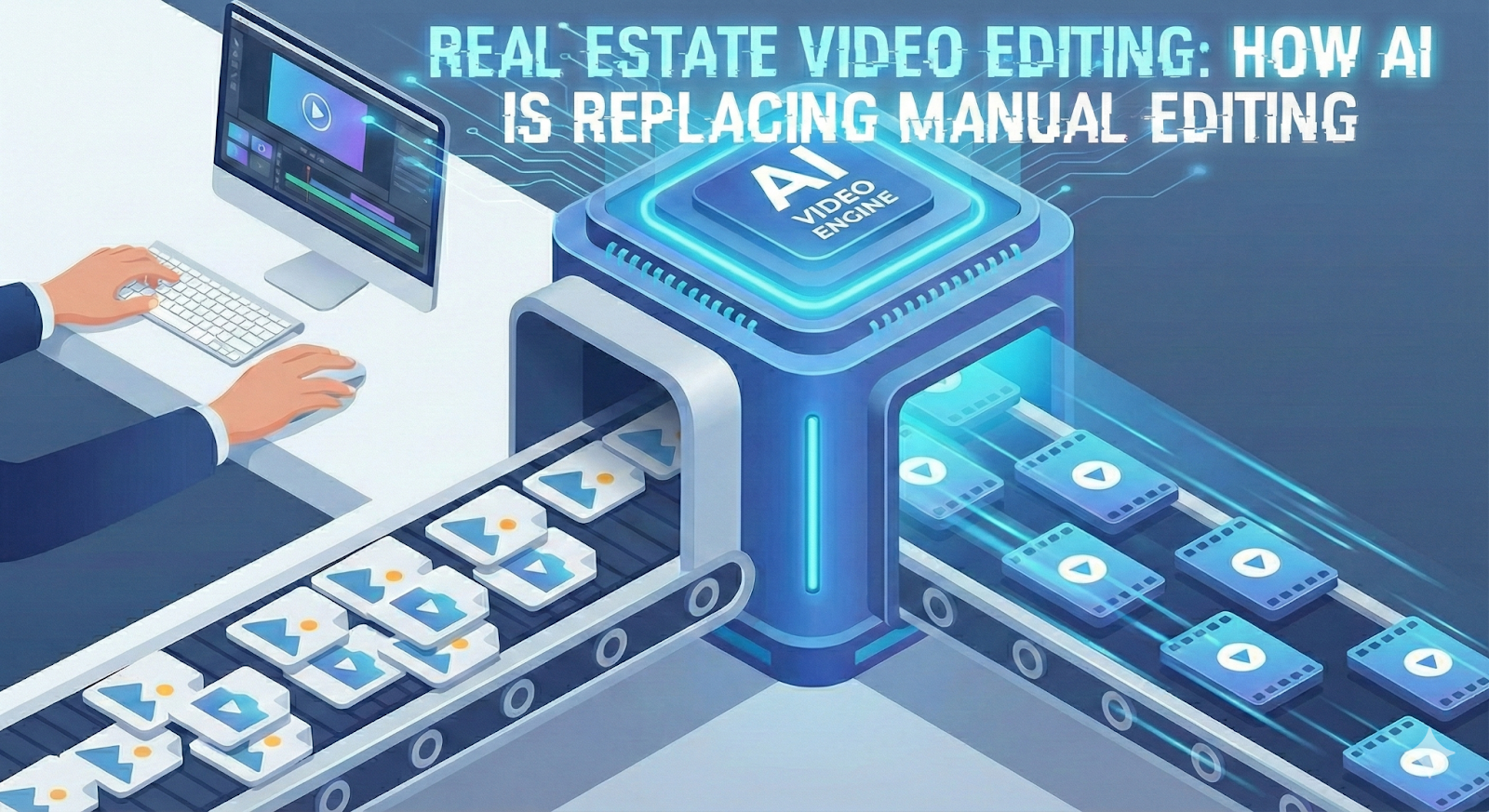
AI changes real estate video editing by treating it as content generation rather than manual assembly.
Instead of building videos scene by scene on a timeline, AI systems work from structured inputs, most commonly listing photos, and automatically create short-form videos with pacing, transitions, and music already aligned for marketing use.
This shift is subtle but operationally significant. There is no footage scrubbing, no manual sequencing, and no extended revision cycles. The editing process becomes predictable and repeatable, which removes many of the delays that traditionally slow video delivery.
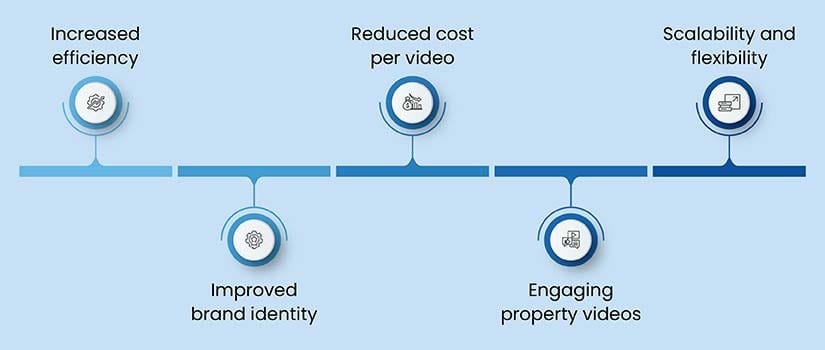
From a workflow perspective, AI-driven real estate video editing enables:
- Photo-to-video creation without additional filming
- A consistent visual style across all listings
- Video output in roughly 10 to 15 minutes
- Formats optimized for social platforms by default
This matters because most real estate videos are marketing assets built for speed and reach, not cinematic detail. AI turns video from a premium upsell into a standard add-on that fits every listing.
“With 85,000 AI real estate videos created by December 2025, platforms like AutoReel show that AI is replacing manual labor, not creativity. That efficiency is why adoption continues to grow.”
— AutoReel Advocate
Manual vs AI Real Estate Video Editing: A Practical Comparison
When comparing manual and AI real estate video editing, the difference shows up first in operations, not visuals. Both approaches can deliver professional-looking results, but they solve very different business problems depending on scale, speed, and budget.
Manual editing works best in specific situations:
- Listings justify higher production budgets
- Custom storytelling or brand-led visuals are required
- Timelines allow for revisions and longer turnaround
AI-based editing is better suited when:
- Speed matters more than creative polish
- Listing volume is high and repeatable
- Margins need to be protected across many orders
Practical Comparison Table
For photographers, this shift changes the margin equation. Many sell AI-generated videos for around $80, and sometimes up to $300, while keeping production costs extremely low.
The comparison is not about full replacement. It is about choosing the right production method for each listing. Once that distinction is clear, the move toward AI becomes a practical business decision.
Who Benefits Most from AI Real Estate Video Editing
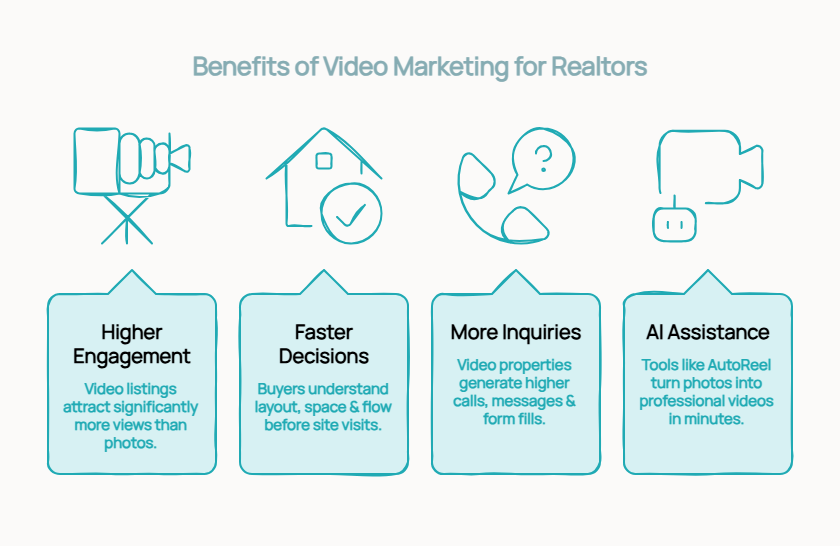
AI-based real estate video editing delivers the most value to professionals who operate at scale rather than on one-off projects. It favors structured workflows where speed, consistency, and repeatable output matter more than custom creative decisions on every listing.
The primary beneficiaries include:
- Agents who need fast, affordable video for every listing without production delays
- Photographers aiming to increase average order value without adding shoots or editing hours
- Teams and brokerages that require consistent marketing output across multiple listings
- Social-first marketers who prioritize volume and frequency over bespoke edits
Photographers experience some of the clearest gains. By offering AI-generated video, many increase their average order value by roughly $80 per listing, with most of that added revenue coming as pure margin and no impact on delivery timelines.
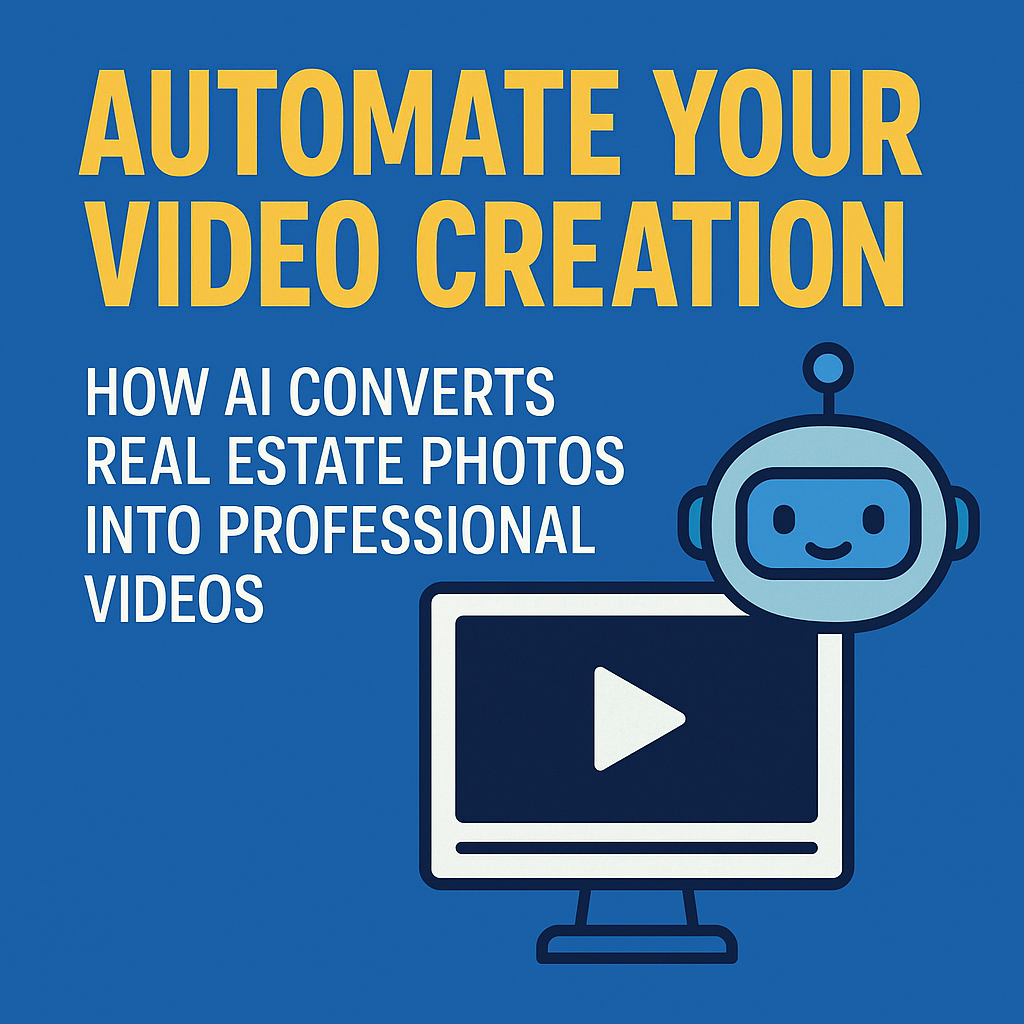
Agents benefit in different ways. Listings go live faster, video is distributed across more platforms, and reliance on scheduling videographers is reduced. The shared advantage is leverage.
AI removes the bottleneck between captured assets and usable video output. For niche-aware professionals, adoption is driven by workflow optimization, not experimentation.
Add profitable video to every listing without increasing production time.
What the Future of Real Estate Video Editing Looks Like
The future of real estate video editing is moving toward selective automation rather than full replacement. Manual editing will continue to serve luxury and storytelling-driven listings, but AI-generated video is becoming the default for everyday marketing.
As expectations around speed and consistency rise, video is shifting from a premium deliverable to a standard listing asset.
Key changes shaping this transition include:
- Video becomes standard, not premium
- Editing moves upstream into listing intake
- Turnaround is designed for same-day delivery
This evolution does not remove human roles. It reshapes them. AI manages speed, scale, and consistency. Human focus remains on the capture quality, strategy, and differentiation.
For professionals who adapt early, this shift brings stability, not disruption, in a market driven by volume and efficiency.
Why Scalable Video Now Runs on AI
AI is reshaping real estate video editing by removing the operational friction that limited video adoption for years. When production becomes fast, affordable, and predictable, video stops being a premium add-on and becomes a standard marketing asset.
For professionals managing high listing volume, tight margins, and short turnaround windows, AI-driven workflows are no longer optional. They now define how scalable real estate video production actually works in practice.
Scale real estate video output with predictable costs and turnaround.
Frequently Asked Questions
1. Is AI real estate video editing good enough for professional listings?
Yes, for most standard listings. AI real estate video editing delivers consistent, social-ready videos where speed and uniform branding matter more than cinematic storytelling. Manual editing still fits luxury listings, but AI now covers everyday professional marketing needs reliably.
2. How long does AI real estate video editing actually take?
AI real estate video editing typically takes 10–15 minutes to generate a one-minute video. Since most outputs are 30 seconds long, turnaround is often faster, dramatically reducing delays compared to manual editing workflows that take several hours or days.
3. Does AI completely replace manual video editing?
No. AI replaces manual video editing where speed, repetition, and scale are priorities. Manual editing remains relevant for custom narratives, high-end listings, and creative control. The shift is selective, replacing inefficient tasks rather than eliminating human editing entirely.
4. Why hasn’t video adoption been higher in real estate?
Video adoption stayed low because manual real estate video editing is time-intensive and costly, often priced between $250 and $1000 per video. Many listings couldn’t justify that expense. AI reduces cost and effort, making video practical for more properties.
5. Can photographers really profit from AI video editing?
Yes. Photographers often sell AI-generated real estate videos for around $80, while production costs can be as low as $10. Some charge up to $300, allowing strong margins without additional shoots, editing hours, or operational complexity.
6. Do AI videos work well on social media?
Yes. AI real estate video editing is designed for short-form platforms like Instagram Reels and Facebook. These videos prioritize pacing, vertical formats, and quick engagement, aligning closely with how buyers actually consume property content online.
7. Are AI real estate videos customizable?
Customization is structured, not manual. Branding elements, music style, and pacing are template-driven, ensuring consistency across listings. While creative freedom is limited, this approach reduces revisions and maintains predictable output for high-volume real estate marketing.
8. Will agents still need videographers?
Yes, but selectively. Videographers will focus on premium or storytelling-driven listings, while AI handles everyday real estate video editing. This division allows agents to reserve higher budgets for properties where custom production adds measurable value.
9. Is AI video editing difficult to integrate into existing workflows?
No. AI real estate video editing typically fits directly after photography. Agents and photographers can add video without changing capture processes, making integration simple and operationally efficient within existing listing production workflows.
External source
- National Association of Realtors (NAR) – Video Marketing in Real Estate
- HubSpot – Video Marketing Trends
- Meta for Business – Reels Best Practices
- Reddit r/RealEstatePhotography – AI Video Discussion.