Cost of Real Estate Video Production: AI vs Videographers (2026 Comparison)

Summarize with AI


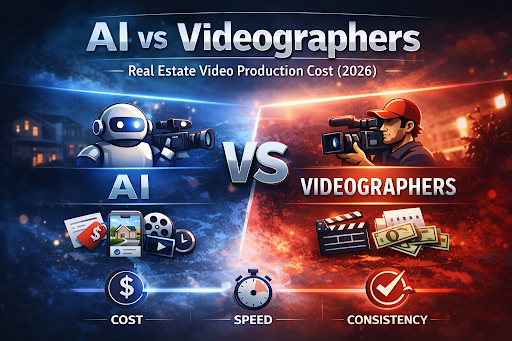
In 2026, real estate video isn’t a “nice-to-have.” It’s a distribution engine.
Vertical video dominates listing discovery. Agents are expected to post consistently. Media houses are expected to deliver fast.
Short-form wins the scroll — and that’s where listings get discovered first.
That’s the shift: it’s no longer just about the cost of making one great video. It’s the cost of producing high-performing videos every week.
So when people ask:
“How much does a videographer cost?”
They’re usually asking the wrong question.
The smarter question is:
“What does it cost to create enough video content to actually win attention in my market?”
That’s where the AI vs videographer decision becomes crystal clear.
Here’s a quick breakdown of how property videos influence buyer behavior.
How Much Does a Videographer Cost for Real Estate Videos?
Let’s start with the most common baseline pricing you’ll see in the U.S.
Typical real estate videography pricing (2025–2026 ranges)
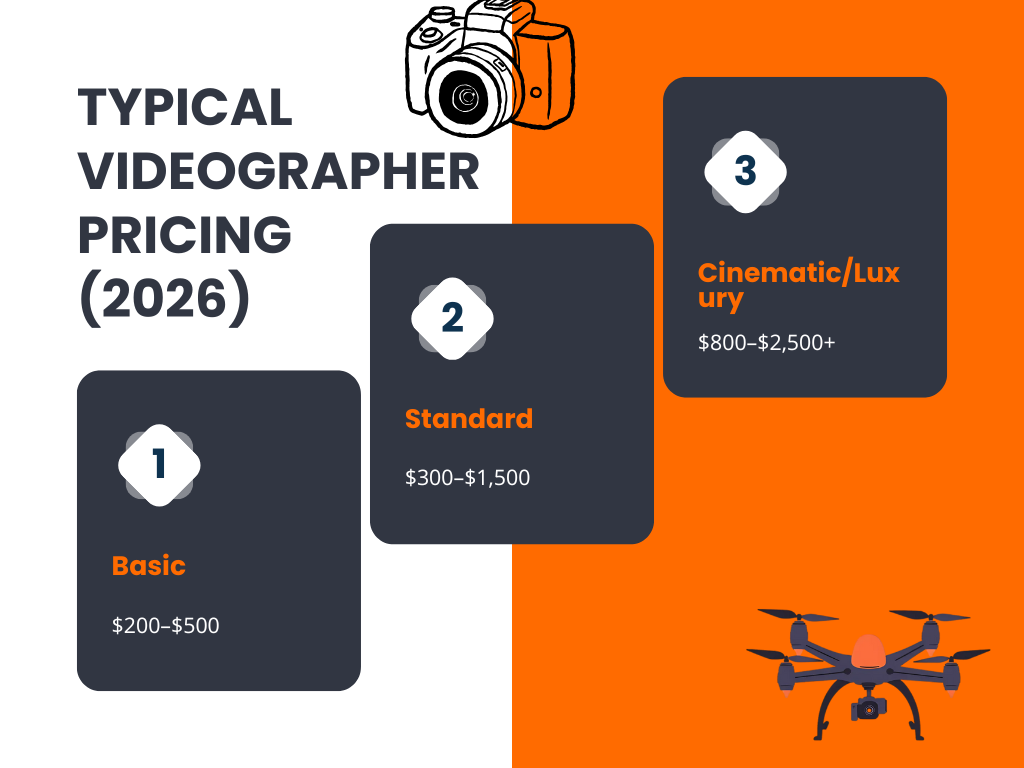
Most guides and service providers place real estate video pricing around:
- $200–$500 for basic walkthrough videos
- $800–$2,500+ for high-end or cinematic videos (drone, agent-led tours, advanced edits)
- $300–$2,500 as a broad market range depending on scope and region
- Some providers quote $300–$1,500 as the average range for professionally produced videos
If you’re comparing production costs, it also helps to compare tool-based workflows that reduce editing and turnaround time.
Why do costs vary so much
Your real estate video cost increases fast when you add:
- Drone shots
- Twilight footage
- Large homes (more time, more shots)
- Travel time
- Rush delivery
- Agent voiceover or on-camera
- Motion graphics
- Custom music licensing
- Multi-platform versions (Instagram, YouTube, MLS)
So yes—how much does a videographer cost?In 2026, most agents will realistically pay $300–$1,500 per listing video, with luxury and complex projects rising beyond that.
Real Estate Video Production Cost Breakdown (What You’re Actually Paying For)
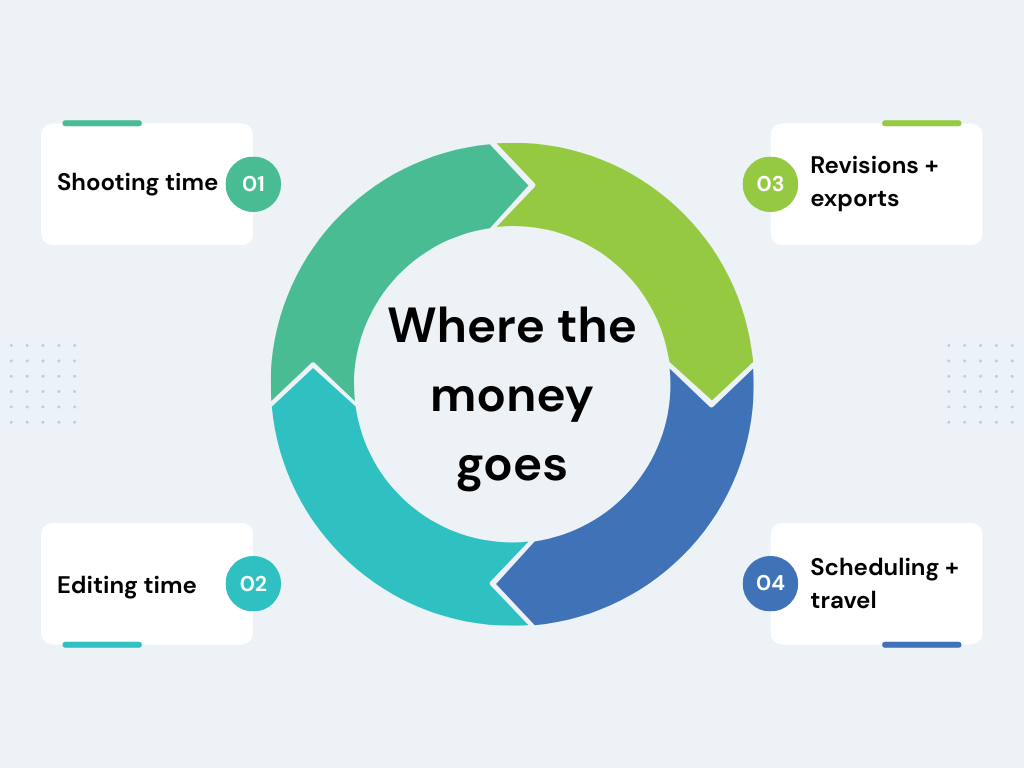
A videographer’s invoice isn’t just “shooting a video.” It’s a bundle of time, labor, and risk.
Here’s what typically sits inside the cost of videographer services:
A) Pre-production
- Scheduling
- Shot planning
- Weather coordination
- Property staging coordination (sometimes)
B) Production (on-site)
- Camera + stabilizers
- Lighting
- Drone (if included)
- Audio (if agent-led)
- Travel time
C) Post-production
This is where a lot of the money goes:
- Selecting footage
- Color grading
- Stabilizing
- Motion graphics
- Music syncing
- Revisions
- Export versions for multiple platforms
D) Opportunity cost

This is the hidden tax:
- Waiting days for delivery
- Needing to post “something” in the meantime
- Inconsistent content volume (which kills algorithm momentum)
This is exactly why consistent video posting matters — it compounds visibility over time.
A single cinematic listing video can look amazing.
But that doesn’t automatically solve the 2026 marketing reality:you still need frequent video output to stay visible.
AI Real Estate Video Production Cost (What Changes in 2026)
AI changes the economics because it compresses:
- Time
- Labor
- Workflow steps
- Revision loops
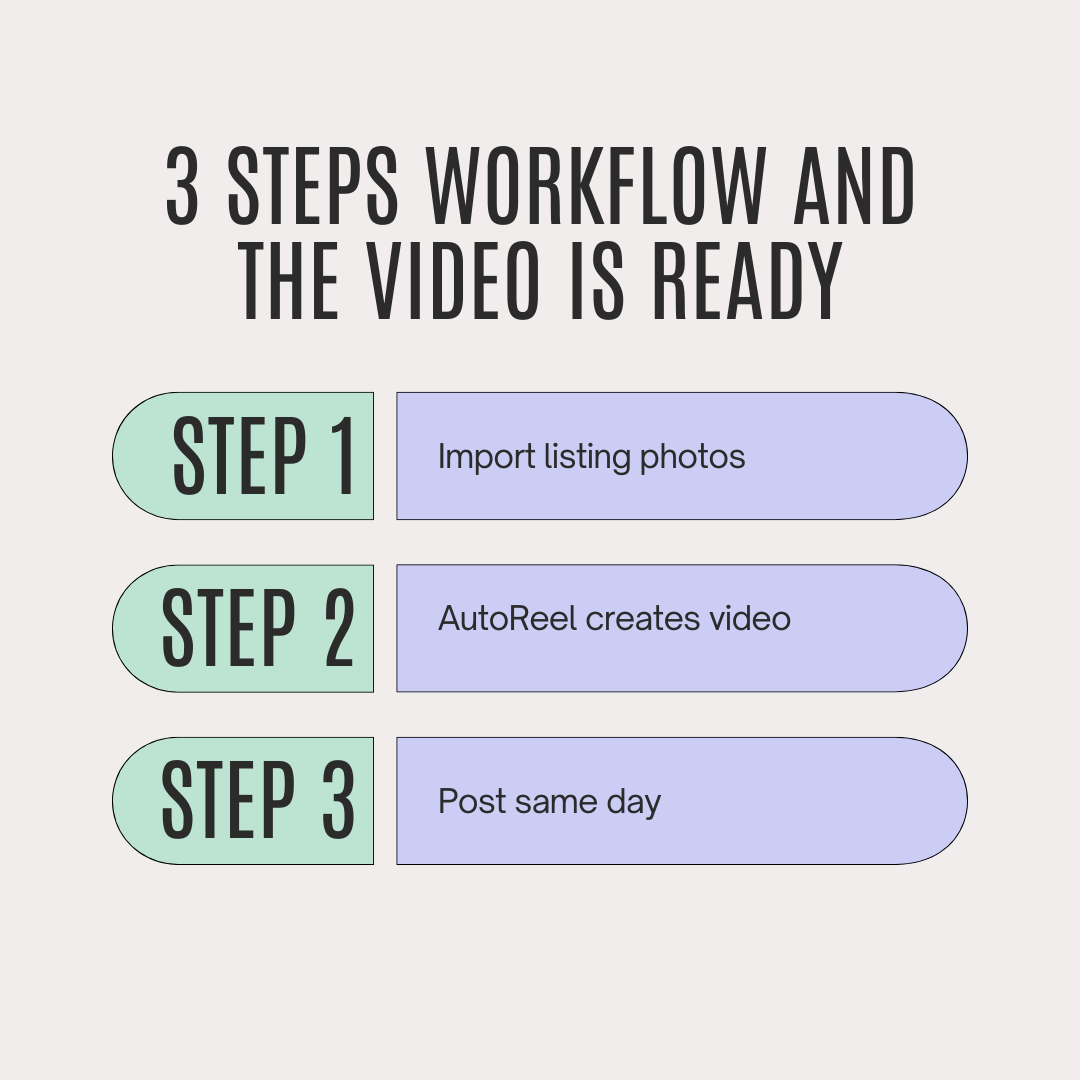
Tools like AutoReel are designed to convert listing assets (photos, raw clips, MLS/Zillow imports) into polished, social-ready videos in minutes, not days.
Real-world proof from agents using AutoReel:
“It’s 10 times less expensive and up to 100 times faster than marketing agencies, producing high-quality videos on demand 24/7/365.” — Nick Ptak, Top 2% Arizona Realtor, Compass
If you want to explore pricing based on volume and deliverables, you can see AutoReel plans here.
What AI replaces
- Manual editing time
- Repetitive formatting for each platform
- Content delays
- Dependency on a single creator’s calendar
What AI doesn’t replace (yet)
- True cinematic storytelling from a skilled filmmaker
- High-end agent-led tours with custom lighting/audio
- Ultra-luxury brand film production
That’s why the best approach isn’t always “AI or videographer.”
It’s often AI for volume + videographer for flagship content.
AI vs Videographer: Side-by-Side Comparison (2026)
Decision table (real-world comparison)
If your goal is weekly content at scale, tools like AutoReel help you go from listing assets to ready-to-post videos without waiting on an editing queue.
Here’s what that speed and cost advantage looks like in the real world.
Real Example: 10 minutes + ~$10 per video vs $300+
Realtors! Make real estate videos in 10 minutes! - YouTube
- Turnaround: ~10 minutes
- Cost: around $10 per video
- Launch speed: same day photos arrive
What Real Estate Agents Should Choose (Based on Listing + Goals)

Most agents aren’t choosing between AI and videographers.
They’re choosing between:
- Posting consistently, or
- Posting occasionally
Because time, cost, and scheduling friction usually decide.
Choose a videographer if:
- It’s a luxury listing where cinematic quality directly impacts perception
- You want drone + custom storytelling for YouTube
- You’re building a premium personal brand film
- You need a neighborhood lifestyle video with custom shots
Choose AI video production if:
- You need weekly listing content across Instagram, Facebook, TikTok, YouTube
- You’re handling multiple listings at once
- You want to test hooks and formats without paying for every edit
- You want to post the same day the listing goes live
- You want content momentum (consistent posting cadence)
If you want a real-world example of how agents use video to win faster, this guide breaks down the tactics.
The 2026 truth:Most agents will win with quantity + speed + consistency, not occasional perfection.
What Real Estate Media Houses Should Choose (Profit + Scale)
If you run a media business, the question becomes:
“How do I deliver more videos, faster, without hiring more editors?”
Because editing can be the biggest bottleneck.
What media operators say after using AutoReel:
“It literally takes 5 minutes on the backend to produce a great product to offer to your real estate agents. The cost is affordable and the developers are quick to respond.” — Chris Lawrence, Owner, Rip City Photography, LLC
Why AI changes the economics for media houses
- Faster delivery = more capacity
- More capacity = more clients
- More clients = more predictable revenue
- Lower labor cost = better margins
AutoReel is positioned as a workflow tool for both agents and media businesses, aimed at simplifying property video creation and scaling output.
The opportunity: productized video packages
Media houses can use AI-assisted production to offer:

And because the creation process is faster, these become repeatable offers, not custom one-offs.
That’s how real estate media houses scale in 2026.
ROI Math: Cost Per Listing Video and Cost Per Lead
Let’s simplify this into numbers that help you decide.
Scenario A: Videographer model (agent)
- $600 per listing video
- 8 listings/month
- $4,800/month
If you only do 2–3 videos/month, you risk inconsistent presence.
Scenario B: AI model (agent)
- Monthly subscription
- Multiple videos per listing
- Multiple versions per platform
- Consistent cadence across 30 days
Even if your AI tool cost is $30–$249/month (varies by plan), the cost per video collapses as volume grows.
The takeaway
If you’re treating video like an occasional listing asset, videography pricing might work fine.
But if you’re treating video like a distribution channel, AI production is hard to beat.
The Hybrid Strategy: How Teams Actually Win in 2026
The best-performing agent teams and media houses tend to follow a hybrid strategy:
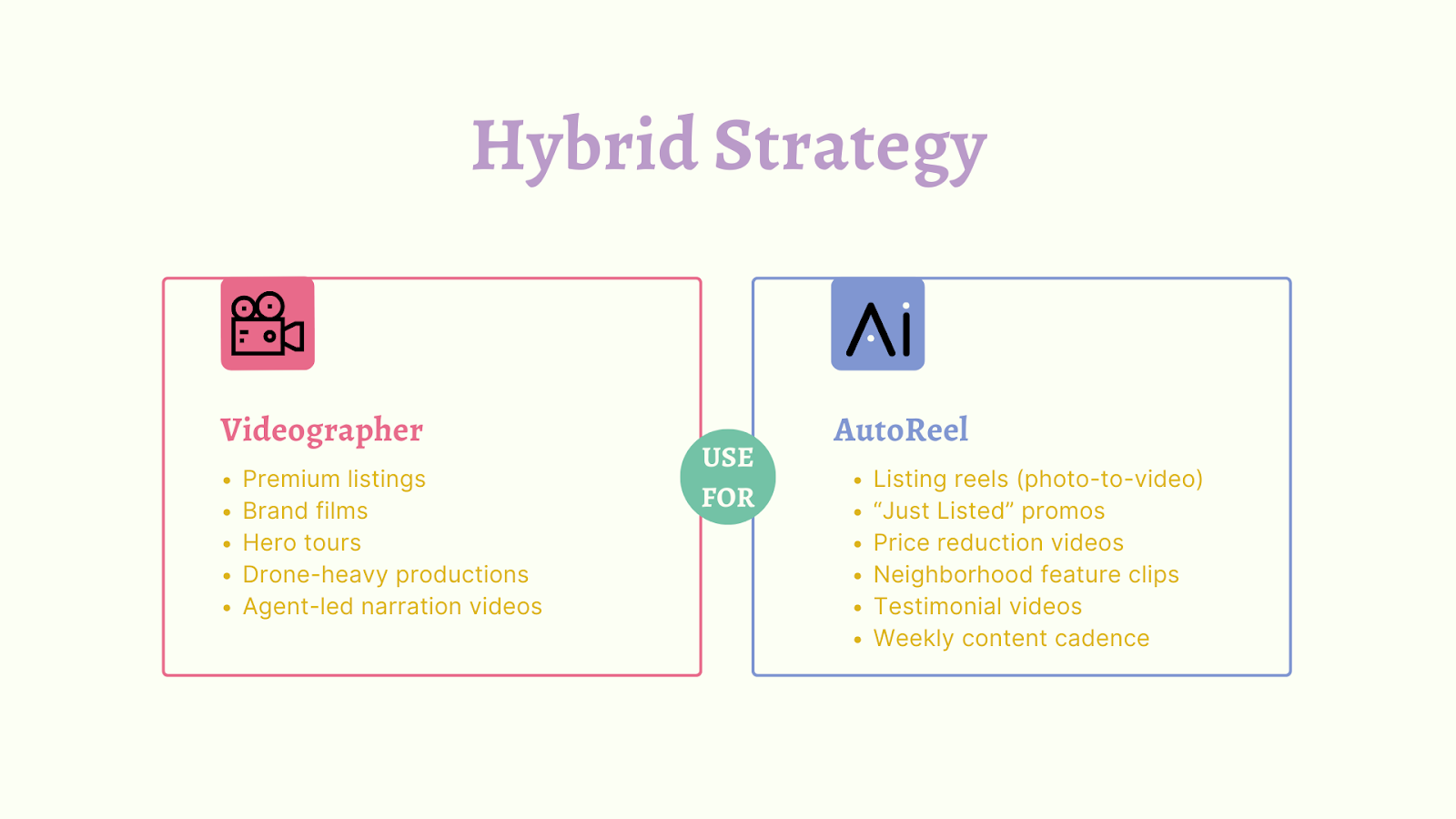
This hybrid method gives you:
- Premium visuals when needed
- Scalable output always
- Consistent algorithm momentum
- Strong ROI and predictable costs
Why AutoReel is Better for Your Business
If you’re an agent or a media house trying to grow in 2026, the edge isn’t just video quality.
It’s video consistency.
AutoReel wins because it removes the friction that stops most teams from posting regularly:
1) Faster output = more market visibility
AutoReel is built to create property videos quickly from listing photos and imports, turning what used to be a multi-day workflow into minutes. That means you can post when the listing is hot, not after the momentum is gone.
2) Lower cost per video at scale
Traditional videography costs stack per listing. AI subscription pricing doesn’t.This is what makes AutoReel especially strong for:
- Agent teams
- Brokerages
- Media houses producing large volumes
Want to estimate what your per-video cost looks like as volume increases? Compare AutoReel plans and credits here.
3) More versions, more platforms, less effort
Short-form platforms reward testing.AutoReel enables quick variations so you can:
- Test different hooks
- Change text overlays
- Iterate faster
- Adjust for Instagram, TikTok, and YouTube Shorts without rebuilding edits from scratch
4) Better business outcomes (not just content)
When you can create consistent listing video content:
- Your brand stays visible
- Your pipeline stays warmer
- Your business becomes less dependent on one-off campaigns
Bottom line:If you want premium cinematic storytelling, hire a videographer.
If you want a system that keeps you visible every week, AutoReel is the smarter investment.
Want a quick recommendation for your team (agent vs media house)? Reach out to AutoReel and we’ll suggest the best workflow and plan based on your volume.
FAQs
1) How much does a videographer cost for a real estate video in 2026?
Most real estate agents pay $300 to $1,500 per listing video in 2026, depending on location, property size, complexity, and deliverables. Adding a drone, agent-led segments, luxury styling, or faster turnaround can push costs to $2,000+.
2) What is the average real estate video production cost for a basic walkthrough?
A basic walkthrough video typically costs $200 to $500, especially for smaller homes with minimal edits. This usually includes a short on-site shoot and a simple edit. Extra revisions, music licensing, or platform-specific cuts can increase pricing quickly.
3) Why do some videographers charge $2,000+ for a listing video?
Premium pricing usually includes drone footage, cinematic camera work, professional lighting, advanced color grading, motion graphics, and multiple exports for different platforms. Larger properties also take longer to shoot and edit. Add revisions and rush delivery, and costs climb fast.
4) Does AI replace videographers completely?
Not completely. AI tools handle high-volume, template-based, social-ready content extremely well, but they don’t fully replace a filmmaker’s creative storytelling for luxury listings, brand films, and custom agent-led tours. Most top teams use AI plus videographers strategically.
5) What’s the biggest hidden cost in traditional videography?
The biggest hidden cost is time and dependency. Scheduling, shoot delays, and editing queues reduce posting consistency. In 2026, inconsistent posting impacts visibility and engagement. The real cost is often missed opportunities—especially when listings need fast momentum in week one.
6) Is AI video production good enough for luxury listings?
AI can be excellent for luxury listings when used for teasers, listing reels, price updates, and social launch content. However, most luxury sellers still expect at least one cinematic hero video to match the property’s perceived value and premium buyer expectations.
7) What makes real estate video cost go up the most?
Your real estate video cost increases most when you add drone, agent narration, longer properties, advanced edits, multiple platform cuts, travel time, and rush delivery. Heavy revisions and complex motion graphics also raise costs. The more custom work involved, the higher the fee.
8) Can media houses use AI tools like AutoReel for clients?
Yes. Real estate media houses use AI tools to increase speed, reduce editing workload, and deliver more content per client. This improves margins and allows scalable subscription packages. AI also helps meet client expectations for fast reels, listing launches, and ongoing weekly output.
9) How quickly can I produce listing videos with AutoReel?
AutoReel is designed to produce listing videos in minutes, not days, using listing photos, clips, and imports from platforms like Zillow or Realtor.com. That means agents can publish the same day a listing goes live and keep posting consistently across platforms.
10) What’s the best strategy for consistent content in 2026?
The best strategy is hybrid: use AI for volume and speed, and hire videographers for premium hero videos. AI keeps your posting cadence steady (daily or weekly), while videographers support flagship listings and brand storytelling. This approach balances quality, cost, and consistency.
11) What’s the cheapest way to get real estate video content regularly?
Subscription AI tools are often the cheapest way to produce frequent video because cost per video drops as volume increases. Instead of paying per edit, you can generate multiple reels per listing, run weekly campaigns, test hooks, and maintain consistency without constant production expenses.
12) Is video still worth it if my market is slower?
Yes—especially in slower markets. Video builds trust, keeps you visible, and positions you as the local expert. Even if listings take longer to move, consistent video content improves brand recall and inbound leads. In 2026, attention is currency—even before a sale.
Sources:
https://dronevideos.com/real-estate-videography-pricing/
https://mttcolor.com/real-estate-video-pricing/
https://vidico.com/news/video-production-cost/
https://orangevisuals.com/real-estate-videographer-services/
https://www.indirap.com/blog/how-much-does-professional-video-production-cost-in-2025
Video Embed: