Scandinavian vs. Coastal: A Style Guide for Virtual Staging Listings

Summarize with AI


Picking a staging style used to mean picking a look you liked. Now it means picking the look that sells your specific listing to a specific buyer, and getting it wrong can mean scrolling right past your videos.
Scandinavian vs. coastal virtual staging is one of the most common style debates agents run into, especially on listings that could go either way: a light-filled condo, a lake house, a suburban flip with good bones but no personality yet. Both styles are calm, both photograph beautifully, and both are everywhere in 2026's virtual staging design trends. But they sell to different buyers, and they solve different listing problems.
This AutoReel virtual staging guide breaks down the Scandinavian staging style and the coastal staging style side by side, so you know exactly which one fits your next listing, and how to execute it without guessing.
Why Style Choice Matters More Than People Think
A 2023 National Association of Realtors report found that 47% of buyers' agents said staging affected most buyers' view of a home. Style match is part of that equation. A buyer scrolling Zillow forms an opinion in seconds, and a mismatched style, say, heavy nautical coastal staging in a downtown loft, can create friction before they've even read the listing description.
Virtual staging makes this decision lower-stakes than it used to be. With physical staging, picking the wrong style means re-renting furniture. With virtual staging, you can test a room in more than one style, compare the photos, and keep whichever one performs better, all without moving a single chair and at a significantly reduced cost.
Scandinavian Staging Style: The Case for Minimalism

Scandinavian staging style is built on restraint. Think pale wood tones, white and off-white walls, muted neutrals, and a handful of black or dark-wood accents for contrast. Furniture is low-profile and functional, no ornate frames, no heavy upholstery.
Where it works best:
- Condos and apartments, especially smaller units where visual clutter reads as cramped
- New builds and modern renovations with clean architectural lines
- Listings targeting first-time buyers, young professionals, or downsizers who want "move-in and relax," not "move-in and decorate"
- Northern climates and urban markets, where the aesthetic already feels native to the local buyer pool
Signature elements:
- Light oak, birch, or ash wood tones on flooring and furniture
- A neutral palette, white, greige, soft gray, with one or two muted accent colors (sage, dusty blue)
- Simple textiles: a chunky-knit throw, a low-pile wool rug, linen curtains
- Negative space treated as a design feature, not a gap to fill
- Minimal greenery, one or two plants, nothing overgrown
The minimalist staging style isn't about making a room look empty. It's about making every piece in the room earn its place, so buyers can mentally insert their own belongings without competing with a busy room.
Coastal Staging Style: The Case for Warmth and Texture
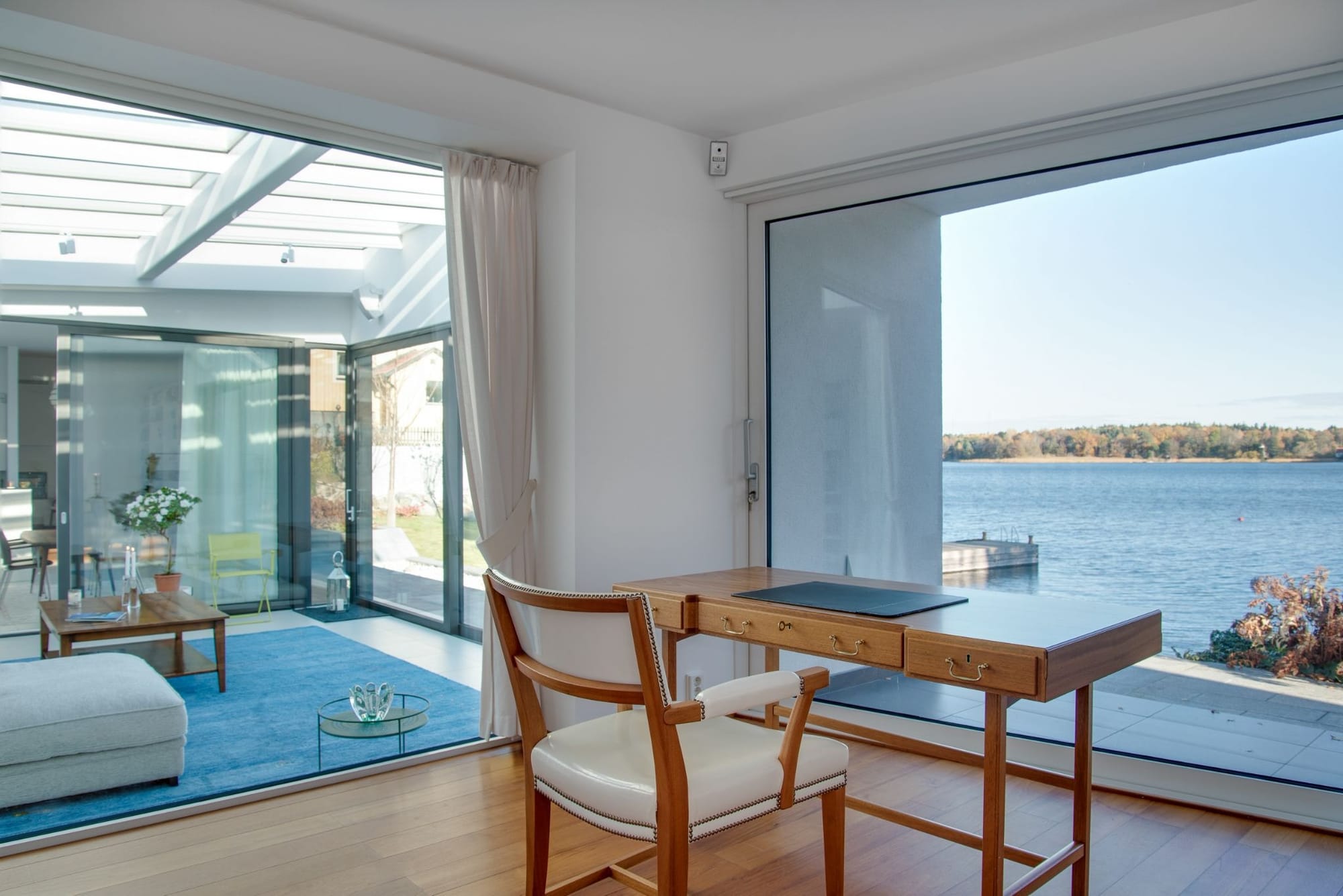
Beach house staging leans into a different feeling entirely: relaxed, breezy, and sun-washed. Where Scandinavian staging strips a room down, coastal staging style builds it up with texture: woven baskets, linen slipcovers, driftwood tones, and pops of blue that reference water without tipping into theme-park nautical.
Where it works best:
- Listings near water, lakefront, beachfront, or even a home with a pool and outdoor living space
- Vacation and second-home markets, where buyers are shopping the lifestyle as much as the square footage
- Larger rooms and open floor plans that can hold texture and layered furniture without feeling busy
- Southern and coastal markets where the style already matches buyer expectations
Signature elements:
- Whitewashed or driftwood-toned wood, paired with lighter, airy fabrics
- A palette of soft blues, sandy neutrals, and crisp white
- Natural textures, rattan, jute, linen, woven wood, for visual warmth
- Larger, more relaxed furniture silhouettes (slipcovered sofas, oversized armchairs)
- More greenery than Scandinavian staging: palms, ferns, or a few well-placed potted plants
The trap with coastal staging style is overdoing the theme. Anchors, ship wheels, and shell motifs read as gimmicky rather than aspirational. The best coastal staging suggests a beach without depicting one.
Scandinavian vs. Coastal: A Side-by-Side Comparison
Neither style is objectively better, they're built for different listings. A studio condo staged coastal can feel oversized and cluttered. A beachfront property staged Scandinavian can feel like it's fighting its own location.
How to Decide Which Style Fits Your Listing
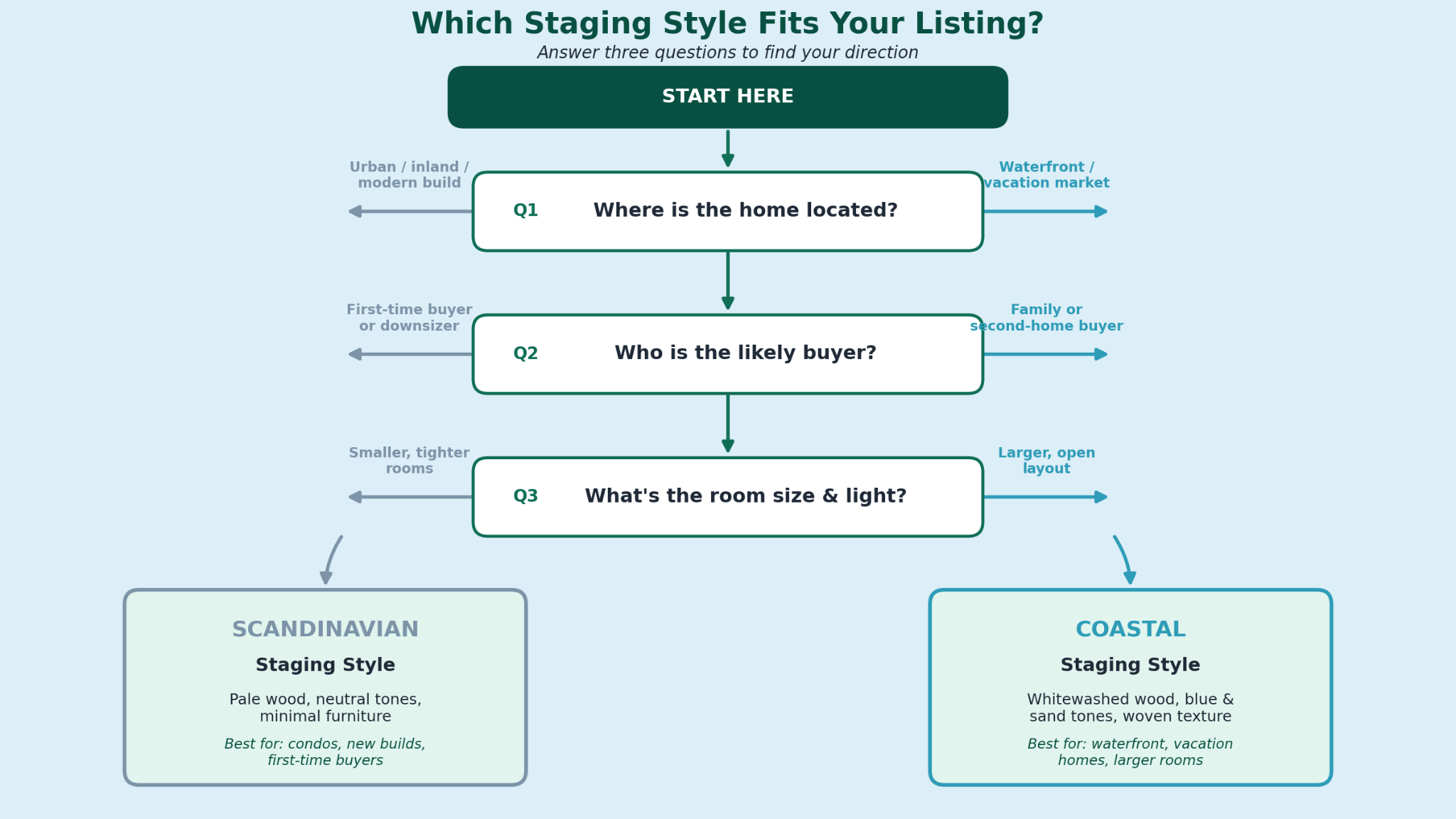
Ask three questions before you stage:
- Where is the home? A property two blocks from the beach automatically earns coastal staging style. A downtown condo tower does not.
- Who's the likely buyer? Pull comps and recent buyer profiles for the neighborhood. First-time buyers and downsizers tend to respond to Scandinavian staging's simplicity; families and second-home buyers respond to coastal staging's warmth.
- What's the room size and light? Smaller, tighter rooms benefit from Scandinavian minimalism because there's less to manage visually. Larger rooms with strong natural light can hold coastal staging's texture without feeling cluttered.
If the answer is genuinely unclear, that's exactly the kind of listing where virtual staging earns its keep; you can generate both versions of a key room, compare them side by side, and let the photos settle the debate instead of guessing.
It also helps to look at what's already performing in your market. Pull the top-viewed listings in your MLS from the past month and note which staging direction they leaned toward. If most of the attention is going to airy, minimal interiors, that's a signal your buyer pool is currently responding to Scandinavian staging style, regardless of what the listing description says about "coastal charm."
Style trends shift with the season and the local market, so this is worth re-checking every few months rather than assuming last year's winning look still applies.
One more practical note: style consistency matters as much as style choice. If the living room is staged Scandinavian, the primary bedroom and dining area should follow the same direction. A buyer who sees three different aesthetics across one listing's photos reads it as unfinished, not eclectic.
Staging Both Styles With AutoReel
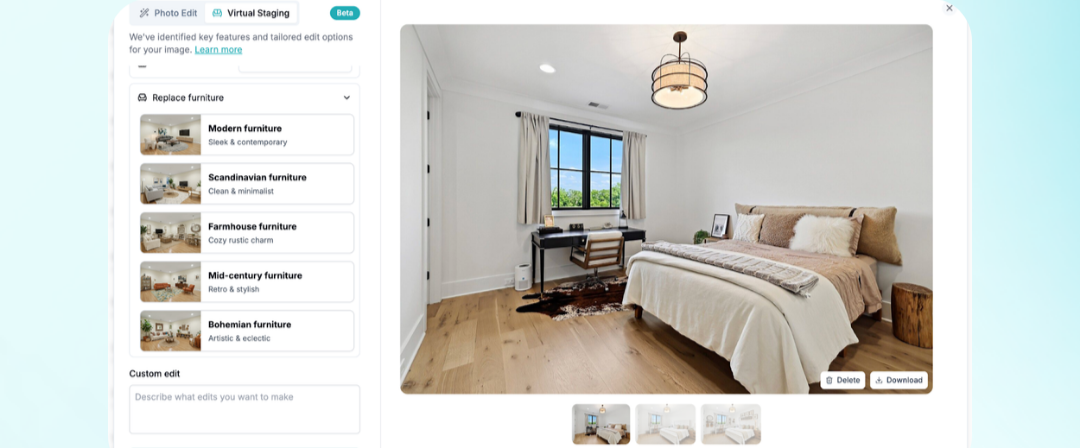
AutoReel's virtual staging tool lets you furnish an empty room in either style directly from your listing photos; no physical furniture, no rental fees, no waiting on a stager's schedule.
- Upload a photo.
- Choose a style direction.
- Get a furnished version back in minutes.
Because staging is included in every AutoReel plan rather than sold as a separate add-on, you can experiment. Stage a living room Scandinavian, then stage the same room coastal, and compare both against real buyer engagement before you commit.
AutoReel plans include a generous monthly amount of staging and photo edits, so testing two directions on one room doesn't feel like a gamble. If a listing needs more edits than your plan's monthly amount covers, extra credits are available at a lower cost - so a bigger listing or a busy month doesn't stall your workflow.
This matters most on the listings this guide is really about, the ones where style isn't obvious. Instead of committing to one direction based on a hunch, you can show a seller both options, or run both past your own gut check on which set of photos looks more "clickable" in a scroll.
The Bottom Line
Scandinavian and coastal staging styles both work, they just work on different listings. Scandinavian staging style sells simplicity and calm to buyers who want a clean slate. Coastal staging style sells lifestyle and warmth to buyers shopping for a feeling as much as a floor plan.
Match the style to the location, the room, and the buyer profile, and virtual staging becomes less of a gamble and more of a controlled experiment you can run before a single showing.
FAQs
What's the difference between Scandinavian and coastal virtual staging?
Scandinavian staging style uses pale wood, neutral palettes, and minimal furniture for a clean, functional look. Coastal staging style uses whitewashed wood, blue-and-sand palettes, and layered natural textures for a warmer, beach-inspired look.
Which staging style sells listings faster?
Neither style is universally faster; it depends on the listing. A style that matches the property's location and target buyer will typically outperform a mismatched style, regardless of which one it is.
Can I try both staging styles on the same listing photo?
Yes, virtual staging lets you generate multiple style versions of the same room from one photo, so you can compare Scandinavian and coastal side by side before choosing which to publish.
Is minimalist staging style right for every small room?
Minimalist staging tends to work well in smaller rooms because it avoids visual clutter, but it's not automatic; a small room with strong natural light and a coastal-market buyer pool can still work with lighter coastal touches.
Does virtual staging work for beach house or waterfront listings specifically?
Yes, and it's one of the strongest use cases for coastal staging style. Waterfront and vacation-market listings often benefit from staging that reinforces the lifestyle buyers are shopping for.
How many staged rooms can I generate in a month?
It depends on your plan. AutoReel's Essential plan includes 15 AI photo edits a month, Growth includes 80, and Pro includes 200, plenty for most listings. If a bigger property or a busy month pushes you past your plan's monthly amount, extra staged images are available at a lower added cost.
Sources
https://www.nar.realtor/research-and-statistics/research-reports/profile-of-home-staging
https://mystofa.com/interior-styles/compare/scandinavian/coastal








