Using AI Video in Real Estate Media Without Breaking Agent Trust (2026)

Summarize with AI


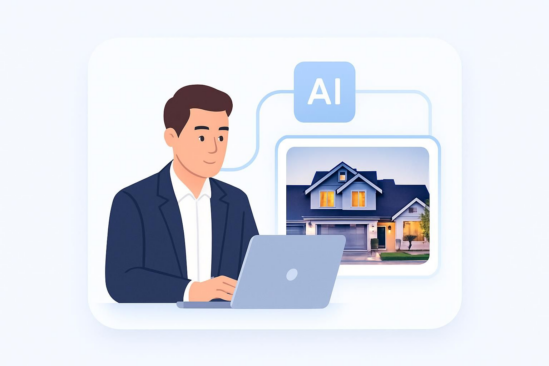
If you are a photographer who has painstakingly built a reputation for reliability and efficiency among real estate agents, you must have wondered about the rapid change that has come in the past few years. The audience landscape has dramatically changed since the coming of the age of social media.
The audiences and the way they received the traditional media have changed rapidly and in unprecedented ways. Gone are the good old days when your beautiful click of a property would catch the attention of customers. In this fast moving world of social media, demands and behaviour of real estate audiences are different with video now the new foundation of real estate media.
With the campaigns now increasingly centered around real estate videos, photographers feel growing pressure to expand their offerings. At the same time, many remain cautious. Video introduces new production steps, pricing discussions, and delivery expectations, all of which can affect established workflows.
When an AI real estate video editor enters the process, concerns around pricing, consistency and client trust become even more pronounced. You may wonder how much an AI video can cost you and how it will impact the agent’s budget. With AutoReel, you can instantly produce and sell an AI video at $80-100.
This article explains how real estate photographers can add AI-supported real estate video services in a way that protects credibility, preserves workflow stability, and fits naturally into how agents and buyers use real estate media today.
View pricing options designed to add video services without disrupting existing workflows.
Why Predictability Matters in Real Estate Media Partnerships
In real estate media, trust is built through predictable execution. Agents rely on photographers who understand property flow, respect listing timelines, and deliver assets consistently. When media arrives properly formatted and ready to publish, agents can move quickly without revisions or follow-ups, reinforcing confidence in the partnership.
This predictability reduces friction. Agents expect files that match previous listings, upload smoothly to MLS platforms, and perform reliably across email, social, and listing sites. When photographers deliver real estate video services with the same consistency as photography, trust compounds rather than erodes.
Because of this, expanding into video must be handled carefully. The risk is not simply producing a poor video, but disrupting a long-established pattern of reliability. Whether using traditional methods or an AI real estate video editor, video adoption must reinforce existing standards and deliver the same dependable experience agents already associate with professional real estate media.
Why Video Adoption Among Photographers Remains Selective
Demand for video in real estate marketing has grown steadily, but adoption among photographers remains selective. In many markets, video is included in a minority of orders and is often reserved for higher-priced listings. This hesitation is not driven by a lack of awareness or skepticism about video’s value. It is driven by practical constraints.
Operational Friction and Workflow Risk
Traditional video production often introduces friction that does not align with photo-first real estate media workflows. For photographers whose businesses depend on speed and consistency, even small inefficiencies can create outsized operational risk.
Where traditional real estate video services create workflow friction:
- Video capture requires slower, more deliberate shooting than photography
- Editing involves manual sequencing and pacing decisions
- Music and styling introduce subjective revisions
- Platform-specific exports add extra production steps
- Turnaround times become harder to predict as complexity increases.
For photographers built on reliability, this unpredictability creates real risk. Any expansion into real estate video services, including the use of an AI real estate video editor, must reduce friction and preserve consistency rather than disrupt the relationship between the photographer and the agents.
Pricing Sensitivity and Standardization Challenges
Pricing has also limited widespread video adoption. Traditional real estate video is typically priced significantly higher than photography due to the time and labor involved. For many agents, especially those handling routine listings, the cost is difficult to justify consistently.
As a result, video becomes an occasional upgrade rather than a standard offering. Low volume makes it difficult for photographers to develop efficient, repeatable processes. Without consistency, video remains a custom project rather than a scalable service.
Until video can be delivered with predictable pricing and minimal workflow disruption, many photographers will continue to offer it selectively rather than universally.
How Much Can Photographers Charge for AI-Supported Real Estate Video Services?
Pricing is usually the first question photographers ask when considering AI-supported real estate video services. While there is no fixed industry standard yet, clear market patterns have already emerged.
In most markets, photographers typically charge $80–$120 per AI-supported video. This price range works because it creates a clear value exchange for both agents and photographers.
Why this pricing works:
- Agents get a video option that is significantly more affordable than traditional real estate video
- Videos are positioned as structured walkthroughs, not cinematic productions
- The price feels appropriate for routine listings, not just premium properties
- Photographers benefit from high margins due to reduced editing time
- Video can be added to more orders without extending turnaround times
When priced around scope, speed, and consistency, AI-supported real estate video services feel like a professional extension of real estate media rather than a discounted alternative.
Explore how AI-supported video services are structured and priced.
How to Package and Sell AI Real Estate Video Services Without Breaking Trust
How AI-supported real estate video services are packaged determines how easily agents adopt them. Photographers who see consistent uptake introduce video in ways that feel optional, familiar, and low-risk.
Common packaging approaches include:
- Upsell AI video as an add-on to photo-only packages
- Offer AI video as a low-cost alternative to traditional video
- Include AI video in bundled real estate media packages
- Provide a watermarked preview with paid final delivery
- Price AI video as a clearly scoped, standalone service
When positioned as a standardized and predictable feature, AI-supported real estate video services integrate smoothly into existing workflows and preserve client trust.
Buyer Behavior is Driving Video Expectations
Buyer expectations have shifted toward independent, information-driven search. While photos still create strong first impressions, they often fail to communicate layout and flow. This gap is why real estate video services are becoming a standard component of modern real estate media, helping buyers evaluate properties earlier and with greater confidence.
As video becomes more common, buyers increasingly rely on short walkthrough formats to understand spatial relationships, self-qualify before scheduling a showing, and reduce uncertainty. For agents, structured real estate video services, especially when supported by an AI real estate video editor, help filter inquiries and improve efficiency by setting clear expectations early in the search process.
As video adoption increases, several clear behavior shifts have emerged:
- Buyers rely on short walkthrough videos to understand layout and flow before scheduling a showing.
- Video helps buyers self-qualify by clarifying scale, room transitions, and spatial relationships.
- Listings with clear video generate fewer basic clarification questions.
- Agents receive more informed and intent-driven inquiries.
For agents, this translates directly into efficiency. Structured real estate video services, especially when supported by an AI real estate video editor, are less about increasing exposure and more about setting expectations early, allowing agents to spend less time on unqualified showings and more time working with buyers ready to move forward.
YouTube Reference: AutoReel Educational Channel
Why Video is Becoming Baseline in Modern Real Estate Media
In many markets, video is no longer limited to high-end listings. It is becoming part of the baseline real estate media package that agents expect for standard properties. This shift does not mean every listing needs cinematic production. It means buyers now expect a basic level of spatial clarity when evaluating a property.
Baseline real estate video services typically share these characteristics:
- They establish context early, often starting with an exterior or entry view
- Interior sequences follow a logical, walkthrough-style order
- Pacing remains neutral and consistent, prioritizing clarity over drama
- Videos are short and easy to consume across listings and social platforms
Photographers are well-positioned to deliver this type of content because they already understand property flow, listing priorities, and agent timelines. When real estate video services are framed as an extension of existing documentation rather than a creative departure, they integrate naturally into established workflows.
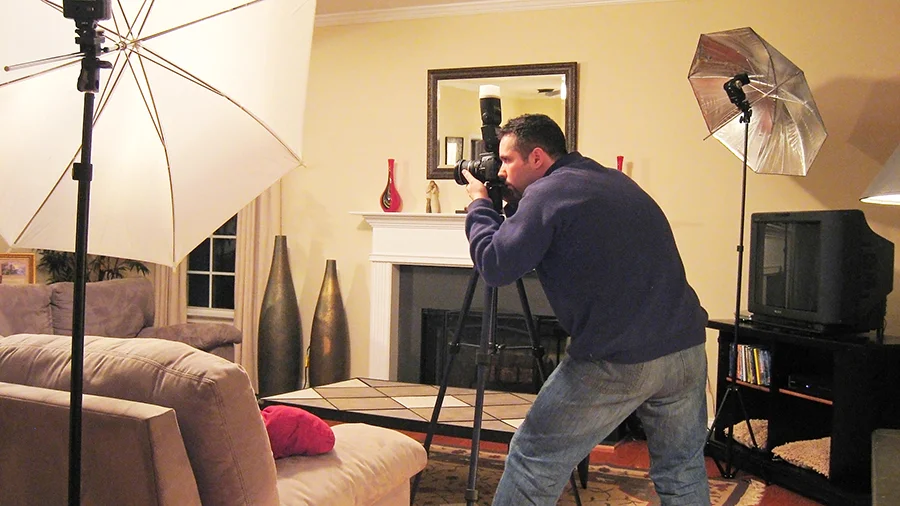
Trust Challenge Around AI in Creative Services
AI often raises hesitation in creative fields where reputation matters. Photographers worry about shortcuts, while agents fear inconsistent output. These defined processes to ensure new tools add value rather than uncertainty.
Common trust-related concerns around AI include:
- Photographers worry AI may be perceived as reduced craftsmanship
- Agents often associate automation with inconsistent results
- Unclear boundaries make AI feel experimental rather than reliable
- Lack of standardization raises concerns about quality control
At the same time, avoiding AI entirely introduces its own risks. As order volume increases, manual workflows can strain delivery timelines and consistency. Delays, uneven output, or burnout can damage trust just as quickly as poorly implemented automation. When AI is positioned as structured workflow support rather than a creative replacement, it can reinforce reliability rather than undermine it.
What AI Real Estate Video Editor Actually Does
An AI real estate video editor is designed to reduce repetitive post-production tasks while maintaining consistent output. It does not replace the photographer’s role in capture, framing, or quality control. Its value lies in execution efficiency.
Supporting Predictable Editing Tasks
In structured real estate video workflows, many editing decisions are predictable. Clips follow a logical order. Pacing remains consistent. Outputs are formatted for specific platforms.
AI tools can assist by:
- Selecting usable clips based on basic criteria.
- Sequencing scenes in a standardized walkthrough order.
- Applying consistent pacing and transitions.
- Exporting videos in predefined formats.
By handling these tasks, AI reduces time spent on repetitive adjustments without altering the underlying structure of the video.
Preserving Professional Oversight
Despite automation, the photographer remains responsible for editorial decisions. Capture quality, framing, and property flow are determined during the shoot. Final review and approval remain manual.
This review step is critical. It ensures that each video aligns with established quality standards and brand expectations. AI does not decide what a property should look like. It executes within boundaries set by the professional.
When used this way, AI functions as infrastructure rather than authorship. It supports reliability without diminishing accountability.
Economics of AI-Supported Video Services
AI-supported workflows change the economics of offering video. Instead of a high-effort, low-volume add-on, video becomes a scalable service that fits within existing production models.
Short-form AI-assisted videos can often be produced in minutes rather than hours. In the age of social media, these videos can then be broadcast across modern platforms like Youtube, Facebook, Instagram and Tik Tok. This efficiency increases visibility, lowers marginal costs and makes pricing more predictable.
In many markets, photographers offer these videos at a price point that agents can justify for routine listings. Rather than reserving video for select properties, agents can include it more consistently.
For photographers, this shift has several implications:
- Video can be added to more orders without extending delivery timelines.
- Average order value increases without proportional increases in labor.
- Revenue growth is driven by efficiency rather than overwork.
Predictability is the key advantage. When video production is standardized, it becomes easier to package, price, and deliver reliably.
How AI Video Fits Into Real Estate Photographer’s Workflow
Efficiency is a key driver behind the adoption of AI-supported video services. Producing a one-minute AI-assisted video often takes 10 to 15 minutes, with many outputs closer to 30 seconds. This efficiency allows photographers to add video without disrupting delivery timelines that agents rely on.
Key workflow benefits photographers report include:
- AI-supported video editing reduces manual sequencing and formatting.
- Short-form video outputs integrate smoothly into existing delivery processes without requiring new equipment, reshoots, or extended post-production.
- Structured workflows reduce revision-heavy projects by enforcing consistent pacing and format.
Shorter video formats also align closely with how agents distribute content today. Videos optimized for listings and social platforms reduce back-and-forth, simplify approvals, and support predictable delivery. When video fits naturally into existing workflows, photographers can expand services without sacrificing speed, consistency, or professional trust.
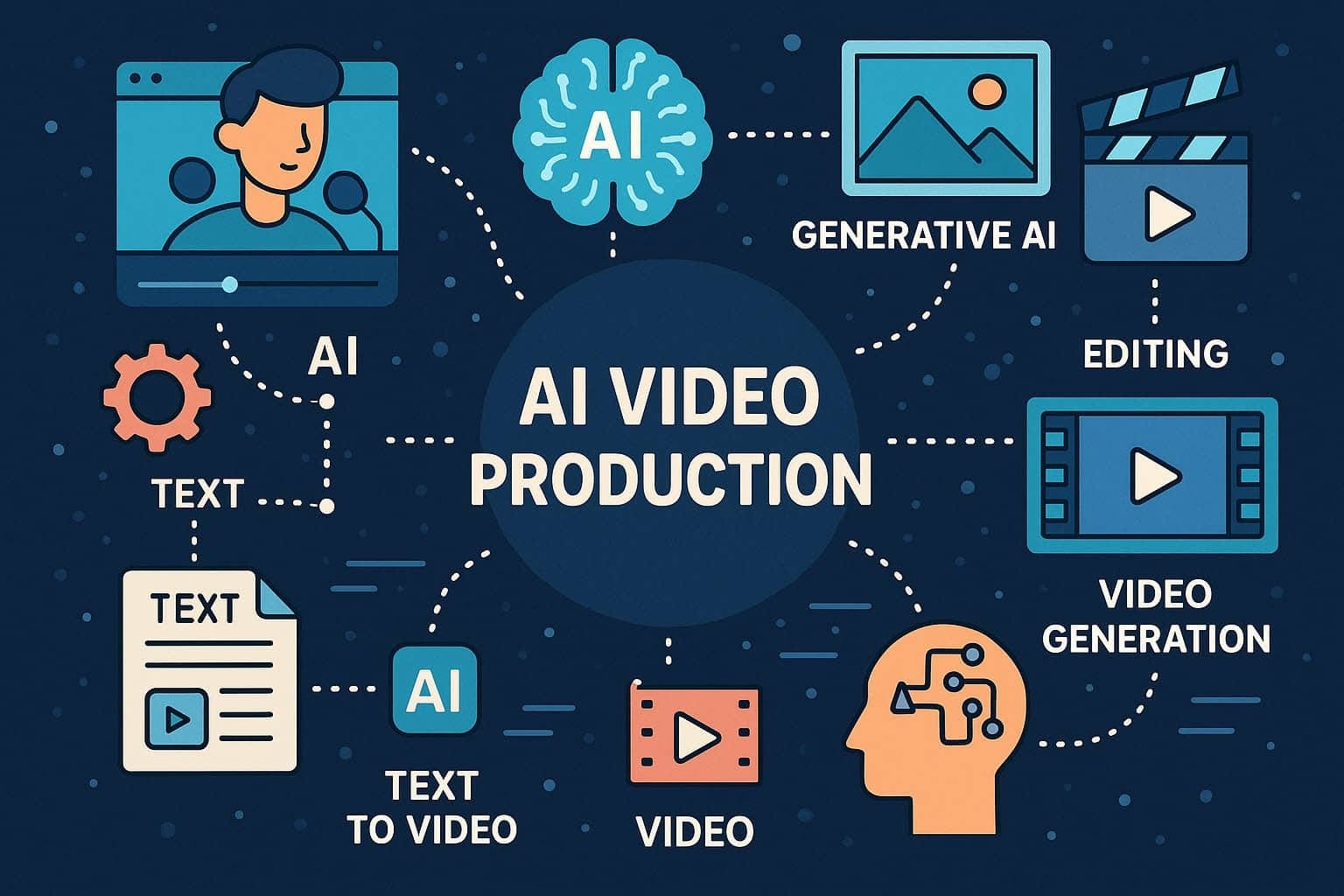
Long-Term Role of AI in Real Estate Media
AI is increasingly becoming a normalization layer in real estate media, supporting consistency, speed, and scale without replacing professional expertise. Its value lies in reinforcing reliable execution as content demands continue to grow.
As listings move faster, agents favor partners who can deliver predictably at scale. AI-supported workflows help standardize output while preserving professional judgment, shifting the focus toward reliability rather than creative novelty in modern real estate marketing.
Photographers who adopt AI intentionally are better positioned to meet rising demand without compromising standards. When integrated within clear workflows and quality controls, tools such as an AI real estate video editor strengthen delivery and protect craftsmanship rather than dilute it.
Explore pricing that expands video services while preserving trust, margins, and workflows.
Frequently Asked Questions
1. How do AI video services change real estate media expectations?
AI-supported real estate video services shift expectations toward speed, consistency, and reliability. Within real estate media, video becomes something agents can expect on most listings rather than an occasional upgrade. The focus moves away from creative novelty and toward predictable delivery that fits modern listing timelines and buyer behavior.
2. Where should an AI real estate video editor fit in workflows?
An AI real estate video editor fits best in post-production, where it handles repeatable tasks such as sequencing, pacing, and formatting. Photographers retain control over capture quality, visual judgment, and final review, ensuring real estate media standards remain professional while production becomes faster and more consistent.
3. How can photographers add AI video without hurting craftsmanship?
Photographers protect craftsmanship by positioning real estate video services as structured documentation supported by AI, not automated creativity. Clear review processes, consistent formatting, and professional oversight signal that AI strengthens reliability in real estate media rather than reducing effort or lowering quality.
4. What makes AI video services scalable for photographers?
AI-powered real estate video services are scalable because they standardize output and reduce manual editing variability. Predictable workflows allow photographers to handle higher volume without extending turnaround times or increasing revisions, making it possible to grow real estate media offerings without adding operational risk.
5. How do agents benefit beyond marketing exposure?
Agents benefit through efficiency. AI-supported real estate video services help set expectations early, reduce basic layout questions, and improve buyer self-qualification. Within real estate media, video becomes a filtering tool that saves time by limiting unproductive showings and focusing attention on serious buyers.
6. Can AI video editors increase revenue without more work?
Yes. An AI real estate video editor reduces time spent on repetitive editing tasks, enabling photographers to take on more real estate video projects. This increases average order value and margins while keeping labor predictable and avoiding longer hours or workflow strain.
7. How does AI video affect agent trust?
Trust is maintained when AI real estate video services deliver consistent results through structured workflows. Agents value reliability in real estate media, and trust grows when video output matches previous listings in pacing, format, and quality rather than feeling experimental or inconsistent.
8. Which video formats work best with AI editing?
Short walkthrough videos, listing overview clips, and platform-ready property videos work best with an AI real estate video editor. These formats follow repeatable structures, making them ideal for automation while maintaining clarity, consistency, and professional standards across real estate media channels.
9. How should AI video services be priced?
AI-supported real estate video services work best when priced as clearly scoped add-ons. Predictable pricing reinforces professionalism and avoids signaling reduced effort. When positioned correctly, AI-supported video fits naturally into real estate media packages without undermining trust or perceived value.
10. What is AI’s long-term role in real estate media?
AI will increasingly function as infrastructure within real estate media, supporting speed, scale, and consistency rather than replacing expertise. Photographers who integrate AI intentionally will meet growing demand while preserving professional judgment, reliable delivery, and long-term agent trust.
11. Will using AI video reduce how agents perceive my professionalism in 2026?
No. In 2026, agents care most about reliability, speed, and consistency. When an AI-supported real estate video is delivered with predictable formatting, clear scope, and a professional review, it reinforces trust. Agents value dependable execution more than manual effort, especially for routine listings.
12. How should photographers explain AI-supported video services to agents in 2026?
Photographers should position AI video as a structured workflow tool, not automated creativity. By emphasizing consistent delivery, faster turnaround, and standardized pricing, AI-supported video feels like a professional service extension rather than a shortcut or experimental offering.
13. What real estate video formats work best with AI without affecting agent trust in 2026?
Short walkthrough-style listing videos work best. These formats prioritize layout clarity, pacing, and accuracy, which aligns with buyer behavior in 2026. They fit naturally into AI-supported workflows while maintaining the professional standards agents expect.
External Sources
- National Association of Realtors https://www.nar.realtor/research-and-statistics
- HubSpot Video Marketing Statistics https://www.hubspot.com/marketing-statistics
- Google Think With Google https://www.thinkwithgoogle.com
Reddit Real Estate Photography Community https://www.reddit.com/r/RealEstatePhotography/