Virtual Staging for Fixer-Uppers: Helping Buyers See Past the Flaws

Summarize with AI


Picture this: a buyer swipes through your listing photos. Peeling paint. An empty room with a random extension cord. Next listing. Gone in two seconds flat.
That's the fixer-upper problem. Virtual staging for fixer uppers fixes it by digitally furnishing and refreshing your photos so buyers see potential instead of problems. No moving trucks. No waiting weeks. Just photos that make a "project" look like an opportunity.
Ever watched a good-bones listing sit while a "perfect" home down the street gets five offers in a weekend? The house isn't the problem. The photos are. Buyers decide in seconds whether to keep scrolling or click in, and bare, imperfect rooms almost never win that click.
So how do you fix that without lying to anyone? That's exactly what this AutoReel virtual staging guide walks through: how virtual staging works on distressed and as-is properties, what it can (and absolutely cannot) touch, and how to market a fixer-upper honestly, while still making it look irresistible.
Why Do Fixer-Uppers Need a Different Marketing Approach?
Staging a fixer-upper is not the same job as staging a move-in-ready listing. Toss furniture into a fresh, empty condo and it instantly feels warm. Toss furniture into a distressed property, and you're still fighting worn flooring, outdated fixtures, and that unmistakable "unloved" look.
The National Association of REALTORS® 2025 Profile of Home Staging backs this up: staged homes spend less time on the market, and buyers rate them as more valuable than unstaged ones, and that gap gets wider, not narrower, once a property clearly needs work.
Why? Buyers are already doing renovation math in their heads. Ask them to also imagine furniture, layout, and livability from an empty room - most simply won't bother.
The goal here isn't to hide the property's condition; that's a fast track to buyer distrust. It's to hand buyers a believable picture of what the space becomes, whether that's "fixed up" or just "furnished," while still marketing the home honestly as-is.
How Does Virtual Staging Work for Distressed Properties?
Virtual staging for flip listings and as-is homes uses AI to digitally add furniture and finishing touches to photos of empty or rough rooms, without a single nail touching the actual property. Upload your photos, and in minutes you get realistic, furnished versions back, for a fraction of the cost of hauling in real furniture.
For a fixer-upper specifically, it's doing double duty:
- It fills empty, awkward rooms so buyers instantly understand what they're looking at. Bedroom or home office? A bed or a desk answers that question in half a second.
- It quiets the visual noise. Furniture pulls the eye toward layout and light instead of scuffed baseboards, without changing a single structural or material fact about the room.
With AutoReel's AI Virtual Staging, agents and photographers upload existing listing photos and get furnished versions back in minutes: no inventory, no moving trucks, no waiting on a stager's calendar.
On a flip where carrying costs tick up every single day it sits unsold, that speed isn't a nice-to-have. It's the whole game.
What Should You Never Change With Virtual Staging?
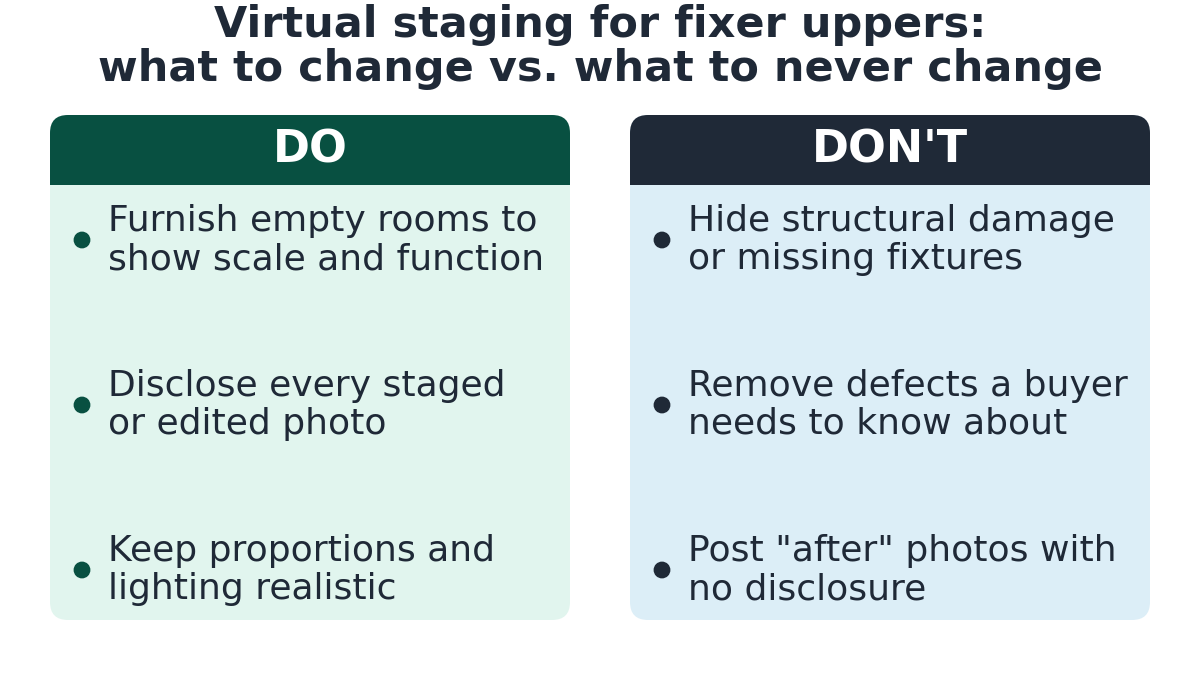
Here's the line you don't cross, ever. Virtual staging for fixer-uppers should never:
- Repair or hide actual structural damage, cracked foundations, water damage, missing fixtures; in a way that misrepresents the property's real condition
- Remove visible defects a buyer would reasonably need to know about before making an offer
- Show up as an "after" photo with zero disclosure that staging or edits were applied
MLS disclosure norms vary by market, but the rule of thumb is universal: any digitally staged or enhanced photo needs a clear label, a small "virtually staged" watermark or caption does the job, and most MLS platforms flat-out require it.
The point is to help buyers see potential, not to trick them about what they're buying. Handled this way, virtual staging builds trust instead of risking it, and keeps you squarely inside fair housing and advertising rules.
Does Virtual Staging Actually Help Sell Homes That Need Work?
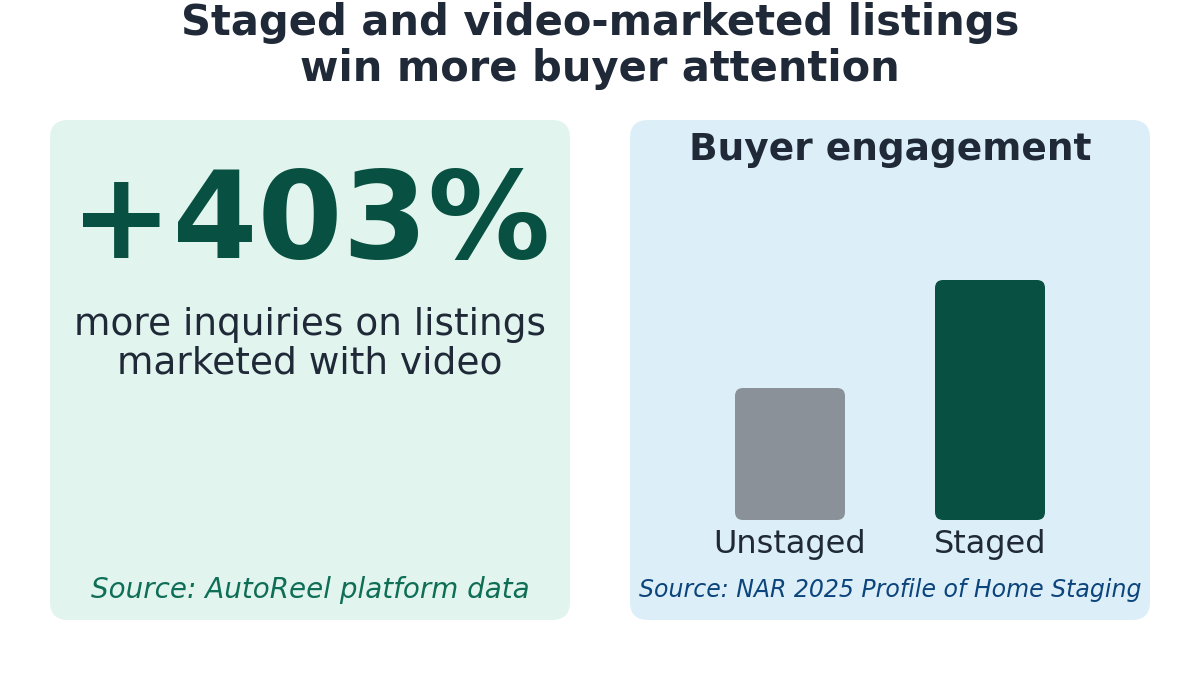
Here's a number worth remembering: listings marketed with video get 403% more inquiries than static-photo-only listings, and NAR's staging research shows staged spaces, virtual or physical, consistently out-engage empty ones.
For a fixer-upper, that lift matters even more, because these listings already start in a hole. Buyers walk in assuming more effort, more cost, more risk.
Virtually staged photos close that gap fast, and they do it in a single glance:
- The room sizes finally read as real. Furniture gives buyers a true sense of scale that empty rooms almost always distort.
- The layout just makes sense. A staged photo answers "would my couch even fit here?" before the buyer has to ask it.
- The upside jumps off the screen. A furnished living room, even a rough one, whispers "this could be great" a lot faster than stained carpet and bare drywall ever could.
That's the exact shift fixer-upper marketing photos need to pull off: from "this is broken" to "this is the flip everyone's going to wish they found first."
How Should You Combine Virtual Staging With Renovation Previews?
Want the highest-converting move in the playbook? Pair virtual staging with a renovation-preview angle, an honest "before" shot right next to a virtually staged "after."
It's a knockout combo for flip listings, investor buyers, and even owner-occupants who need a nudge to picture the payoff.
Here's a simple sequence that tends to convert:
- Lead with an honest wide shot of the room or exterior exactly as it stands today.
- Follow it with a virtually staged version showing the furnished, updated potential.
Stitch the sequence into a short video with AutoReel's Photo to Video tool, which turns a batch of listing photos into a cinematic property tour in about 10 minutes, tailor-made for that before-to-potential arc on Instagram, TikTok, or the listing page itself.
Why does this work so well? Because it does the buyer's imagining for them, in real time, while staying completely transparent about the property's current condition. That combination - honesty plus vision - is hard to beat.
What's the Most Cost-Effective Way to Stage Multiple Rooms?
Flips and distressed listings rarely need just one staged room. Kitchens, bathrooms, living areas, they all need the same "picture this finished" treatment, and physical staging for an entire fixer-upper can run into hundreds, even thousands, with weeks of lead time you don't have on a flip timeline.
Virtual staging scales in a completely different way.
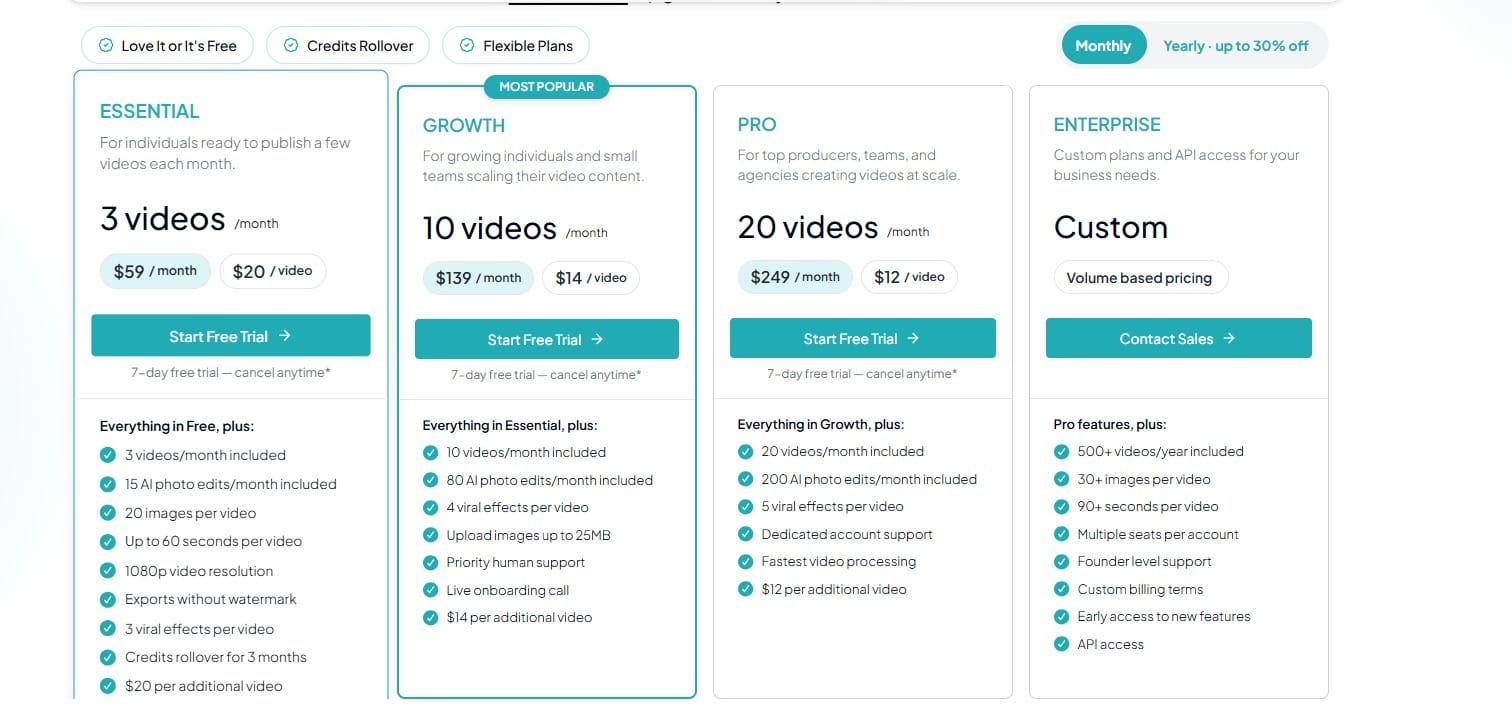
AutoReel plans include a set number of AI photo edits as part of your monthly or annual allowance. Essential plans include 125 AI photo edits per year, Growth plans include 800, and Pro plans include 2,000 edits, with custom volume available on Enterprise.
That allowance covers virtual staging and other AI photo edits across every listing your plan supports, so a flipper or media company staging rooms across multiple properties isn't paying per-room, per-vendor pricing every time.
Hit a heavier month than usual? Extra credits are available at a lower added cost, so one busy stretch never means switching plans or getting stuck mid-listing. Check the AutoReel pricing page for current allowances before you lock in a plan for your workload.
How Do You Avoid Making Virtually Staged Photos Look Fake?
Buyers have gotten sharp at spotting bad AI staging, furniture floating above the baseboards, lighting that doesn't match the room, proportions that feel off.
Want yours to pass the eye test? A few habits make the difference:
- Shoot with staging in mind. Wide, well-lit, level shots give any staging software far cleaner data to work with.
- Match the style to the market. A coastal cottage flip and a downtown condo call for completely different staging aesthetics, generic furniture kills the illusion instantly.
- Keep proportions honest. Don't stage a cramped bedroom with primary-suite furniture; buyers will clock the mismatch the second they walk through.
- Use tools built for real estate, not generic photo editors. Real-estate-specific AI is trained to match lighting, shadows, and perspective to the actual room, not just drop furniture on top.
AutoReel's virtual staging is purpose-built for listing photos, which is exactly why the furniture, lighting, and shadows land correctly the first time, no endless re-edits required.
Bringing It Together
A fixer-upper doesn't need to look perfect to sell fast. It needs to look possible.
Virtual staging hands buyers that possibility in seconds, at a fraction of the cost of physical staging, without misrepresenting the property's real condition. Pair it with honest before-and-after storytelling, disclose your edits, and let the photos do the one job a fixer-upper listing needs most: help buyers imagine themselves finishing what you started.
Ready to see it work on your next listing? Check out AutoReel's pricing and start staging your fixer-upper photos today, no physical inventory, no waiting on anyone's calendar but your own.
FAQs
1.Is virtual staging legal for as-is or fixer-upper listings?
Yes, as long as it's disclosed. Most MLS platforms require a label such as "virtually staged" on any digitally furnished or edited photo, and agents should never use staging to hide real defects buyers need to know about.
2.Does virtual staging work on rooms with visible damage or clutter?
It works best on rooms that are empty or lightly cluttered. Extremely damaged or heavily cluttered spaces may need a quick physical tidy-up or a "clean plate" edit before staging furniture on top for the most realistic result.
3.How much does virtual staging cost compared to physical staging?
Physical staging typically runs into the thousands of dollars per property and takes days or weeks to schedule. Virtual staging is included in your AutoReel plan allowance, with extra credits available at a lower added cost if you need more in a given month.
4.Can virtual staging help sell a flip faster than an unstaged flip?
Staged listings, virtual or physical, consistently see stronger buyer engagement than unstaged ones, according to NAR's staging research, and that gap tends to be largest on properties buyers already perceive as needing work.
5.Should I show both the "before" and virtually staged photos?
Yes, pairing an honest current-condition shot with a virtually staged version builds trust and helps buyers visualize the renovation payoff, which is especially effective for flip and investor-focused marketing.
6.What's the best way to turn staged fixer-upper photos into a video?
Tools like AutoReel's Photo to Video feature turn a set of staged and unstaged photos into a short cinematic property tour in about 10 minutes, ideal for social media and listing pages.
Sources
https://www.nar.realtor/research-and-statistics/research-reports/profile-of-home-staging








