Virtual Staging Turnaround Time: What Agents Should Expect in 2026

Summarize with AI


You've got a listing going live Friday and empty rooms are staring back at you in every photo. So the question isn't really "should I virtual stage this" anymore, it's "how fast can I actually get it done?"
Virtual staging turnaround time in 2026 typically runs anywhere from a few minutes with AI-powered tools to 24–48 hours with traditional design-service providers. The gap between those two numbers is bigger than most agents realize, and it's the difference between staging a listing the night before photos go live or waiting through a weekend while your competition's listing is already racking up views.
This AutoReel virtual staging guide explains what actually determines how fast virtual staging gets done, what "fast" really means across different providers, and how to plan your listing timeline around it.
Why Does Virtual Staging Turnaround Time Matter So Much?
Speed isn't a vanity metric here; it's tied directly to how listings perform.
Homes typically go under contract faster and for closer to (or above) list price when they're staged, according to the National Real Estate Exchange's home staging research. But that only works if the staged photos are live when buyer traffic is highest, usually the first 72 hours after listing.
If your staging provider takes two or three days to turn around a batch of rooms, you've likely already missed that early traffic spike. That's the real cost of slow turnaround: not just annoyance, but lost visibility during the window that matters most.
What Actually Affects Virtual Staging Processing Time?
A few factors determine how long virtual staging takes, regardless of which method you use:
- Method: AI-generated staging versus manual design work by a human editor
- Batch size: staging one hero shot versus an entire 20-photo listing
- Room complexity: an empty rectangular bedroom stages faster than an oddly angled living room with multiple sightlines
- Revision rounds: how many times you need to swap furniture styles or fix a rendering issue
- Provider queue: whether you're in a shared processing queue at peak listing season (spring and early summer, when inventory surges)
Traditional virtual staging companies rely on human designers manually placing furniture into photos using design software. That's a real skill, but it's not instant — most traditional providers quote 24 to 48 hours per batch, sometimes longer during high season.
AI virtual staging tools, by contrast, process rooms in minutes because the furnishing is generated algorithmically instead of placed by hand.
How Long Does Virtual Staging Actually Take?
Here's a realistic breakdown by method:
- Traditional (human-designed) virtual staging: 24–48 hours standard turnaround, with rush options at extra cost that can bring it down to same-day in some cases. Expect longer waits during spring listing season.
- Freelance or marketplace staging services: Highly variable, anywhere from a few hours to several days, depending on the individual designer's workload and time zone.
- AI virtual staging platforms: Minutes per room, not hours. This is the fastest category by a wide margin, since there's no manual placement step and no human queue to wait behind.
If you're comparing virtual staging speed across providers, that method; AI versus human; is the single biggest variable. Everything else (batch size, complexity, revisions) shifts the number up or down within that category, but it rarely closes the gap between "minutes" and "days."
Here's how the three most common staging approaches stack up side by side:
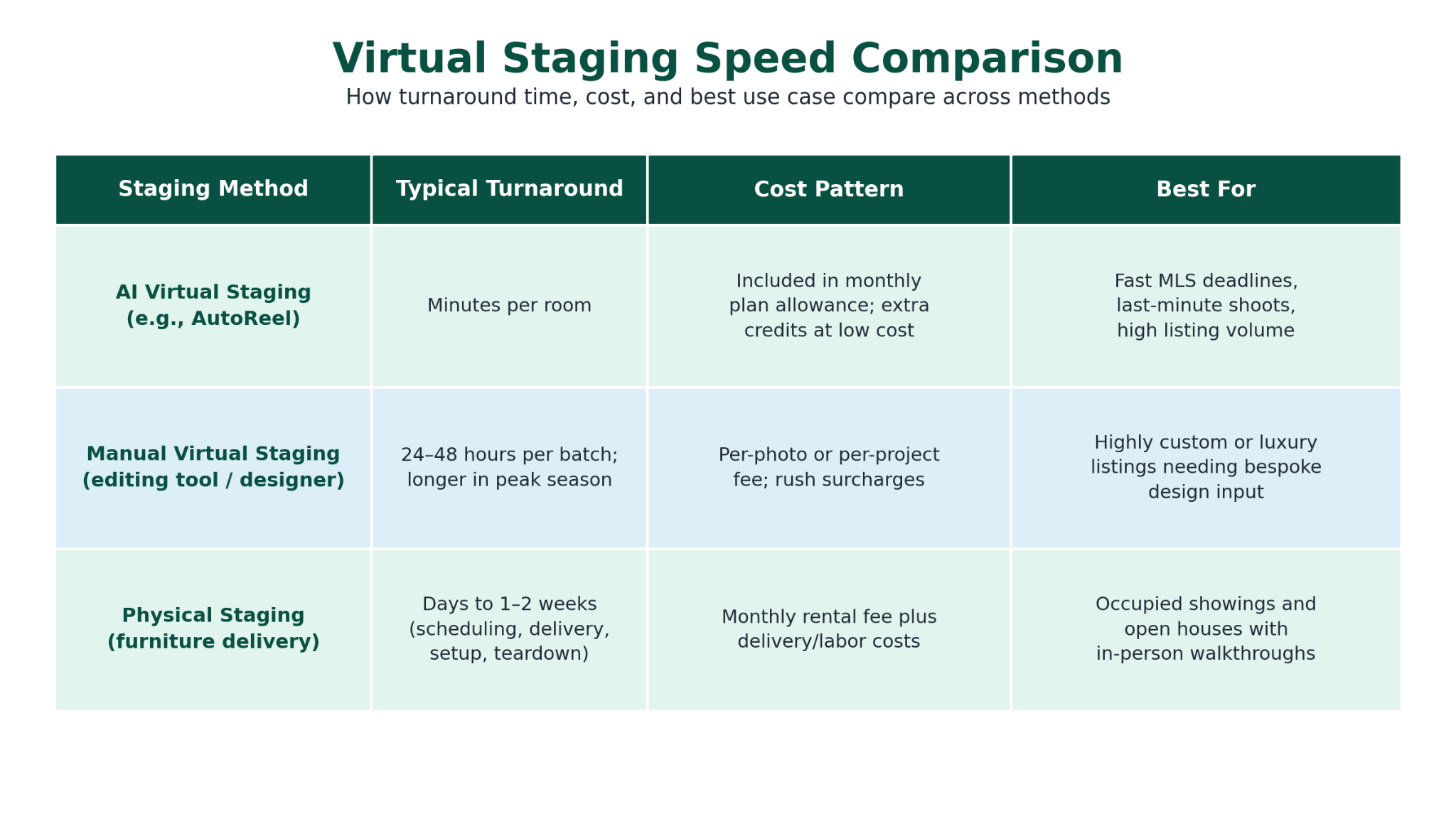
The gap isn't just AI versus human: it's AI versus everything that involves a truck. Physical staging still has its place for in-person showings, but it was never designed to solve a same-day MLS deadline, and it shows in the timeline.
Is Same-Day Virtual Staging Realistic?
Yes, and for AI-powered platforms, same-day isn't even the right benchmark anymore, same-session is.
With AutoReel's virtual staging, you upload empty room photos and get furnished results back in minutes, not by end of day. That means you can shoot a listing in the morning, stage the empty rooms during lunch, and have MLS-ready photos uploaded before your afternoon showings.
Same-day used to mean "the designer squeezed you in before their queue closed." Now it means you're not waiting in anyone's queue at all.
What Should Agents Expect From Fast Virtual Staging in Practice?
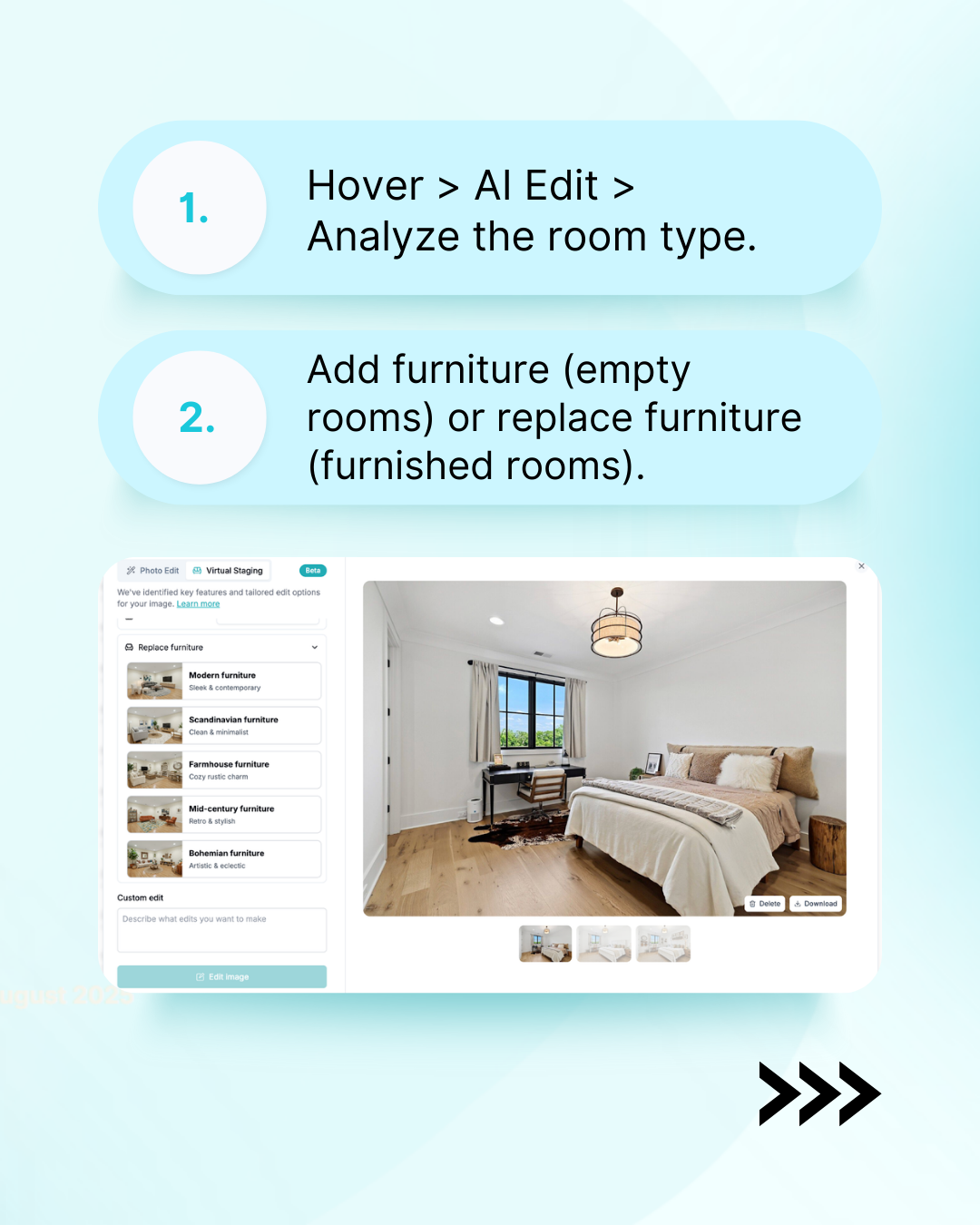
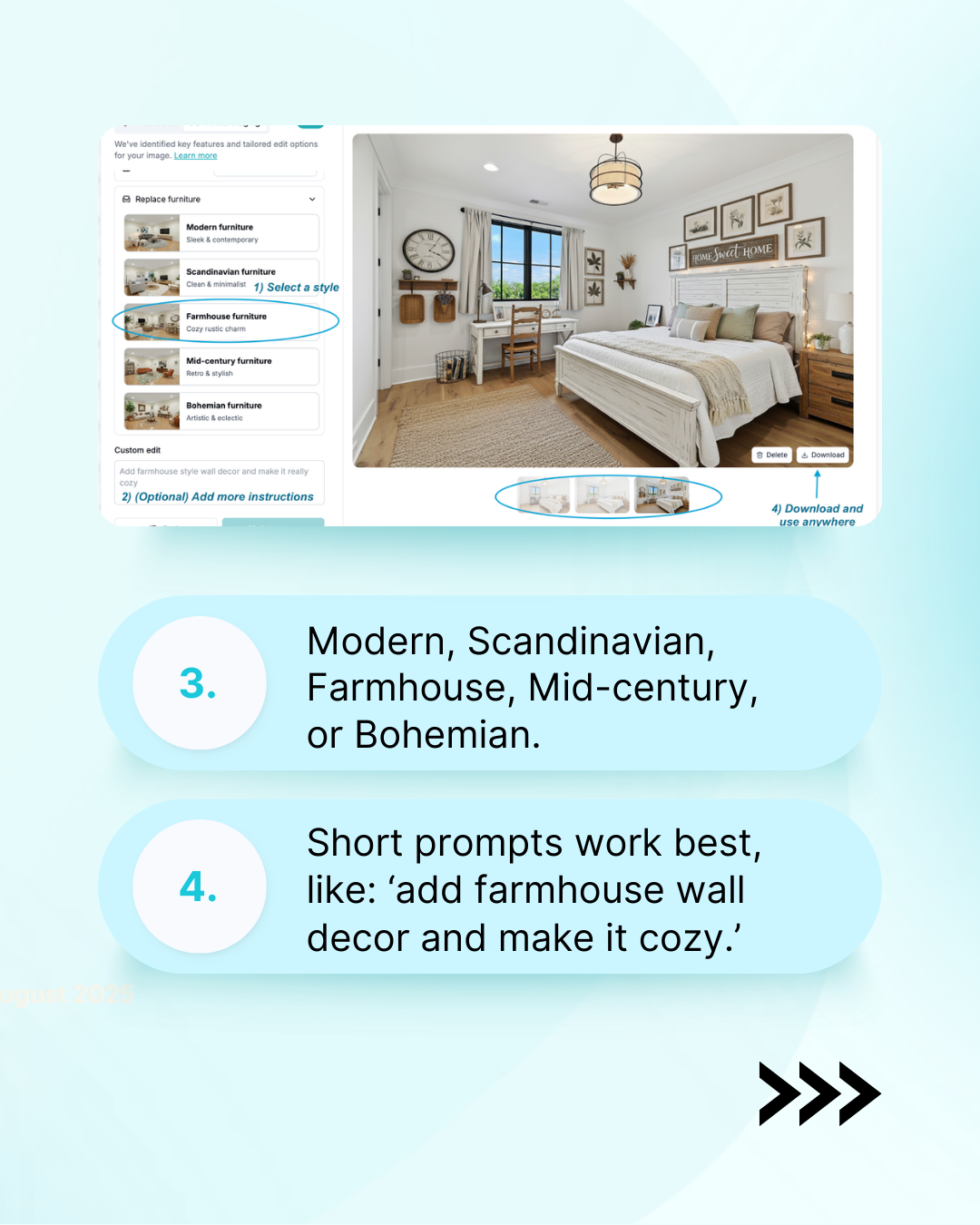

A realistic same-session workflow looks like this:
- Photograph the empty listing (or use a photographer's delivered shots)
- Upload the photos to your staging tool
- Choose a furniture style — modern, traditional, Scandinavian, coastal, whatever fits the buyer profile for that neighborhood
- Generate the staged version
- Review and download
With AI staging, steps 3 through 5 can happen in the time it takes to grab coffee. With a traditional design service, you're submitting a request and waiting for a delivery email — often the next business day.
That workflow difference matters most when you're working against a hard deadline: a Thursday photo shoot ahead of a Friday MLS listing, an open house scheduled for the weekend, or a last-minute price change that needs refreshed marketing photos fast.
Does Faster Turnaround Mean Lower Quality?
This is the objection agents raise most, and it's a fair one; speed shouldn't come at the cost of photos that look obviously fake to buyers scrolling listings.
The good news: modern AI staging models have gotten dramatically better at realistic lighting, shadow placement, and proportional furniture scale. The furniture actually fits the room instead of floating awkwardly in the middle of it.
That said, quality still varies by tool. When you're evaluating options, look at before-and-after samples closely; check whether shadows fall correctly, whether furniture scale matches the room's actual dimensions, and whether the staging style matches what buyers in that price range and neighborhood expect.
Speed and realism aren't mutually exclusive, but they're not automatically bundled together either, the platform matters.
How Should Agents Plan Their Listing Timeline Around Staging Speed?
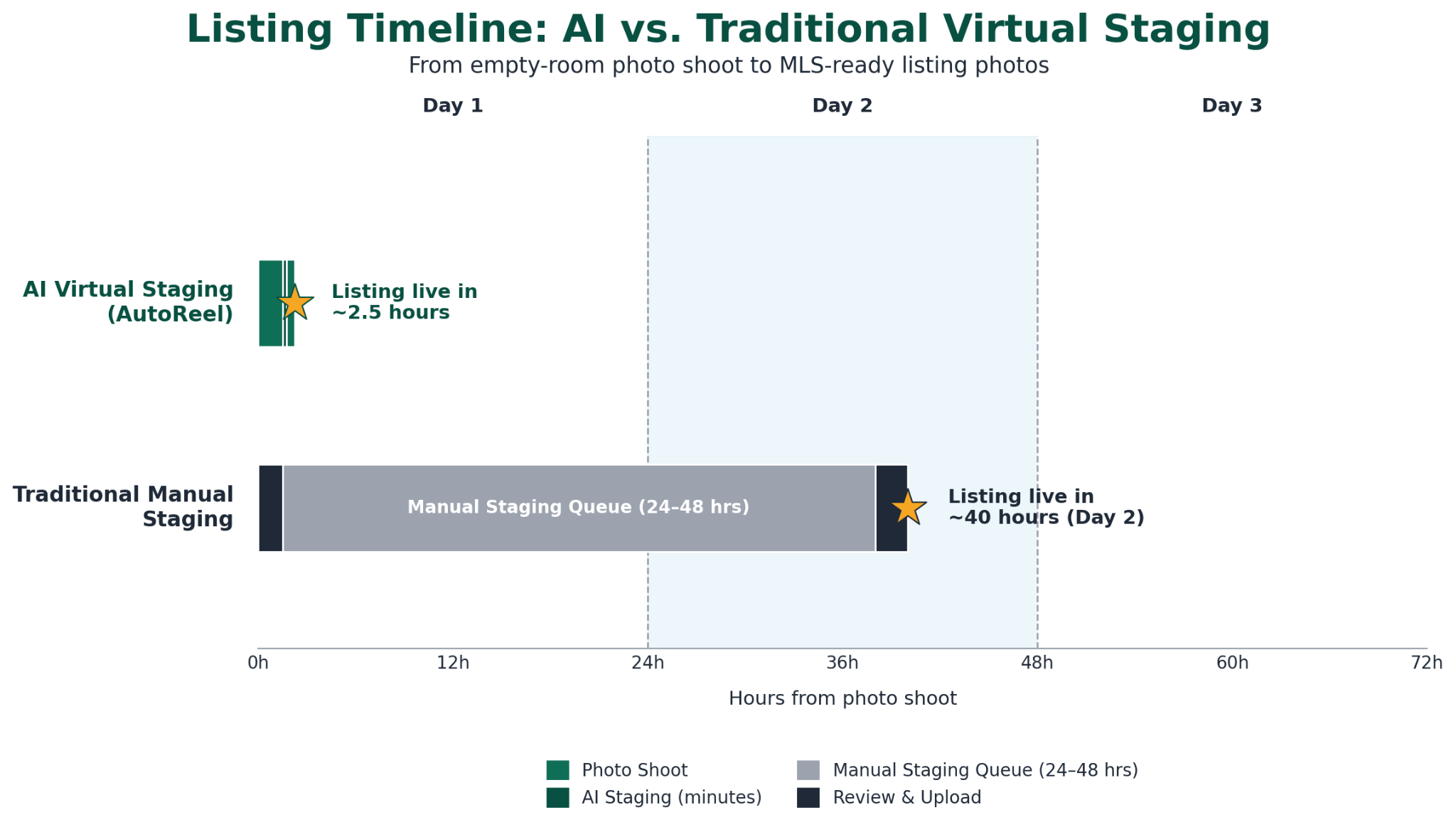
If you're building your listing timeline around a traditional staging provider, add a full business day (minimum) as a buffer before your target MLS date. If a room needs a revision, say, the furniture style doesn't match the neighborhood's buyer profile; that's another round-trip.
If you're using an AI staging platform, you can realistically compress that buffer down to the same afternoon. That flexibility is especially useful for photographers and media companies juggling multiple listings in a single week, since it removes staging from the list of things that can bottleneck delivery.
AutoReel builds virtual staging directly into the same workflow used for photo-to-video creation, so once your rooms are staged, those same photos flow straight into a listing video without re-uploading anywhere.
AutoReel plans include a monthly allowance of staging edits, and if a busy month runs you past that allowance, additional credits are available at a low added cost; no need to jump plans just because you had a heavy listing week.
The Bottom Line on Virtual Staging Turnaround Time in 2026
The turnaround gap between traditional and AI virtual staging isn't shrinking; if anything, it's widening as AI models keep getting faster and more realistic. If your current staging workflow has you waiting a day or two per batch, that's time your listing isn't spending in front of buyers during its most important window.
For agents who need staged photos ready before a shoot's photos even finish uploading to the MLS, AutoReel's virtual staging tool turns that around in minutes. Start with the free plan, no credit card required, and see how fast an empty listing can look move-in ready.
FAQs
1.How long does virtual staging usually take?
It depends on the method. Traditional, human-designed virtual staging typically takes 24–48 hours per batch. AI-powered virtual staging processes rooms in minutes, since there's no manual furniture placement or design queue involved.
2.Can virtual staging be done the same day as a photo shoot?
Yes, with AI virtual staging tools. You can upload photos right after a shoot and have furnished rooms back within minutes, which is fast enough to stage and list in the same day, often the same afternoon.
3.Does faster virtual staging mean lower-quality results?
Not necessarily. Speed depends on the method (AI versus manual design), while quality depends on the platform's rendering accuracy ,shadow placement, furniture scale, and realistic proportions. Check before-and-after samples to judge quality independently of turnaround time.
4.How many rooms can be staged at once?
This varies by provider and plan. Most platforms let you batch-upload an entire listing's worth of empty rooms and process them together, which is faster overall than submitting one room at a time.
5.What happens if I use up my monthly virtual staging allowance?
On most plans, including AutoReel's, additional staging credits are available at a low added cost, so a heavier listing month doesn't require switching to a higher-tier plan.
6.Is virtual staging turnaround different during peak listing season?
For traditional, human-staffed staging services, yes, spring and early summer often mean longer queues. AI-powered staging isn't affected by seasonal demand in the same way, since processing doesn't depend on a human designer's availability.
Sources
https://www.nar.realtor/research-and-statistics/research-reports/profile-of-home-staging








