Virtual Staging vs. Physical Staging: Which Sells Homes Faster?

Summarize with AI


Staged homes sell faster and for more money than empty ones; that part isn't in dispute. The real question agents and photographers are asking now is which kind of staging gets there faster: renting furniture and hiring a crew, or staging the photos themselves with AI.
Short answer: virtual staging wins on speed, scalability, cost, and flexibility for the vast majority of listings. Physical staging still earns its keep on luxury properties and open houses where buyers walk through in person.
If you're weighing options for an upcoming listing, this blog breaks down cost, timeline, and effectiveness for both, so you can pick the right one for the property in front of you, not just the one you did last time.
What Physical Staging Actually Costs
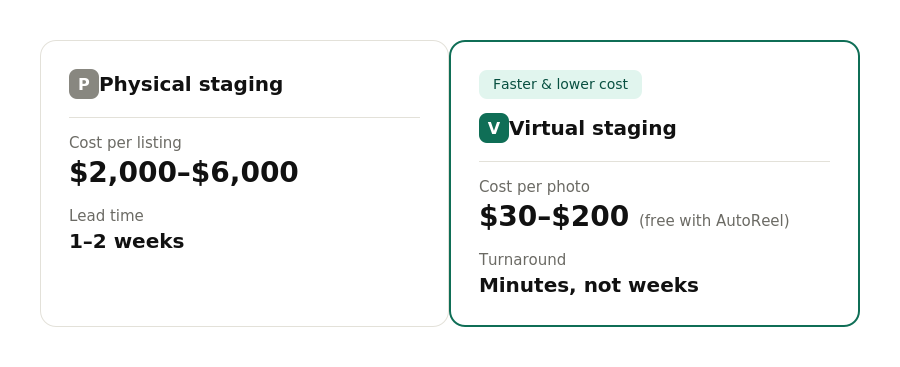
Physical staging means renting real furniture, art, and decor, then paying a crew to move it in and out. According to the National Association of Realtors' 2023 Profile of Home Staging, the median cost that sellers spent on staging was $2,000, though full-home staging for larger properties commonly runs $3,000 to $10,000 or more once you factor in a monthly rental fee per room.
That cost compounds the longer a home sits. Most staging companies bill in one- to three-month blocks, so a listing that lingers past its expected days-on-market can turn a $2,000 line item into $4,000 or $6,000 before it closes.
There's also lead time. Booking a stager, scheduling delivery, and styling a home typically takes one to two weeks; time a listing spends sitting empty and unphotographed while the clock on your marketing runs.
What Virtual Staging Actually Costs
Virtual staging skips the truck entirely. A designer, or now, an AI model; furnishes empty rooms directly inside your listing photos. Traditional virtual staging services charge $30 to $200 per image, billed per room, per photo.
AI-powered platforms have pushed that cost down dramatically. AutoReel's virtual staging is included on every plan, with monthly caps that scale by tier — 15 on Essential, 80 on Growth, 200 on Pro; you upload the empty-room photo and get a furnished version back in minutes, no rental furniture, no crew, no per-image invoice.
That difference matters most for agents juggling multiple listings or photographers who want to upsell staged photos without adding a vendor relationship. There's no delivery window to schedule around - you stage the photo the same day you shoot the home.
Does Staging Actually Help Sell a House?
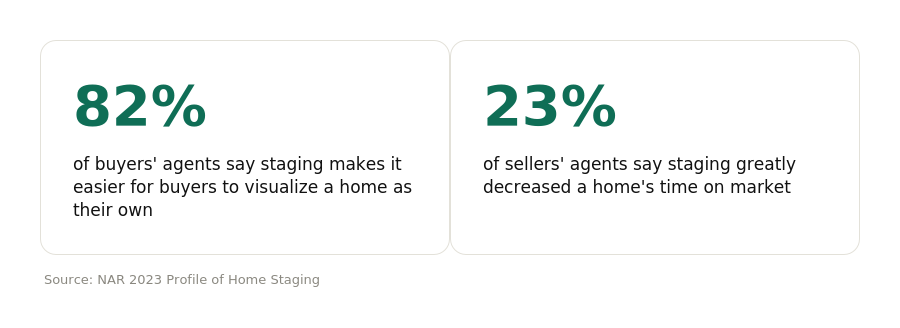
Yes, the data is consistent on this point regardless of which method you use. NAR's 2023 staging report found that:
- 20% of buyers' agents said staging increased the offer price by 1% to 5%
- 82% said it made it easier for buyers to visualize a property as their future home.
The same report found staged homes typically spend less time on market, and 23% of sellers' agents said staging "greatly" decreased a home's days on market. The effect isn't about tricking buyers, it's about removing the mental work of imagining furniture in an empty room.
Virtual staging effectiveness tracks closely with physical staging on this exact metric, because buyers are reacting to the photo, not the room itself, for the vast majority of their early decision-making.
NAR data consistently shows the overwhelming majority of buyers start their search online, meaning the photo is doing the persuading long before anyone walks through the door.
Speed to List: Where Virtual Staging Pulls Ahead
This is the category where the two methods diverge most. Physical staging requires booking a stager, waiting for inventory availability, a delivery day, styling time, and then photography; often a one- to two-week runway before a listing photo even exists.
Virtual staging compresses that into a single afternoon.
- Shoot the empty rooms.
- Upload the photos.
- Get furnished images back the same day.
For agents chasing a listing that needs to go live before the weekend open house, that turnaround is the difference between missing the market window and catching it.
This is also where AutoReel's workflow does double duty. The same photos you virtually stage can go straight into Photo to Video to become a cinematic property tour. No separate shoot, no separate vendor; one set of photos doing the work of both a staged listing and a marketing video.
ROI Comparison: Cost Per Listing vs. Return
Run the numbers side by side on an average single-family listing:
- Physical staging: $2,000–$6,000 per listing, 1–2 weeks lead time, furniture removed at close or renewed monthly if the home doesn't sell quickly.
- Virtual staging (traditional vendor): $30–$200 per photo, same-day to 48-hour turnaround.
- Virtual staging (with AutoReel): Included in every plan with monthly caps by tier (15–200), turnaround measured in minutes.
Staging ROI comparisons from NAR consistently show a positive return either way; sellers report staging costs recouped many times over through faster sales and stronger offers.
But the margin on that ROI is far wider with virtual staging, since the input cost is a fraction of physical staging while the buyer-facing outcome, a furnished-looking photo, is functionally the same for the large majority of buyers who see the home online first.
When Physical Staging Still Wins
Virtual staging only affects photos and video; it doesn't change what a buyer sees in person. For any listing with a scheduled open house or frequent in-person showings, an empty room will still feel empty in real life no matter how furnished it looks online.
Physical staging is worth the cost there, especially for luxury listings where buyers expect a full sensory walkthrough, or vacant homes competing with staged comps in a slow market.
The two aren't mutually exclusive, either. Plenty of agents virtually stage the listing photos to win the click and drive traffic, then physically stage just the rooms that matter most: living room, primary bedroom, kitchen, before showings begin.
That captures the cost savings of virtual staging where it counts and the in-person impact of physical staging where it's unavoidable.
How to Virtually Stage a Listing in Minutes
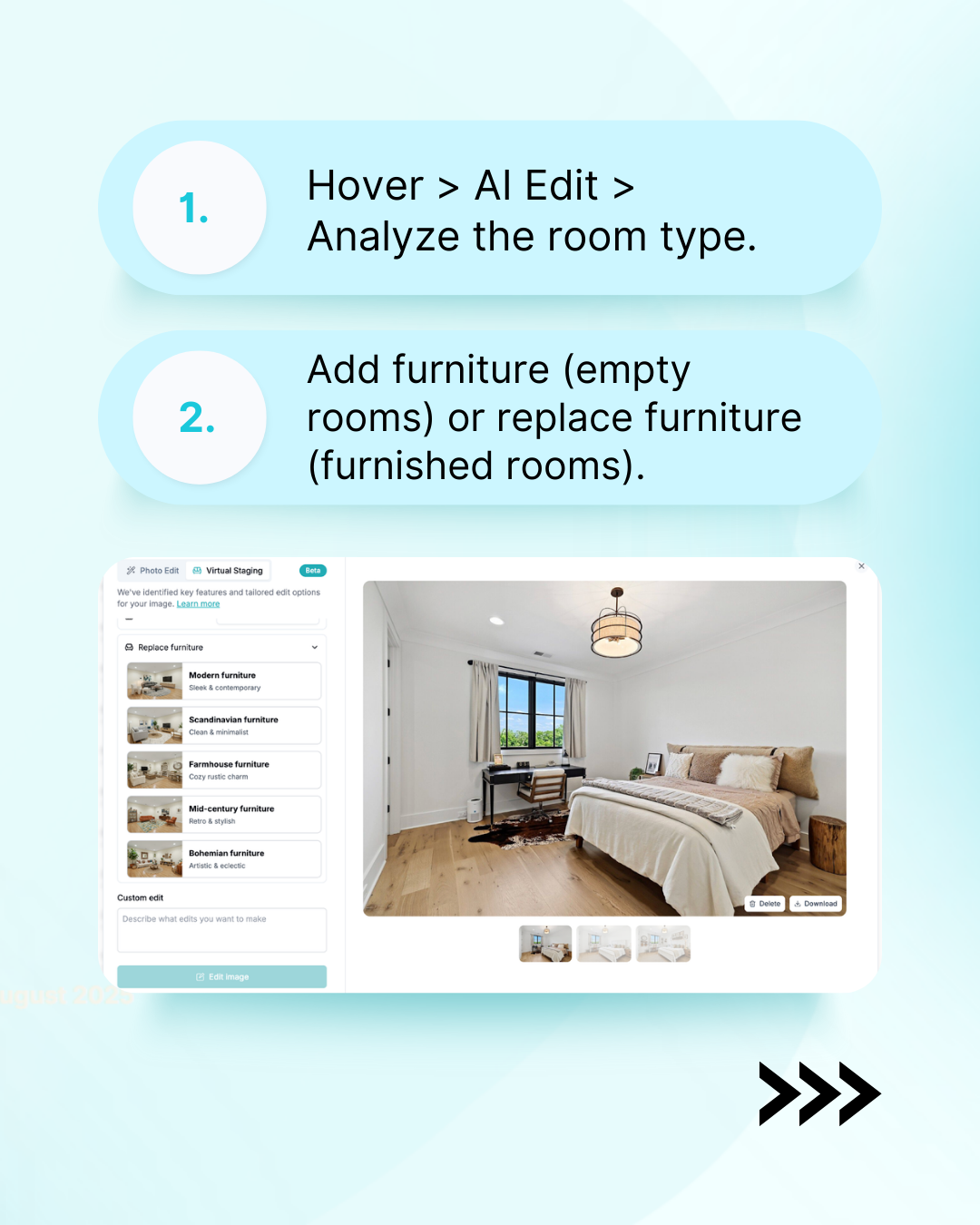
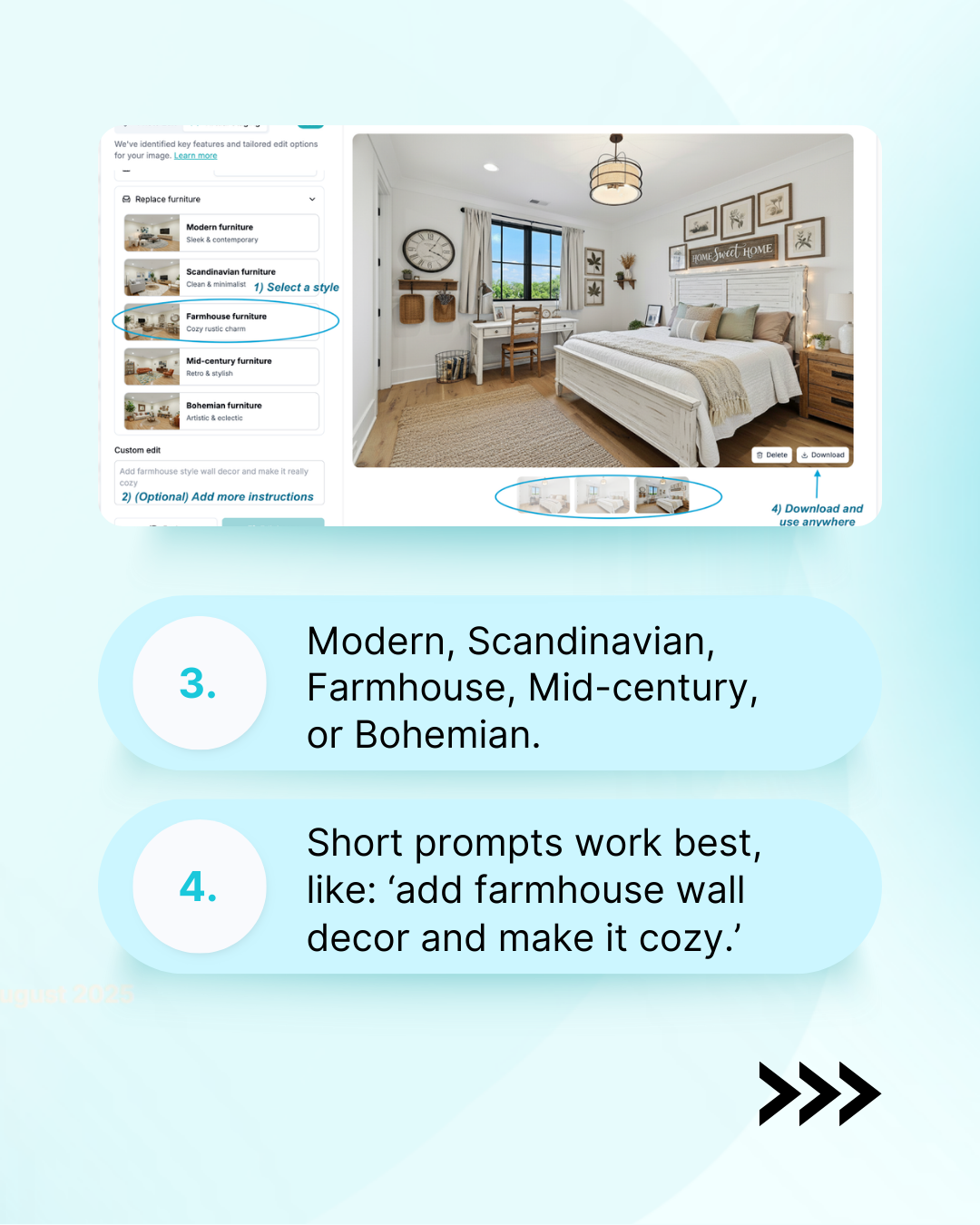
You can virtually stage a listing in just a few minutes by using AutoReel. Here is how to do it step-by-step:
- Shoot the empty rooms as you normally would; portrait or landscape both work.
- Upload the photos to AutoReel, either manually or by pulling them directly from Realtor.com with One-Click Import.
- Apply virtual staging to any empty room, included on every plan up to your monthly cap.
- Review and download the furnished versions, ready for MLS and marketing.
- Turn the same photos into a video using Photo to Video feature, so the listing gets a staged photo set and a property video from one shoot.
No design software, no vendor call, no waiting on a delivery truck. For a deeper walkthrough of the feature set for realtors and photographers upselling staged photos to clients, check AutoReel's pricing page for current plan details.

The Bottom Line
Staging works; that's settled. For most listings, virtual staging delivers the same buyer impact as physical staging at a fraction of the cost and none of the lead time, which is why it's become the default for online-first marketing.
Try AutoReel's virtual staging on your next empty listing — available starting on paid plans, with a 7-day free trial that doesn't require a credit card to start.
FAQs
Is virtual staging as effective as physical staging for selling a home?
For online marketing, yes, most buyers see the listing photo before they ever walk through the door, so a well-done virtual staging image drives the same click-through and interest as a physically staged one. Physical staging still matters for in-person showings, mostly of luxury properties, since virtual staging only changes the photo, not the empty room itself.
How much does virtual staging cost compared to physical staging?
Traditional virtual staging runs $30–$200 per photo; physical staging for a full home typically runs $2,000–$6,000 or more, plus monthly rental fees if the listing doesn't sell quickly. AI-powered tools like AutoReel include virtual staging on every plan, with monthly caps that scale by tier rather than a per-photo fee.
Do agents need to disclose that a listing photo is virtually staged?
Best practice, and increasingly MLS policy, is to label virtually staged photos as such, since the furniture isn't physically present. Check your local MLS rules, as disclosure requirements vary by market.
Does staging actually help a house sell faster?
Yes. NAR's 2023 Profile of Home Staging found 23% of sellers' agents said staging greatly decreased a home's time on market, and 82% of buyers' agents said it helped buyers picture themselves living there.
Can I use virtual staging and physical staging on the same listing?
Yes, and many agents do, but it is usually done in case of luxury properties. For the routine listings, it is always better to opt for virtual staging as it is cost-efficient, time-saving, and highly scalable.
Sources
https://www.nar.realtor/research-and-statistics/research-reports/profile-of-home-staging
https://www.nar.realtor/research-and-statistics/research-reports/quick-real-estate-statistics
https://omegarender.com/virtual-staging-vs-real-staging
https://www.realtor.com/news/trends/ai-virtual-staging-versus-physical-staging-home-listing/
https://www.thezebra.com/resources/research/home-staging-statistics/








