Virtual Staging vs. Renovating Before You Sell: What Actually Pays Off

Summarize with AI


If you're weighing virtual staging against a real renovation before you list, here's the short answer: virtual staging typically delivers a far higher return on investment than remodeling, because it costs a fraction as much and speeds up your listing timeline instead of delaying it.
Renovations can pay off in specific cases, mainly kitchens and baths in outdated homes, but for most sellers, staging (virtual or physical) closes the gap between "how the home looks" and "how the home could look" without the risk of over-improving for your market.
This AutoReel virtual staging guide breaks down the real math behind virtual staging vs renovation.
How Much Does Staging Actually Increase Sale Price?
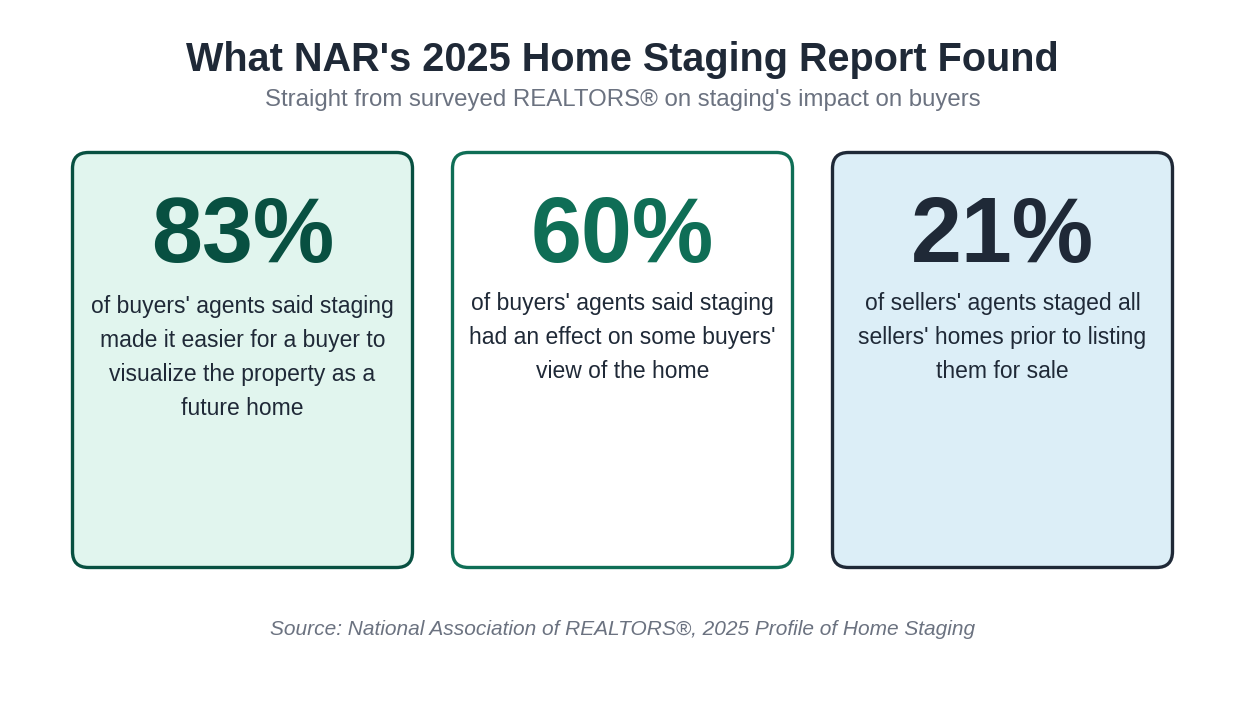
According to the National Association of Realtors' Profile of Home Staging, staged homes tend to sell faster and for a higher price than unstaged ones, with many buyers' agents reporting an increase in perceived home value after staging.
The mechanism is simple: buyers struggle to picture furniture placement, room flow, and scale in an empty or cluttered space. Staging removes that guesswork. It's not decoration; it's a sales aid.
Virtual staging gets you the same psychological effect at a fraction of the cost and time of physical staging. Instead of renting furniture and paying movers, you upload listing photos and get furnished, photorealistic rooms back, often the same day.
What's the Real Cost Difference Between Virtual Staging and Renovating?
Here's where the ROI conversation gets interesting.
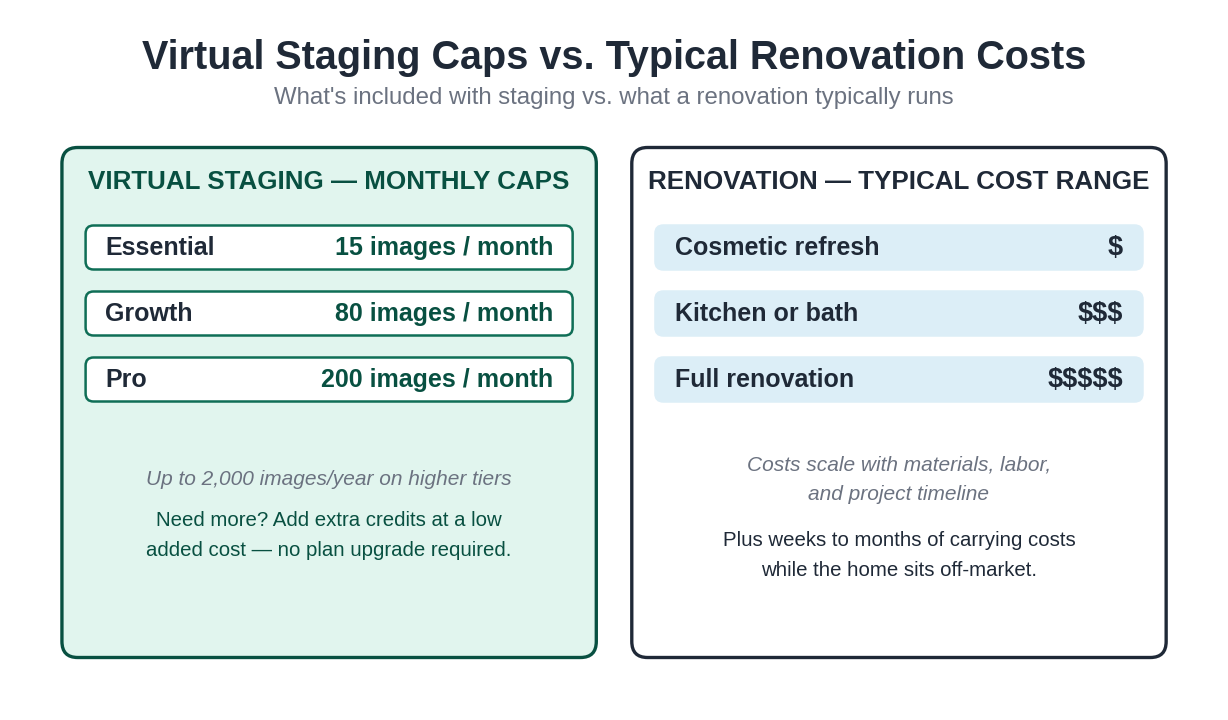
Physical renovation means real contractors, real materials, and real time, often weeks to months, depending on scope. A kitchen refresh or bathroom remodel can run from a few thousand dollars for cosmetic updates to well into five figures for a full gut.
And renovations carry real risk: you might not recoup the cost if you over-improve for your neighborhood's price ceiling, or if buyer taste doesn't match your choices.
Virtual staging replaces the "does this room look finished?" problem without touching a wall. You're not adding square footage or fixing a structural issue, you're helping buyers visualize a vacant or dated room as move-in ready.
AutoReel's virtual staging is included on every paid plan, with generous monthly and annual caps built in:
- Essential includes 15 staged images a month
- Growth includes 80 staged images a month
- Pro includes 200 staged images a month
If you're staging a big listing or juggling multiple properties in the same month, you can add extra credits at a low added cost rather than upgrading your entire plan.
That structure matters for ROI math: your staging cost per listing stays predictable, whether you're staging one vacant condo or ten listings in a busy spring season.
Does Renovating Before Selling Pay Off?
Sometimes, but it depends heavily on what you're renovating and where.
Kitchen and bathroom updates tend to have the best track record for recouping cost at resale, especially in homes that are visibly outdated compared to neighborhood comps. Cosmetic fixes, paint, flooring, lighting, also tend to pay off because they're relatively cheap and buyers notice them immediately.
Where renovation ROI falls apart is scope creep. Sellers who take on a renovation "while they're at it", finishing a basement, adding a bathroom, redoing landscaping, often spend more than the local market will reward.
You can't renovate your way past your neighborhood's ceiling price, and a slow renovation timeline means carrying costs (mortgage, taxes, insurance) stack up while your home sits off-market.
This is the core trade-off: renovation can raise your home's actual value, but it also raises your risk and your timeline. Staging raises your home's perceived value with none of that risk.
What's the ROI of Virtual Staging vs. Physical Renovation?
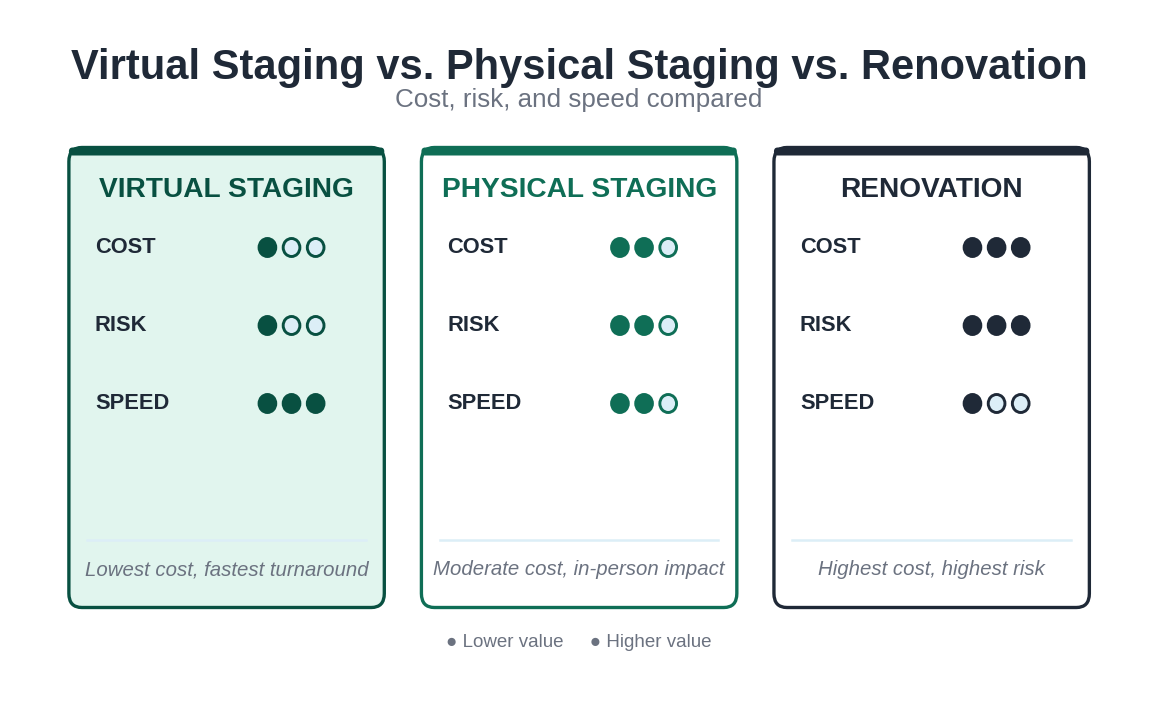
Think of it as a spectrum of cost, risk, and speed:
- Virtual staging: Low cost, fast turnaround, essentially no risk of "over-improving." The tradeoff is that it changes photos, not the physical space, so it works best when the bones of the home are solid and the issue is presentation, not condition.
- Physical staging: Higher cost than virtual, but buyers walk through real furniture during showings. Strong ROI for vacant homes, especially in competitive markets, but requires rental logistics and lead time.
- Renovation: Highest cost, highest risk, longest timeline. Best reserved for homes with a genuine condition problem (an outdated kitchen, a single bathroom in a market that expects two) rather than a presentation problem.
For most listings, especially vacant homes, empty nesters downsizing, or homes between tenants, the fastest path to a stronger sale price is making the space look finished, not making it actually more finished. That's exactly what virtual staging solves for.
When Does Renovating Make Sense Instead of Staging?

Renovation earns its keep when the home has a real functional or condition gap compared to what buyers in your market expect
Think a single working bathroom in a neighborhood where every comp has two, or a kitchen that hasn't been touched since the home was built. In those cases, staging (virtual or otherwise) can't paper over a genuine deficiency; buyers will discover it at inspection anyway.
But if the issue is that a room reads as awkward, empty, or dated in photos, not that anything is actually broken, staging solves the problem renovation was going to solve anyway, at a much lower cost and without delaying your list date.
How Do You Pitch Virtual Staging to Sellers?
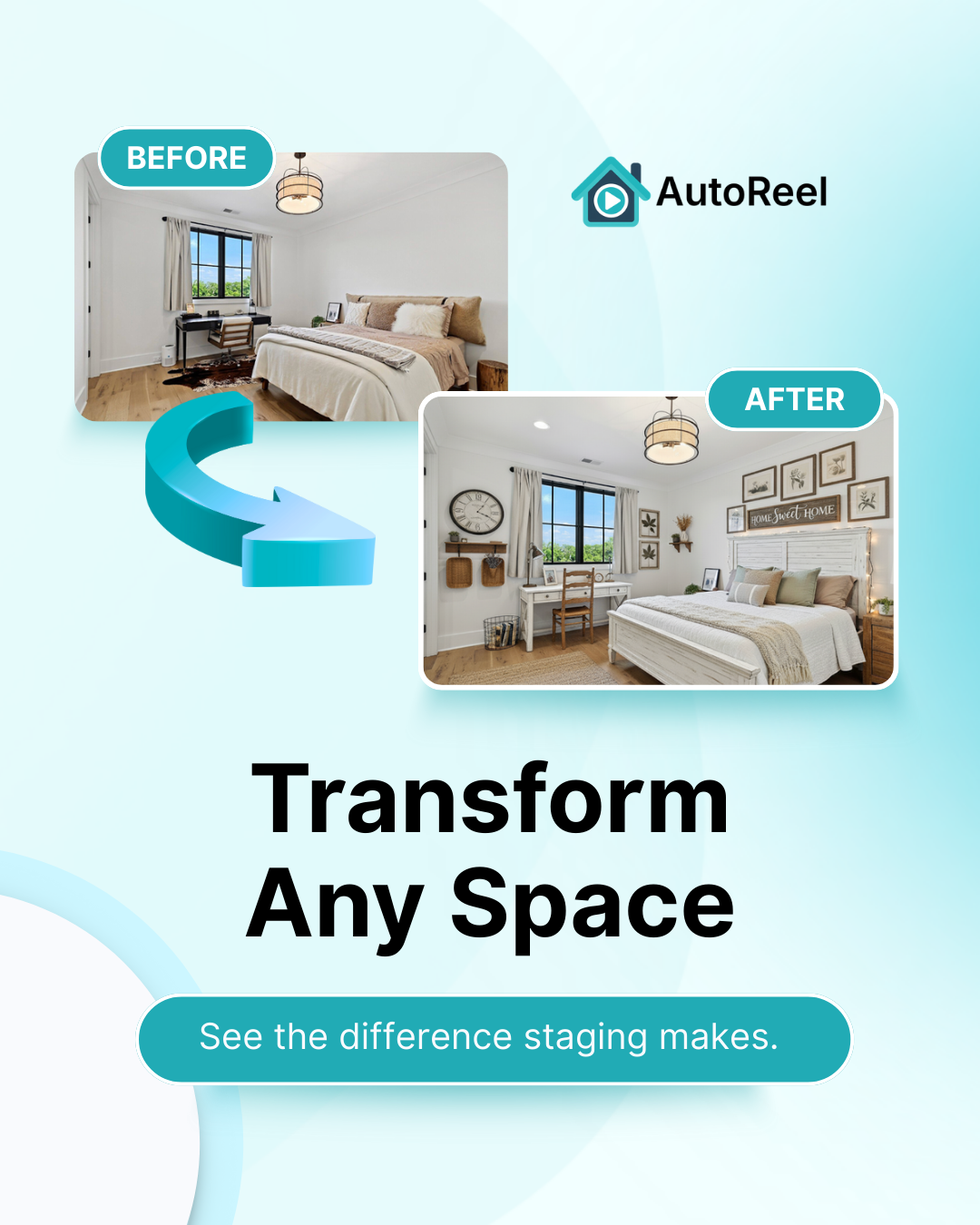
Agents often hesitate to bring up staging because sellers hear "more cost, more delay." Reframe it: virtual staging is the low-cost, no-delay option that photographs like a professionally staged home.
A simple pitch: "Buyers decide from the first few photos. An empty or cluttered room reads as unfinished, even if the home itself is in great shape. Virtual staging shows the space the way a buyer needs to see it, furnished, warm, and easy to picture living in, without the cost or wait of renting furniture."
Pair that with the data: staged listings consistently perform better on buyer engagement, and every day a listing sits unstaged is a day it's competing against staged comps.
Common Staging Mistakes That Kill ROI
Even with the right tool, staging can underdeliver if it's done poorly:
- Over-furnishing small rooms: Staging should make a room look usable, not cramped.
- Ignoring room function: A "flex room" staged as a home office reads very differently than one staged as a nursery; match the staging to your likely buyer.
- Inconsistent style across rooms: Mixing wildly different furniture styles across a listing's photos breaks the buyer's mental picture of the home.
- Skipping disclosure: Virtually staged photos should be clearly labeled as such per MLS and local disclosure norms; transparency protects trust with buyers and agents alike.
Avoiding these mistakes is what separates staging that actually moves the needle from staging that just adds pretty pictures.
Bottom Line
If your home is in solid condition but not photographing its best, virtual staging is the higher-ROI move: low cost, fast turnaround, and no risk of over-improving for your market.
Save renovation dollars for genuine condition gaps: an outdated kitchen, a missing bathroom, something buyers will notice at the walkthrough regardless of how the photos look. For everything else, staging gets buyers to picture themselves in the home without the cost, timeline, or risk a renovation carries.
FAQs
1.Does virtual staging actually increase sale price?
Virtual staging itself doesn't change the physical home, but by helping buyers visualize a finished, furnished space, it supports the same buyer psychology that drives staging's documented impact on perceived value and buyer interest, for a fraction of physical staging's cost.
2.Is virtual staging cheaper than renovating before selling?
Yes, significantly. Renovation costs are tied to materials, labor, and timeline; virtual staging costs are tied to photo processing and are typically included in your existing plan, with room to add more as needed.
3.Should I stage or renovate an outdated kitchen before selling?
If the kitchen is genuinely outdated relative to your market's comps, a targeted renovation may pay off. If it's simply cluttered, dimly lit, or poorly photographed, staging and better photography usually solve the problem for far less.
4.How many rooms should I virtually stage in a listing?
Prioritize the rooms buyers weigh most heavily: the primary living area, kitchen, primary bedroom, and any awkward or ambiguous spaces (bonus rooms, dens). Staging every room isn't necessary if the goal is buyer clarity, not volume.
5.Do virtually staged photos need to be disclosed?
Yes. Most MLS systems and industry norms require a disclosure that staged photos are virtual, not physical. This keeps buyer trust intact and avoids disputes at showing time.
Sources
https://www.nar.realtor/research-and-statistics/research-reports/profile-of-home-staging








