What Is Real Estate Photography? How AI Is Quietly Changing the Industry

Summarize with AI


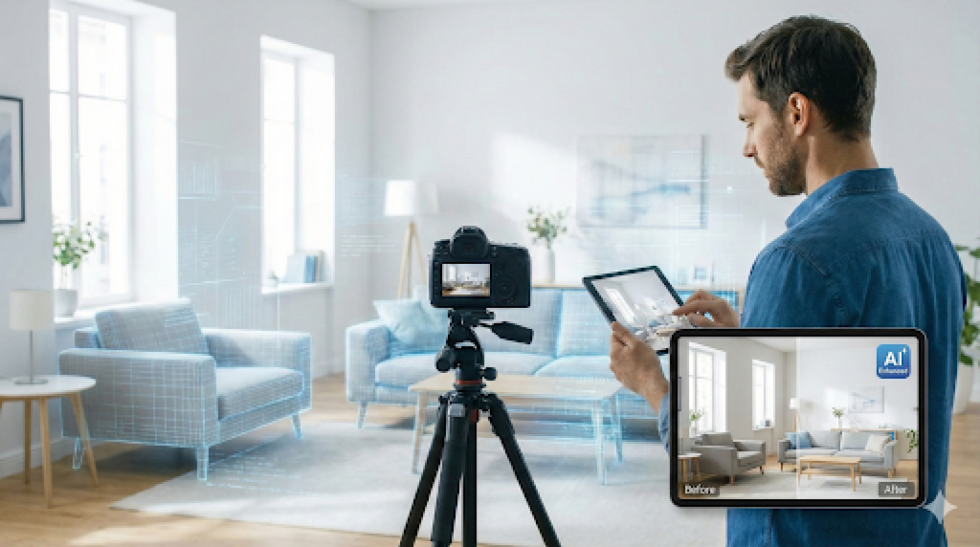
Takeaway
- Understand what real estate photography is and why listings depend on it.
- See how AI speeds editing, video creation, and delivery workflows.
- Learn how photographers use AI support without losing creative control.
For years, property visuals depended entirely on camera skills, lighting decisions, and long hours of post-production. While those fundamentals remain, the workflow built around them is quietly changing.
This guide explains what real estate photography actually is, how professionals use it today, and where AI now fits into the process.
If you are a photographer, agent, or real estate marketer trying to understand how modern property visuals are produced, this article walks through the shift with clarity and real-world context.
See how modern real estate visuals are being produced today with AutoReel.
What Is Real Estate Photography?
At its core, real estate photography is the practice of creating professional images that visually represent a property for sale or rent.
The objective is not artistic expression, but accuracy, appeal, and buyer confidence. These images are designed to help potential buyers understand a space clearly before visiting it in person.
A standard real estate photography workflow focuses on clear interior and exterior coverage, accurate room flow, controlled lighting, and honest presentation. This is why the real estate photography definition differs from lifestyle or architectural photography. It is functional first, emotional second.
Traditionally, these visuals were delivered as still images. As listing expectations evolved, static photos alone became insufficient, creating space for technology and AI to enter modern real estate photography workflows.
How AI Is Transforming Real Estate Photography Today
Here’s the reality. AI didn’t enter real estate photography to replace cameras or photographers. It entered the workflow to remove friction after the shoot, where time pressure, rising costs, and inconsistent delivery have always been the biggest challenges.
Today, AI in real estate photography is most visible in post-production and distribution. Instead of spending hours on repetitive edits, professionals now use AI to streamline tasks that once slowed delivery and limited scale. Common applications include:
- Image correction and overall enhancement
- Color balance and lighting normalization
- Perspective and vertical correction
- Background cleanup and minor distractions
- Creation of short-form listing videos
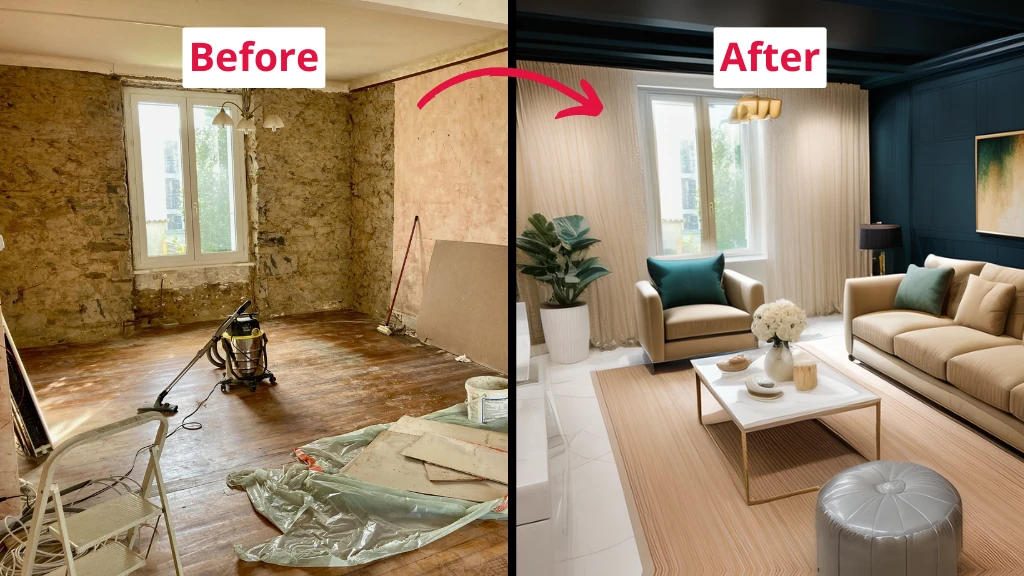
Data shows most AI-generated real estate videos are 30 seconds long and optimized for social media, taking just 10–15 minutes to produce compared to traditional video workflows that cost hundreds of dollars.
However, AI works best only after a property is captured correctly. It cannot fix poor composition or lighting, which is why skilled photographers remain central to the process.
What Does a Real Estate Photographer Actually Do?
Despite increasing automation, the role of a real estate photographer has not disappeared. In fact, it remains central to how property visuals are created.
Photography begins on-site, where experience and judgment matter far more than software. A professional photographer is responsible for making decisions that directly affect how a property is perceived.
On every shoot, a real estate photographer controls:
- Camera placement and lens selection to show spaces accurately
- On-site lighting choices that reduce shadows and distortion
- Composition that reflects room size honestly, without exaggeration
- Timing the shoot based on property readiness, weather, and natural light
AI cannot walk a property, judge clutter, or negotiate angles on-site. It also cannot adjust framing based on physical constraints or real-time client input.
What AI does instead is compress post-production time by handling repetitive editing tasks. This allows photographers to deliver faster, maintain consistency, and add services without spending extra hours editing, reinforcing why strong visuals are now essential for modern listings.
Why Real Estate Photography Became Non-Negotiable for Listings
Real estate photography is no longer an optional upgrade. It has become a baseline expectation for modern property listings.
Buyers now make early decisions online, often before speaking to an agent, and visuals are the first filter they use to judge whether a property is worth their time.
While only about 20% of real estate photography orders currently include video, listings that use video consistently attract higher engagement. This gap highlights a growing expectation rather than a lack of interest.
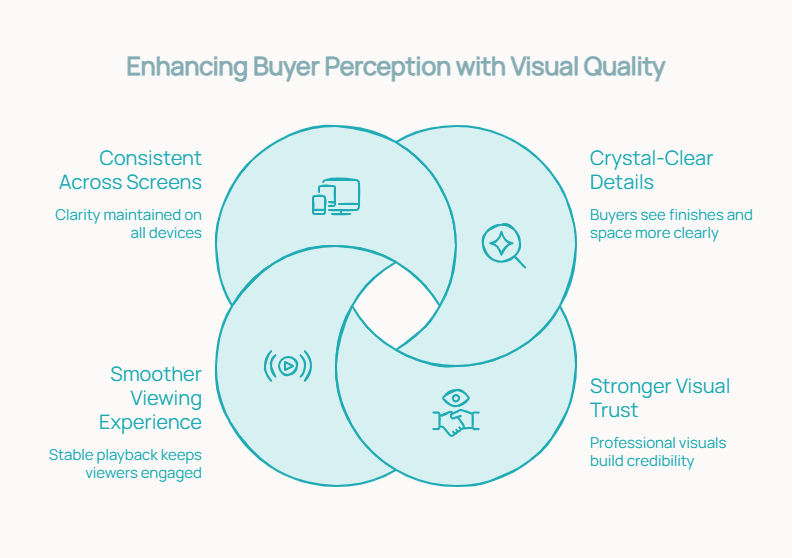
High-quality visuals play a critical role in shaping buyer perception by:
- Increasing the perceived value of a property
- Reducing hesitation that can delay inquiries or showings
- Creating trust and clarity before a buyer ever visits in person
As a result, real estate photography and video trends have shifted toward bundled visual services. Professionals are increasingly offering:
- Photo packages paired with short listing videos
- Photos enhanced with virtual improvements where appropriate
- Visuals optimized specifically for social media and mobile platforms
This shift in demand did not originate from AI. Buyers were already asking for faster, richer, and more engaging property visuals.
AI simply made meeting those expectations more practical by lowering production time and costs. Instead of changing what buyers want, technology has made delivering it consistently far more achievable for professionals.
How AI Supports Photographers Without Replacing Them
A common concern across Reddit and Quora is simple and direct: “If AI can edit photos, where does that leave photographers?”
The reality is far less threatening than it sounds. AI does not make creative decisions or ethical calls. It removes repetitive, time-heavy tasks from the workflow.
In practice, AI handles repetition, while humans handle judgment. Photographers remain responsible for how a property is captured, represented, and approved for delivery.
With AI photo editing real estate tools in place, professionals are seeing clear, measurable benefits:
- Editing time drops significantly, reducing post-production fatigue
- Turnaround times become predictable, improving client trust
- Visual consistency improves across multiple listings and packages
This efficiency has a direct financial impact. AutoReel data shows photographers can add around $80 to their average order value, often by offering AI-generated videos that look nearly identical to real footage. These videos can be sold without additional shooting time or complex equipment.
One Reddit user summarized the shift accurately: “Clients don’t care how long it took. They care how it looks and how fast they get it.”
By freeing photographers from repetitive editing work, AI creates room for faster delivery, higher margins, and entirely new service offerings rather than replacing the professional behind the camera.
Real-World Use Cases: AI in Property Photos and Videos
Real estate professionals are not using AI to experiment. They are using it to solve workflow problems that already exist, especially around speed, revisions, and pricing flexibility.
AI fits neatly into the post-production stage, where time and cost pressures are highest.
In real-world workflows, professionals are using AI for:
- Social-ready listing videos
- Fast revisions without reshoots
- Cost-effective visual upgrades
- Scalable media packages
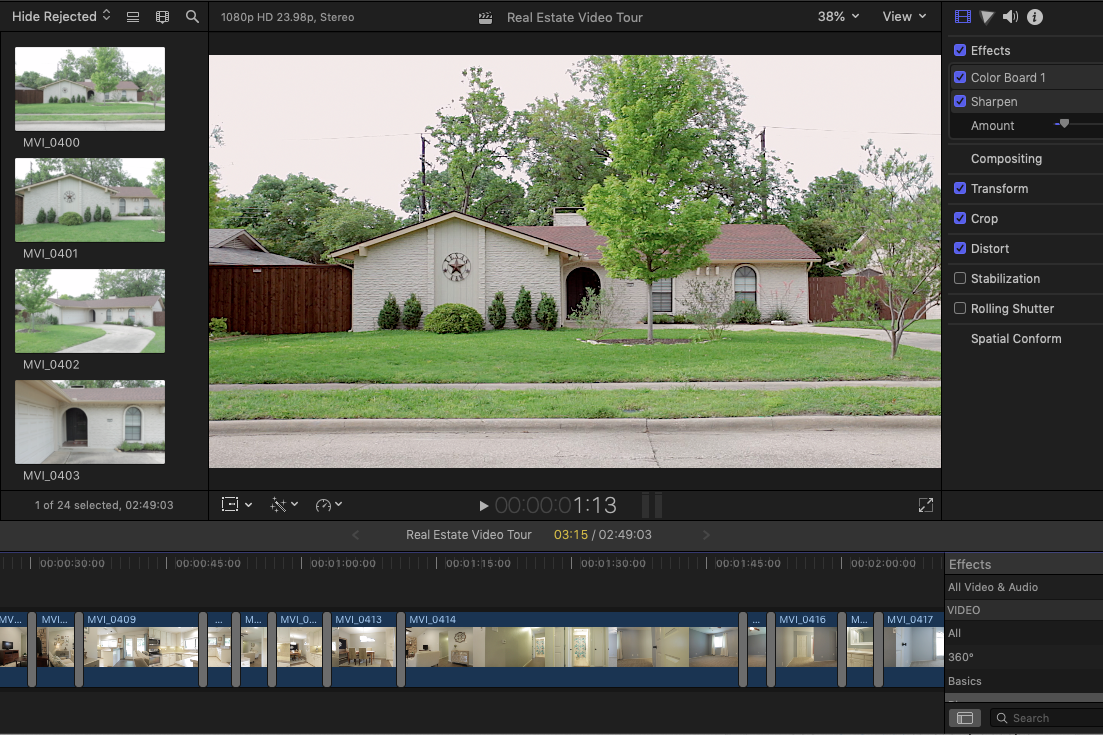
From a pricing perspective, the shift is equally practical. Photographers report charging anywhere between $80 and $300 per AI-generated video, depending on market and presentation quality.
With AutoReel pricing for real estate photography being as little as $10 per video, this creates an approximate 8× return on investment without adding shooting time or extra equipment.
This ability to increase output and margin without increasing workload is exactly what pushes AI-assisted real estate photography toward its future trajectory.
The Future of Real Estate Photography in an AI-Assisted Market
The next phase of real estate photography is not about automation replacing professionals. It is about combining human expertise with AI support to meet modern expectations around speed, consistency, and value. As listing standards evolve, this balance is becoming essential rather than optional.
The Role of the Photographer in an AI-Driven Process
Even in an AI-assisted market, the photographer remains the foundation of the entire process. Photography still begins on-site, where experience and judgment cannot be automated.
Human professionals are responsible for decisions that directly affect accuracy and trust, including:
- Capturing the property with correct composition and perspective
- Making real-time lighting decisions based on the space
- Managing room flow and spatial representation
- Setting quality standards and ethical boundaries
- Deciding what should and should not be enhanced
AI cannot walk a property or respond to on-site constraints. These responsibilities remain firmly human-led.
How AI Expands Speed, Scale, and Opportunity
AI enters after capture, focusing on efficiency rather than creative control. Its role is to remove bottlenecks that slow delivery and limit service expansion, including:
- Speeding up delivery through automated processing
- Lowering production costs for photos and videos
- Making short-form listing videos accessible without complex setups
- Improving consistency across high volumes of listings
[Insert Original Screenshot: Photographer reviewing AI-enhanced output]
This combination allows professionals to gain time, increase margins, and meet client expectations without changing how they shoot, positioning AI as an advantage rather than a disruption.
Why AutoReel Fits Modern Real Estate Photography
AutoReel is designed for professionals who already understand real estate photography and want to expand their offerings without adding complexity.
It doesn’t change how you shoot or how you work on-site. Instead, AutoReel strengthens everything that happens after delivery by turning existing property photos into polished, social-ready videos in minutes.
Professionals choose AutoReel because it allows them to:
- Create AI real estate videos in 10–15 minutes
- Deliver outputs optimized for 30-second social formats
- Add around $80 or more per order with minimal extra effort
- Offer videos that look nearly identical to real footage
- Expand video services without expensive gear or traditional production costs
AutoReel functions as a profit layer rather than a disruption, helping photographers and media teams increase value, speed, and revenue without changing how they already operate.
Add social-ready real estate videos to your services without adding shooting time.
The Practical Future of Real Estate Photography
Real estate photography continues to serve the same purpose: helping buyers understand a property before they visit. What has changed is execution, with AI now handling repetitive, time-heavy tasks behind the scenes.
This shift allows photographers to focus on accuracy, composition, and on-site decisions. Professionals who adopt AI as a support layer are delivering faster, maintaining quality, and improving margins without changing how they shoot.
Test how AI supports real estate photography in practice.
Frequently Asked Questions
1. What is real estate photography used for today?
Real estate photography is used to market residential and commercial properties through listing platforms, social media, and property websites. Its purpose is to visually communicate layout, condition, and appeal before a buyer visits in person. Today, it often includes photos, short videos, and AI-enhanced visuals to meet modern buyer expectations.
2. How is AI used in real estate photography?
AI in real estate photography is mainly used for editing, enhancement, and video creation. It helps correct lighting, improve clarity, and generate short-form listing videos faster than traditional workflows. AI reduces post-production time while keeping photographers in control of capture quality.
3. Does AI replace real estate photographers?
No. AI does not replace photographers. It supports them by automating repetitive editing tasks. Photographers still handle on-site shooting, composition, and quality decisions. AI works best when paired with properly captured images rather than replacing human skill.
4. Are AI real estate videos expensive?
AI-generated real estate videos are significantly more affordable than traditional video production. While real property videos can cost $250–$1000, AI videos can be produced for as little as $10 and sold for $80 or more, depending on the market and presentation quality.
5. What are current real estate photography trends?
Real estate photography trends include short social-friendly videos, faster turnaround times, bundled photo-video packages, and AI-assisted editing. Listings now prioritize speed and consistency alongside image quality, especially for digital-first buyers.
6. Can AI improve real estate photos automatically?
Yes, AI photo editing real estate tools can automatically enhance lighting, color balance, and perspective. However, results depend on the quality of the original images. AI improves efficiency, not poor photography.
7. Is virtual staging part of real estate photography?
Virtual staging real estate is often paired with photography. AI tools allow empty rooms to be digitally furnished, helping buyers visualize potential use. This is especially useful for vacant properties or new developments.
8. Why are photographers adopting AI tools?
Photographers adopt AI to save time, increase order value, and offer video services without complex equipment. AI allows them to scale output without increasing shooting hours, improving profitability.
9. How long does it take to create an AI real estate video?
On average, it takes 10–15 minutes to produce a one-minute AI real estate video. Most videos are shorter, around 30 seconds, making them ideal for social media listings.