Why Real Estate Media Is Rapidly Shifting to AI Content Generation (2026)

Summarize with AI


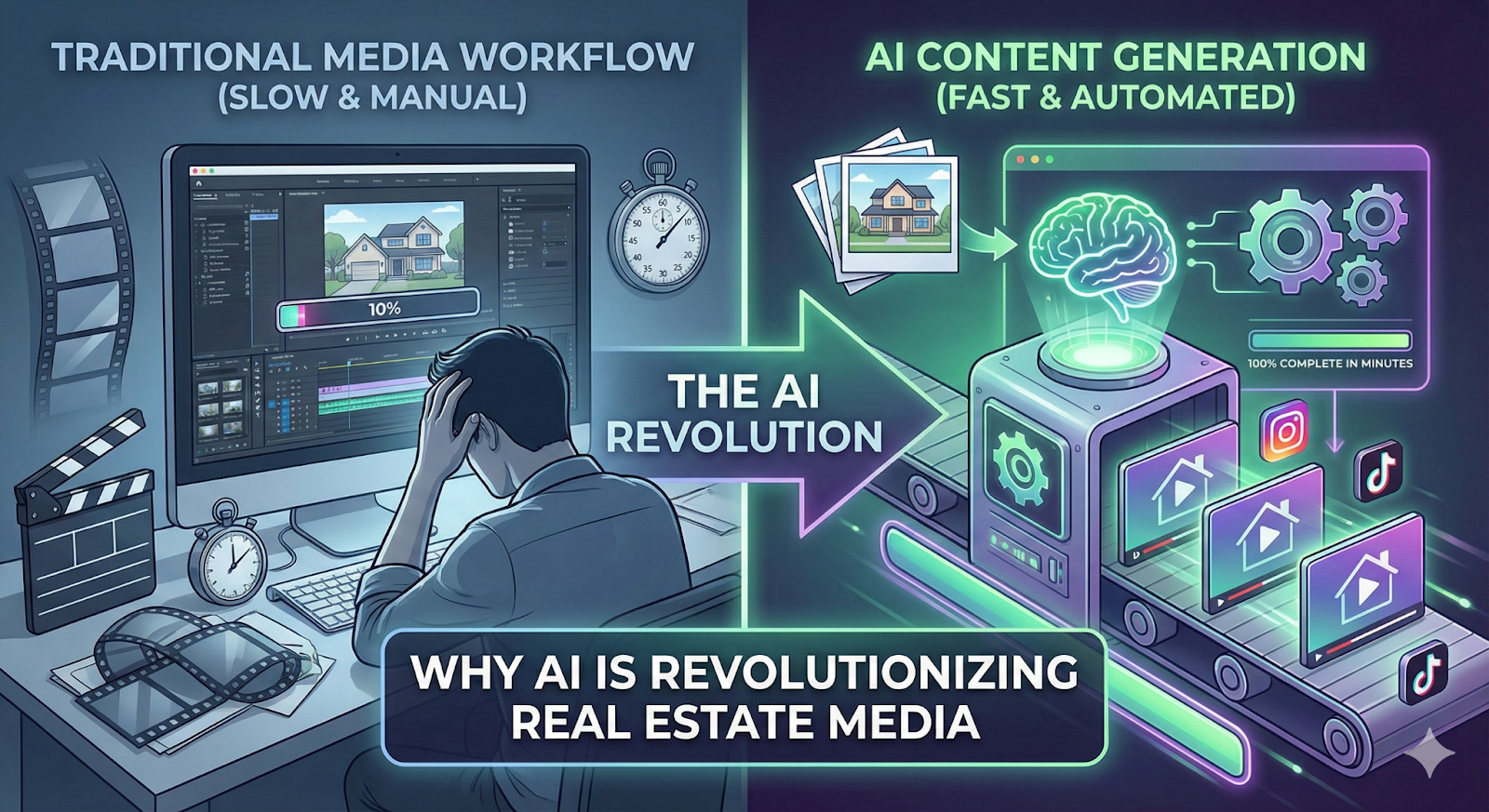
In 2026, speed and efficiency now define modern real estate media workflows. AI content generation is reshaping how real estate media is produced, delivered, and scaled — processes that once depended on multiple professionals, long timelines, and high production costs are increasingly being handled through intelligent automation designed for speed and consistency.

How AI-powered real estate media works with AutoReel.
AutoReel video generation time per listing — same day as photography delivery
approximate cost per AI-generated video vs $250–$1,000 for traditional video production
AI real estate videos created on AutoReel as of December 2025
What Is AI Content Generation in Real Estate Media?
AI content generation refers to software-driven systems that automatically create real estate marketing assets using existing property data. In practical terms, this means transforming listing photos into short videos, branded reels, and social-ready clips without relying on manual editing for every asset.
Instead of building videos frame by frame, AI content generation uses predefined motion logic, transitions, and formatting rules. The agent or photographer uploads photos once, and the system handles sequencing, timing, motion, and output — making creative automation tools especially effective for high-volume real estate media workflows.

AutoReel in action — AI-generated real estate video from listing photos.
Key Characteristics of AI Content Generation
What separates AI content generation from traditional editing software is focus. It removes repetitive, time-consuming production work while preserving creative intent and branding. As demand for video continues to grow, creative automation tools make it possible to produce more content without increasing workload.
Why Traditional Real Estate Media Creation Is Breaking Down in 2026
Traditional real estate media workflows were built around photography-focused delivery. Today, listing requirements have expanded to include short-form video, social-ready clips, and multiple branded variations for different platforms. However, most production systems have not evolved to support this level of output efficiently.
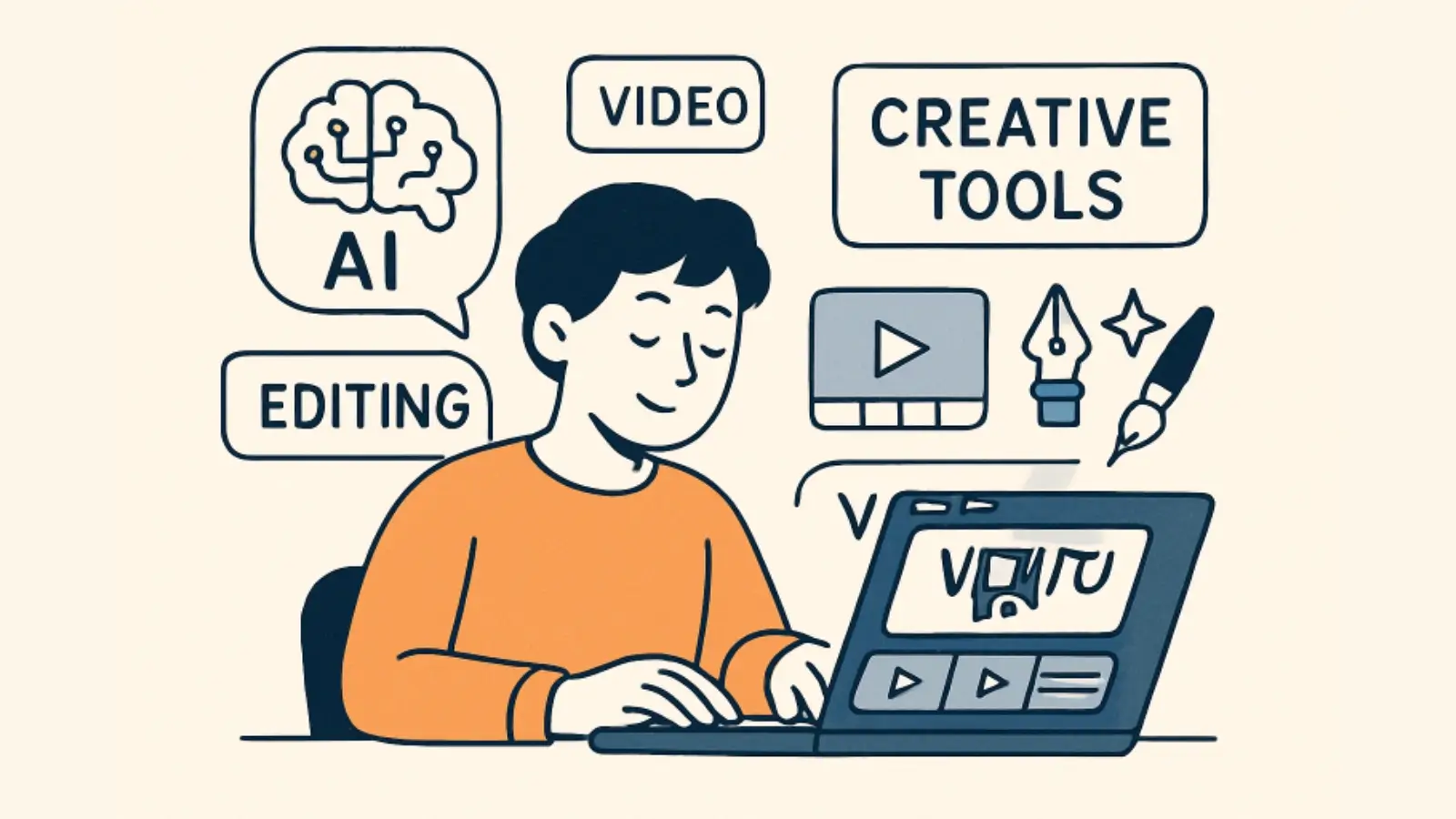
As AI in real estate marketing gains traction, the limits of manual workflows are becoming increasingly clear. Cost pressure, slow turnaround, and inconsistent delivery now directly affect how reliably listings launch with complete and competitive media.
The Cost and Time Bottleneck
Why Manual Editing Cannot Scale
AI content generation supports creative work by removing repetitive production tasks like sequencing and formatting. This enables faster delivery, consistent branding, and scalable output across modern real estate media workflows.
How Creative Automation Tools Are Changing Content Workflows
Creative automation tools enable repeatable, consistent video creation by automatically handling sequencing, motion, and formatting. By following predefined workflows, they allow real estate teams to produce more content quickly and reliably without increasing manual effort.
What Creative Automation Tools Handle Automatically
The result is consistent, on-time content that scales easily. AutoReel data shows AI real estate videos take 10–15 minutes to produce, with most 30-second videos optimized for social media performance.
"I stopped charging per edit and started charging per listing. The automation made that possible."
Creative automation tools do not remove creative control. They reduce friction across production workflows. This efficiency is what enables AI content generation to support scale without compromising consistency.
The Rise of Photo-to-Video AI Tools in Property Marketing
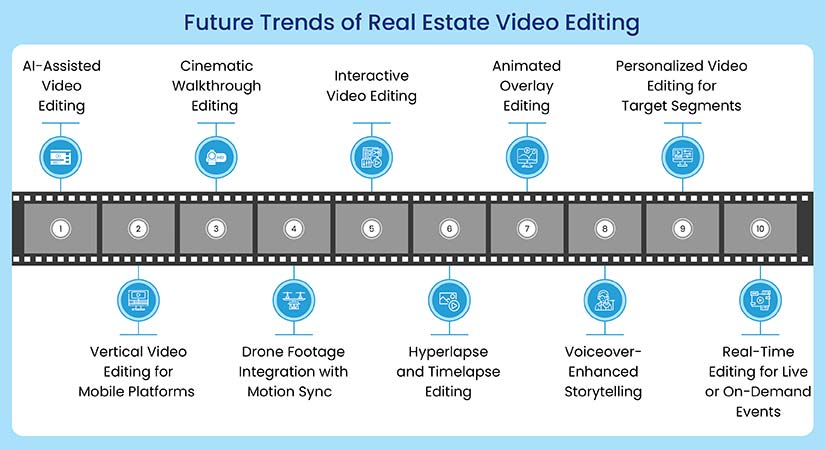
Photo-to-video AI tools are rapidly becoming a core part of modern real estate media workflows. These tools transform existing listing photos into motion-based video content without requiring reshoots, drone footage, or extended production timelines.
Why Photo-to-Video AI Tools Are Gaining Adoption
The ROI Behind Photo-to-Video AI Tools
Photo-to-video AI tools deliver strong returns by lowering production costs and increasing resale value. AutoReel users often sell AI-generated videos for around $80 per listing while paying as little as $10 per video.
This margin turns video from a premium add-on into a repeatable revenue stream, making AI-driven video creation a standard, ROI-backed upsell rather than an optional extra.
AI in Real Estate Marketing: Speed, Scale, and Consistency in 2026
Speed
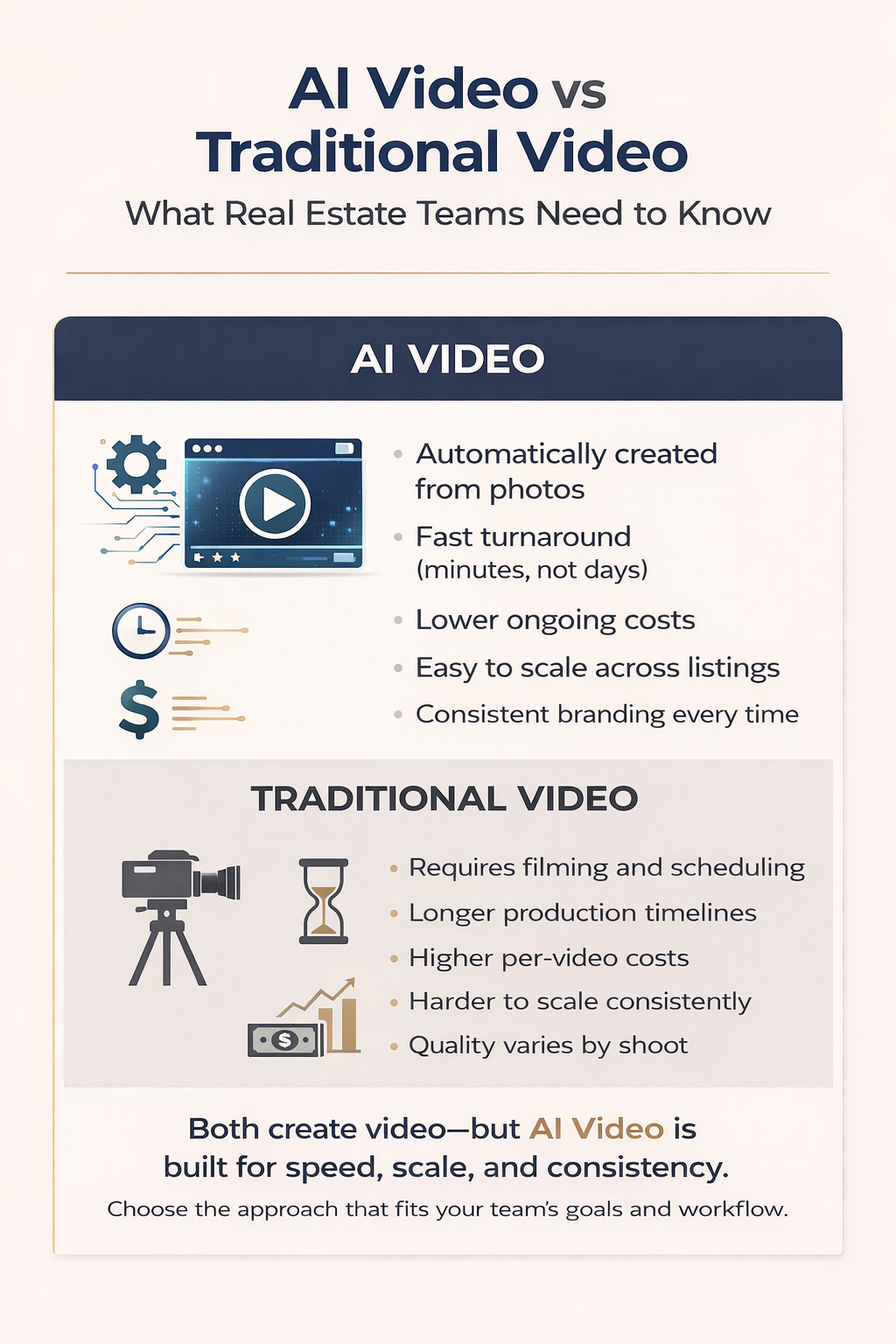
Speed is one of the most immediate advantages of AI-driven workflows. Video production no longer slows listing launches and media assets can be published alongside photos — instead of days later.
Scale
Creative automation tools make it possible to increase output without increasing labor. One photographer can now support dozens of listings each week without adding editors or expanding production teams.
Consistency
Consistency becomes easier to maintain when production follows predefined rules. AI ensures that motion, pacing, and structure remain uniform across listings and platforms.
"Clients do not ask how the video was made. They ask how fast it can be posted."
What This Shift Means for Agents, Photographers, and Media Teams
Impact on Real Estate Agents
For agents, AI content generation removes many of the barriers that previously limited video usage. Faster production and lower costs make video a consistent part of listing marketing rather than an occasional add-on.
Impact on Photographers
Photographers benefit from new revenue opportunities without additional labor. AutoReel data shows that a single AI video can let photographers add around $80 to their average order value, with most of that amount being pure profit.
Impact on Media Teams
For media teams, AI content generation changes how output is measured. Value is no longer tied to time spent per asset but to volume, consistency, and delivery speed.
Where Real Estate Media Production Is Headed
AI content generation is reshaping real estate media by prioritizing speed, consistency, and scalable output. As automation becomes standard, professionals reduce manual work while meeting demand for short-form video, improving turnaround times, margins, and modern listing performance.
Try AutoReel for AI-powered real estate media that fits into your workflow.
AI-generated real estate videos in 10–15 minutes
From listing photos to posting-ready video. Used by photographers, agents, and media teams across the US, Canada, UK, and beyond.
Frequently Asked Questions
"Groundbreaking tool. They are committed to improving the services with new updates often."
Kim Lindsey
Owner, Kim Lindsey Photography
"An absolute game-changer! Professional-quality reels in minutes. Customer service is top-notch, quick and responsive."
Joe Semkow
Photographer, Inspire Kindness
"AutoReel has streamlined editing times by 25%, shortening time to listing."
Don Horn
Owner, Horn Pix Photography
"AutoReel transforms photos into beautiful, realistic video walkthroughs. A must-have tool for realtors in a digital-first world."
Nicole Causey
Co-Founder, Everhome Realty