Why Real Estate Photography Is Important for High-Performing Listings (And Faster Sales)

Summarize with AI


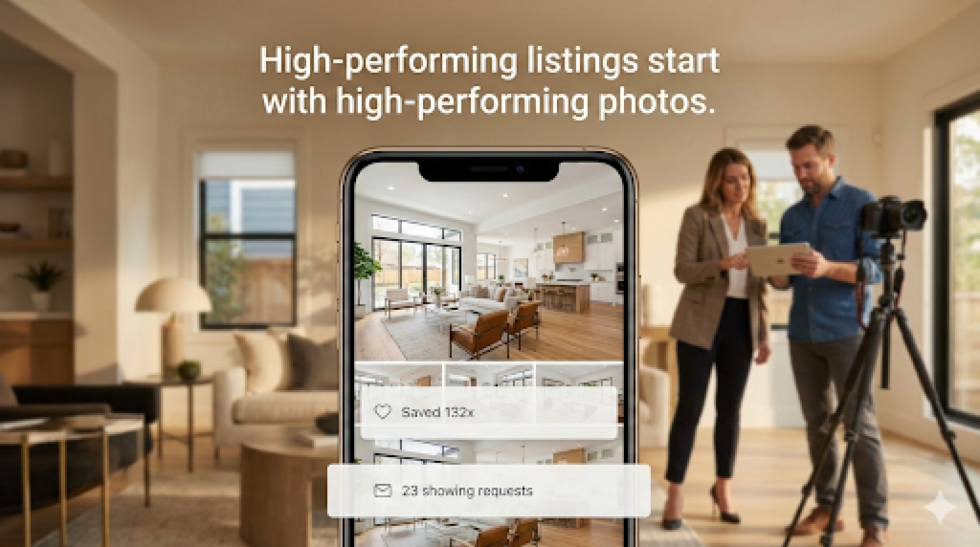
If you’ve ever watched a buyer scroll through listings like they’re speed-running Zillow, you already know this truth:
Real estate photography isn’t just important — it’s the deciding factor.
In today’s online-first market, buyers don’t “discover” homes at open houses anymore. They discover them through visuals - photos and short videos. And in most cases, they make a judgment in seconds: either click and explore, or scroll past and forget.
That’s why understanding why real estate photography is important is no longer optional for agents, photographers, or real estate media teams. It’s the foundation of high-performing listings, stronger buyer interest, and better conversion rates: from views to showings to offers.
This guide breaks down the real impact of great listing photography, what separates “good enough” images from high-performing visuals, and how tools like AutoReel can help you turn photos into repeatable marketing assets (reels, walkthroughs, and social-ready videos) that actually drive business results.
Why Real Estate Photography is Important in a Digital-First Market

Real estate has officially become a visual-first industry.
Most buyers begin their journey online, where photography becomes the first showing. It sets expectations, builds emotional connection, and instantly tells a buyer whether the home is worth a second look.
Here’s why it matters so much:
- Visuals determine whether a buyer clicks on your listing
- Visuals influence how long they stay engaged
- Visuals drive showings, saves, shares, and inquiries
- Visuals directly impact perceived property value
Even if the home is incredible, weak photos can make it look smaller, darker, older, or less premium than it really is.
And once a listing gets ignored early? It’s harder to recover.
First Impressions Happen in 3 Seconds (Visuals Control That Moment)

There’s a simple performance truth in modern real estate marketing:
Listing’s first impression happens in the social media feed — not at the doorstep.
When someone is browsing listings on Zillow, Realtor.com, Redfin, MLS, or even Instagram reels, they’re not analyzing square footage or reading descriptions first.
They’re reacting to:
- Lighting
- Composition
- Room flow
- Clarity
- Cleanliness
- Overall “feel”
And that reaction is emotional.
Great photos don’t just show a home… They make the buyer picture their life inside it.
That’s the difference between: “This is a house.” vs. “This could be my home.”
High-Quality Visuals Improve Listing Performance (Views, Saves, Showings)
High-performing listings have one thing in common: They look high-performing.
Professional-grade photos drive better metrics across every major platform. If you’re building a modern listing strategy, video is increasingly part of what buyers expect—and the performance data behind that shift is hard to ignore.
What improves when photography is strong?
- More clicks from search results
- More saves/favorites from serious buyers
- More shares to partners/family
- More showing requests
- Higher lead volume
- Better brand perception for the agent/team

For real estate agents, this means:
- Better lead quality
- Faster momentum
- Less “chasing” buyers
For media houses and photographers, this means:
- Higher-value clients
- Repeat business
- A stronger portfolio
Visuals aren’t “marketing spend.” They are now a performance multiplier.
Real Estate Photography Builds Trust (And Filters Out Low-Intent Buyers)
Buyers don’t just want pretty photos. They want believable photos.
High-quality real estate photography helps establish trust by creating transparency and confidence through:
- Clear angles
- Accurate lighting
- Consistent framing
- Honest space representation
- Professional polish

That trust produces better outcomes:
- Serious buyers engage
- Low-intent buyers drop off sooner
- Showings become more qualified
In other words: Photography save your time, not just your aesthetics.
And in competitive markets, trust-building visuals can determine who wins the buyer before the tour even happens.
Bonus:
Video content can also strengthen your listing’s discoverability online—especially when it’s embedded on property pages and shared consistently.
Photography Helps You Compete in Crowded Listing Markets
Let’s be honest—most listings compete against 10–50 similar homes.
Same:
- Location
- Price range
- Layout style
- Bedroom count
- Finishes

So what makes a buyer stop on your listing?
Visual superiority.
If your listing photos look brighter, cleaner, more premium, and better composed than the homes around it, your listing instantly becomes the “best option” in the buyer’s mind—even if the property is equally strong.
And when the home is empty or the lighting isn’t ideal, virtual staging and smart photo enhancements can help the listing show its potential—without misrepresenting the space.
This is also why real estate photography is important for:
- New agents building credibility
- High-volume teams scaling listings
- Brokerages trying to stand out locally
- Photographers competing for premium clients
Photography is often the competitive advantage people underestimate.
It’s Not Just About Photos—It’s About Marketing Assets
Here’s the modern reality. Real estate photography is no longer the final product. It’s the starting point.
Today’s high-performing agents don’t stop at uploading photos to MLS—they turn the same photo set into a listing video (without filming) for social, email, and ads. They repurpose visuals into:
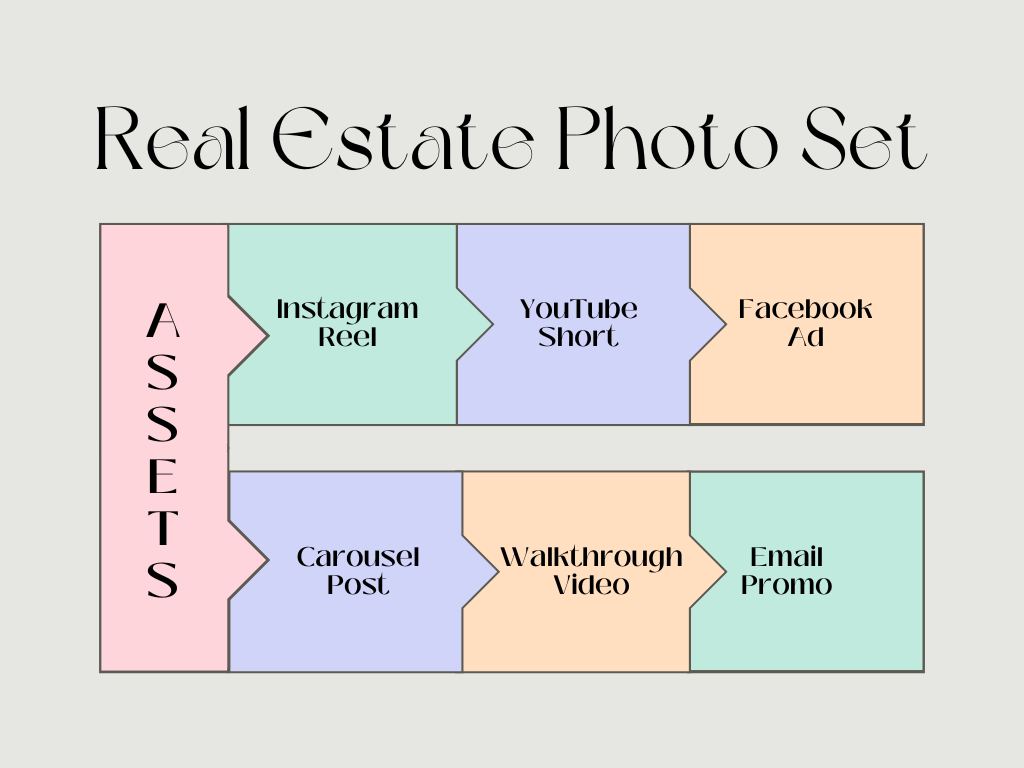
This is where many professionals lose momentum.
Want the exact workflow that agents and media teams use to turn a photo set into a cinematic, scroll-stopping reel? Here’s a step-by-step breakdown.
Because yes, you may have great photos but if you don’t convert them into high-engagement media, you’re leaving leads on the table.
That’s why AutoReel matters (more on that below).
Even photographers who already deliver premium shoots are using AutoReel to turn the same photo set into short-form content that clients actually want.
“An absolute game-changer! Professional-quality reels in minutes. Customer service is top-notch, quick and responsive.”
— Joe Semkow, Photographer, Inspire Kindness
What Makes Real Estate Photos “High-Performing” (Not Just “Nice”)

Not all professional photography performs equally. A “high-performing” set is designed for conversion, not just aesthetics.
If you want your photos to work harder (and convert cleanly into reels), the way you shoot—sequence, overlap, and consistency—matters more than most people realize.
Here’s what separates standout photography:
1) Bright, natural lighting
Dark images feel smaller and less welcoming.
2) Correct angles and room flow
Photos should help buyers understand layout, not confuse them.
3) Clean composition
Clutter kills perceived value—fast.
4) Consistent color balance
Every room should look cohesive, not like 8 different cameras were used.
5) Wide shots that still feel realistic
Wide-angle is important, but distortion breaks trust.
6) A storytelling sequence
A set should feel like a smooth tour, not random snapshots.
When your photo set hits these standards, it becomes easier to:
- Command attention
- Generate inquiries
- Drive more showings
- Justify pricing confidence
How AutoReel Helps Turn Great Photography Into More Business (Agents + Media Teams)
Professional photos are powerful. AutoReel makes them scalable.
That’s not just marketing language—agents, photographers, and media teams use it specifically because it turns a photo set into consistent, high-engagement content without wasting hours, or even days, on editing, formatting, or social creation.
Here’s where AutoReel becomes a business advantage:
1. Faster listing marketing turnaround
When speed matters (and it always does), AutoReel helps you go from photos → video content quickly.
2. More reach on social platforms
Instagram, TikTok, YouTube Shorts, and Facebook prioritize video content. AutoReel helps you create it consistently.
3. Better content volume without burning out
Agents and media teams often struggle to “post regularly.” AutoReel helps you scale output without scaling effort.
4. Stronger brand presentation
High-quality video assets make you look like a premium marketer—even if you’re managing 10 listings at once.
5. Better ROI from photography
Instead of using photos once on MLS, AutoReel helps you repurpose them into multiple lead-generating assets.
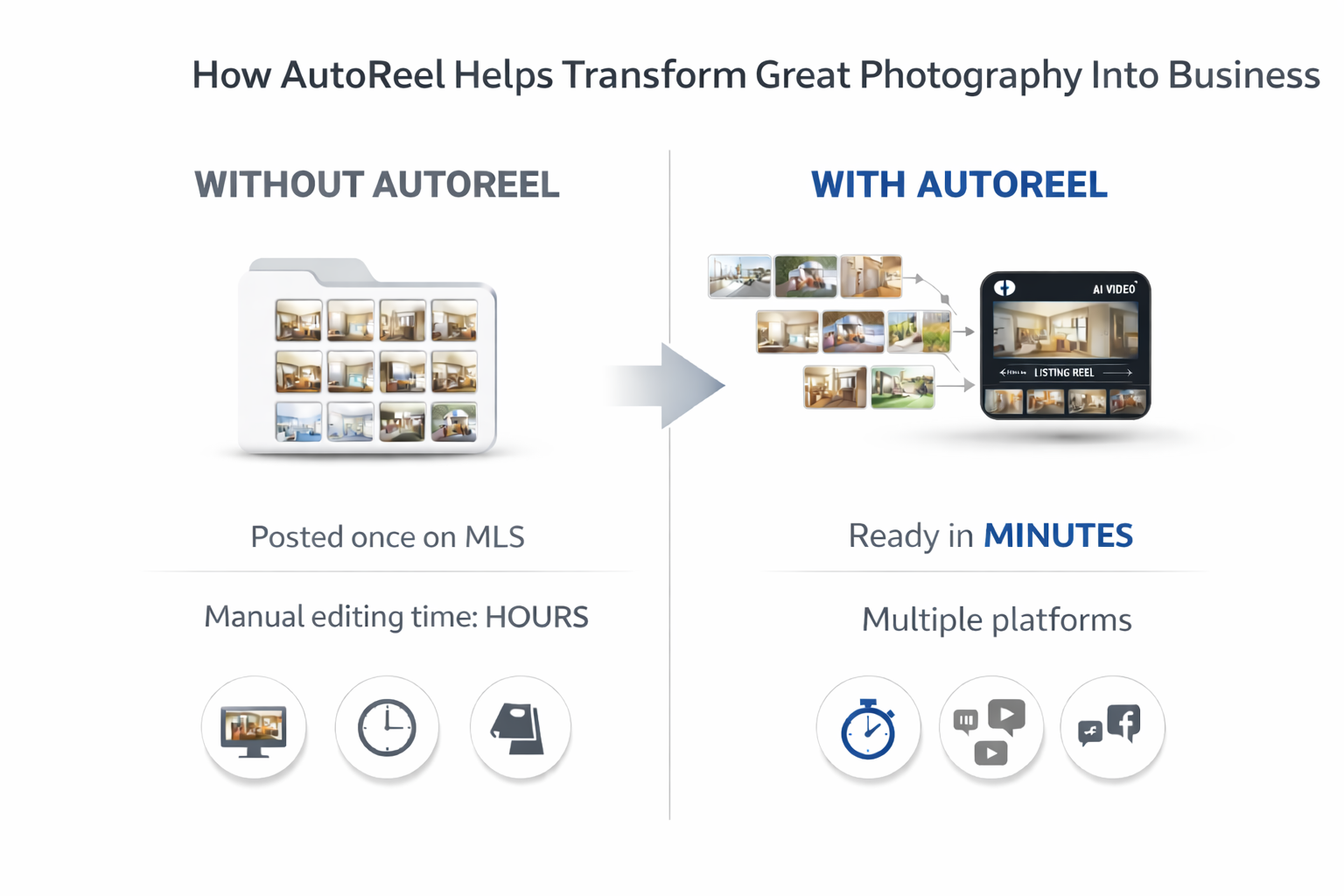
This is especially valuable for:
- Real estate agents who want more leads + faster closings
- Media houses who want high throughput without compromising quality
- Photographers who want to add a premium upsell layer to their packages
For brokerages, teams, and media companies building a repeatable content pipeline, contact the AutoReel team to map the right setup.
Conclusion: Why Real Estate Photography is Important (And Why AutoReel is Better for Business)
So, why is real estate photography important? Because photos are no longer just “listing images.”
They are:
- Your first showing
- Your trust builder
- Your click driver
- Your buyer filter
- Your competitive differentiator
- Your conversion engine
AutoReel helps you turn great listing photos into scalable marketing content that gets more views, more engagement, and ultimately more business.
Instead of doing more work manually, AutoReel helps you:
- Move faster
- Market smarter
- Stand out consistently
- Win attention where buyers actually scroll
In a market where attention is currency, AutoReel helps you cash in.
If you want to see what this looks like for your workflow, you can check AutoReel pricing and pick a plan that matches your listing volume.
FAQs: Why Real Estate Photography is Important
1) Why is real estate photography important for selling a home faster?
Because buyers choose what to tour based on photos. Strong visuals drive more clicks, more showings, and faster decision-making — especially in competitive markets.
2) Do professional photos really make a difference in listing performance?
Yes. Professional photos typically improve buyer engagement, increase inquiries, and help listings appear more premium — often leading to better perceived value.
3) What type of real estate photography performs best online?
Bright, clean, wide-angle photos with accurate color balance and strong room flow perform best. Buyers want clarity, realism, and an easy-to-follow “tour” experience.
4) How many photos should a high-performing listing include?
Most high-performing listings include enough images to tell the full story: exterior, entry, primary living spaces, kitchen, bedrooms, bathrooms, backyard, and bonus areas. Quality matters more than quantity, but you need both coverage and consistency.
5) Why is real estate photography important for agents trying to build a brand?
Because visuals reflect professionalism. Great photos make agents look premium, trustworthy, and high-performing, which helps attract more clients and higher-value listings.
6) How does AutoReel help after the photos are taken?
AutoReel helps convert listing photos into marketing-ready video content and assets that perform better on social platforms, helping agents and media teams drive more reach, engagement, and leads.
Sources:
https://www.redfin.com/blog/professional-real-estate-photos-sell-homes-for-more/