Real Estate Video Statistics: Does Video Help Sell Homes Faster in 2026?

Summarize with AI


Scroll behavior has changed. Attention hasn’t disappeared — it’s just become more selective, more intentional. In real estate, that shift is showing up in one place more than anywhere else: video.
Buyers aren’t just browsing listings anymore. They’re scanning, filtering, and deciding faster—often before they ever reach out.
Agents aren’t really asking “Should I use video?” anymore. The quieter question is:“Is it actually moving listings faster—or just making them look better?”
This guide breaks down the latest real estate video statistics for 2026, connects them to real outcomes, and gives you a clearer view of what video is actually doing for your business—and where it starts to matter most.
If you're still exploring how video fits into your workflow, it's worth understanding how platforms like AutoReel are reshaping how agents create and distribute listing videos at scale.
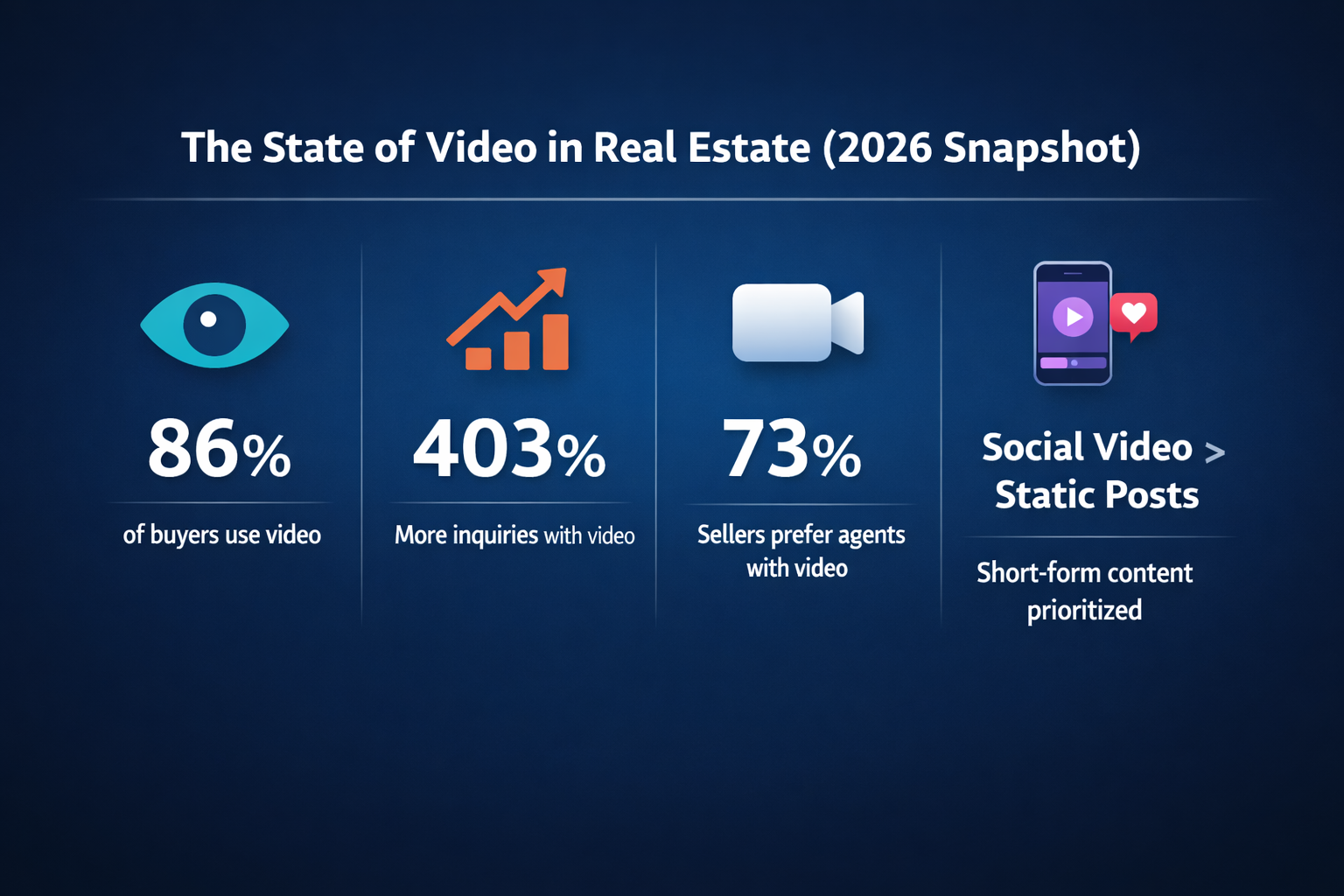
The State of Video in Real Estate (2026 Snapshot)
Video isn’t an “edge” anymore. It’s the baseline.
- 86% of homebuyers say they use video during their property search
- Up to 403% more inquiries were received for listings with video than those without
- 73% of homeowners say they’re more likely to list with an agent who uses video
- Social platforms now prioritize short-form video content over static posts
If your listing doesn’t include video, it’s not neutral. It’s quietly losing ground.
For a deeper look at how video trends are evolving across platforms and listings, you can explore more insights on the AutoReel blog.
Does Video Help Sell Homes Faster?
Short answer: yes — but not in the way most people think. Video doesn’t magically “close deals.” What it does is compress the decision cycle.
Here’s how:
- Pre-qualifies buyers → People who book showings already feel familiar with the property
- Reduces friction → Fewer unnecessary visits, more serious inquiries
- Creates emotional context → Buyers visualize living there, not just viewing it
What the data shows:
- Homes with video sell up to 31% faster compared to non-video listings
- Listings with video tours reduce time-on-market by 20–25% on average
- Video-driven listings attract more repeat views, increasing buyer intent
So when people ask, “Does video help sell homes faster?” It’s less about speed — and more about momentum. Video builds momentum early, which shortens everything that comes after.
The real advantage comes when video is not just created, but created consistently across every listing — a gap many agents are now solving with tools designed specifically for real estate workflows.
Why Video Works: The Psychology Behind Buyer Behavior

Photos show space. Video shows experience. And buyers don’t buy square footage — they buy a feeling they can justify later.
Video taps into three key psychological triggers:
1. Narrative flow
A walkthrough video creates a beginning, middle, and end. It feels like a story, not a gallery.
2. Spatial understanding
Buyers better understand layout, proportions, and transitions between rooms.
3. Emotional anchoring
Music, pacing, and movement create a sense of lifestyle—not just structure.
This is where most listings fall short. They inform — but they don’t immerse.
Real Estate Video Statistics That Actually Matter (2026)
There’s no shortage of stats. Most of them don’t help you decide anything.
These do:
Engagement & Reach
- Video listings generate 4x more engagement than static listings
- Social video posts get 1200% more shares than text and image posts combined
Conversion & Lead Quality
- Landing pages with video see up to 80% higher conversion rates
- Buyers who watch video are 64% more likely to inquire
Seller Acquisition
- Agents using video win more listing presentations due to perceived marketing advantage
Retention & Brand Growth
- Consistent video use increases agent recall and brand trust over time
If you’re running a media team, this is where the shift becomes obvious — video isn’t just a deliverable anymore. It’s a growth lever.
The Operational Challenge: Why Most Agents Still Struggle with Video
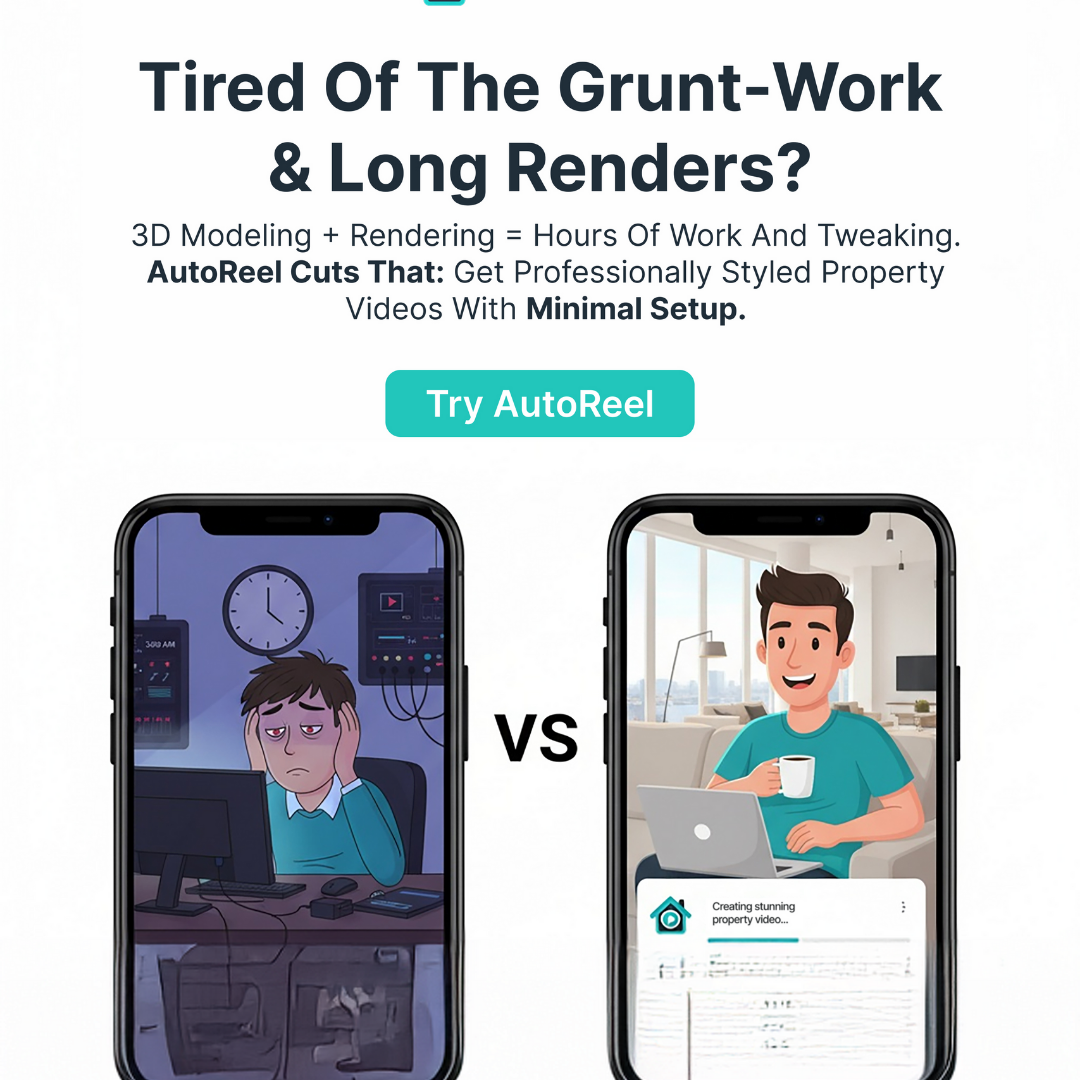
Here’s the quiet contradiction: everyone agrees video works- yet, most people still don’t do it consistently.
Why?
- Editing takes time
- Quality varies too much
- Scaling across multiple listings becomes messy
- Social formats change faster than workflows can keep up
So the issue isn’t belief — it’s execution. That gap is where most opportunities sit.
If you’re looking at ways to simplify that execution, it helps to understand what a scalable video workflow actually looks like in practice.
Where Tools Like AutoReel Fit Into This Shift

This is where things get practical.
If video is supposed to be consistent, scalable, and platform-ready, then the workflow matters as much as the output.
What agents and media teams are starting to move toward:
- Automated video creation from property assets
- AI-driven editing that maintains quality across listings
- Multi-format outputs (Reels, Shorts, listing videos)
- Faster turnaround without sacrificing consistency
That’s essentially the space AutoReel operates in — helping agents and media teams turn raw property assets into polished, platform-ready videos without slowing down their workflow.
Instead of treating video like a one-off creative task, it becomes part of your listing system.
And that changes the math:
- More listings get video
- Videos go live faster
- Social distribution becomes consistent
Over time, that compounds into visibility — and visibility turns into pipeline. That shift isn’t theoretical either. Teams already using structured video workflows are seeing measurable gains.
As Don Horn, Owner of Horn Pix Photography, puts it:“We realized the founder and his team were providing a value-add proposition our business could leverage. AutoReel has streamlined editing times by 25%, shortening time to listing.”
For teams thinking in terms of scale and ROI, it’s also worth reviewing how pricing models align with output and volume expectations.
What This Means for Real Estate Agents and Media Houses
There’s a difference between using video occasionally and building around it.
Agents who treat video as optional:
- Use it for premium listings only
- See inconsistent results
- Struggle to maintain presence
- Build stronger listing pipelines
- Attract better seller clients
- Stay visible across platforms without extra effort
For media houses, the shift is even sharper. Clients aren’t just asking for “videos” anymore. They’re asking for repeatable outcomes.
The ones who can deliver that — efficiently — win.
The Real Answer (If You Strip It Down)

Does video help sell homes faster? Yes — but not simply because it adds speed. It changes the quality of attention your listing attracts.
Video brings in more serious, better-informed buyers who are already emotionally invested before they even step inside.
That shift reduces hesitation, shortens decision timelines, and creates smoother transactions — turning interest into action faster, and listings into outcomes that actually move.
If you’re evaluating whether video should become a consistent part of your listing strategy, it’s worth taking a closer look at how the right tools and workflows can remove friction from the process.
Or, if you want to see how this fits your current setup, you can always get in touch with the team.
FAQs: Real Estate Video Statistics
1. What are the latest real estate video statistics for 2026?
Recent real estate video statistics show listings with video can generate up to 403% more inquiries, while homes featuring video content may sell up to 31% faster. Video has become a critical factor in buyer engagement, visibility, and overall listing performance.
2. Does video help sell homes faster?
Yes, video helps sell homes faster by attracting more qualified buyers early in the process. It reduces unnecessary showings, increases engagement, and builds emotional connection, which shortens the decision-making cycle and leads to quicker, more serious offers.
3. Why is video more effective than photos in real estate?
Video is more effective than photos because it shows flow, layout, and lifestyle in a single experience. Buyers gain a clearer sense of space and emotional connection, making it easier to imagine living in the home rather than just viewing static images.
4. Do buyers actually watch real estate videos?
Yes, a large majority of buyers actively watch real estate videos during their home search. Video helps them shortlist properties faster, understand details remotely, and feel more confident before scheduling visits, making it a key part of modern buying behavior.
5. Is video marketing worth it for real estate agents?
Video marketing is worth it for real estate agents because it increases listing visibility, improves lead quality, and strengthens brand perception. It also helps win more listings, as sellers prefer agents who offer advanced, modern marketing strategies like video.
6. What types of real estate videos perform best?
Short-form videos, property walkthroughs, and lifestyle-focused videos perform best across platforms. Content that highlights not just the property but the living experience tends to generate higher engagement, more shares, and stronger buyer interest compared to traditional formats.
7. How can agents create videos consistently?
Agents can create videos consistently by using streamlined workflows and tools that automate editing and formatting. Platforms like AutoReel help transform property assets into ready-to-publish videos, reducing effort while maintaining quality and consistency across listings and social channels.
8. Can real estate media teams scale video production?
Yes, real estate media teams can scale video production by adopting automation and standardized workflows. This allows them to produce high-quality videos for multiple listings efficiently, meet client expectations, and deliver consistent results without significantly increasing time or resources.